2 hr 30 min
Night Manta Ray Snorkel Adventure
- Entry ticket
- Mobile voucher
- Valid same day
- Free cancellation
Big Island Volcano Tour Helicopter — Aerial Tours Over Kīlauea
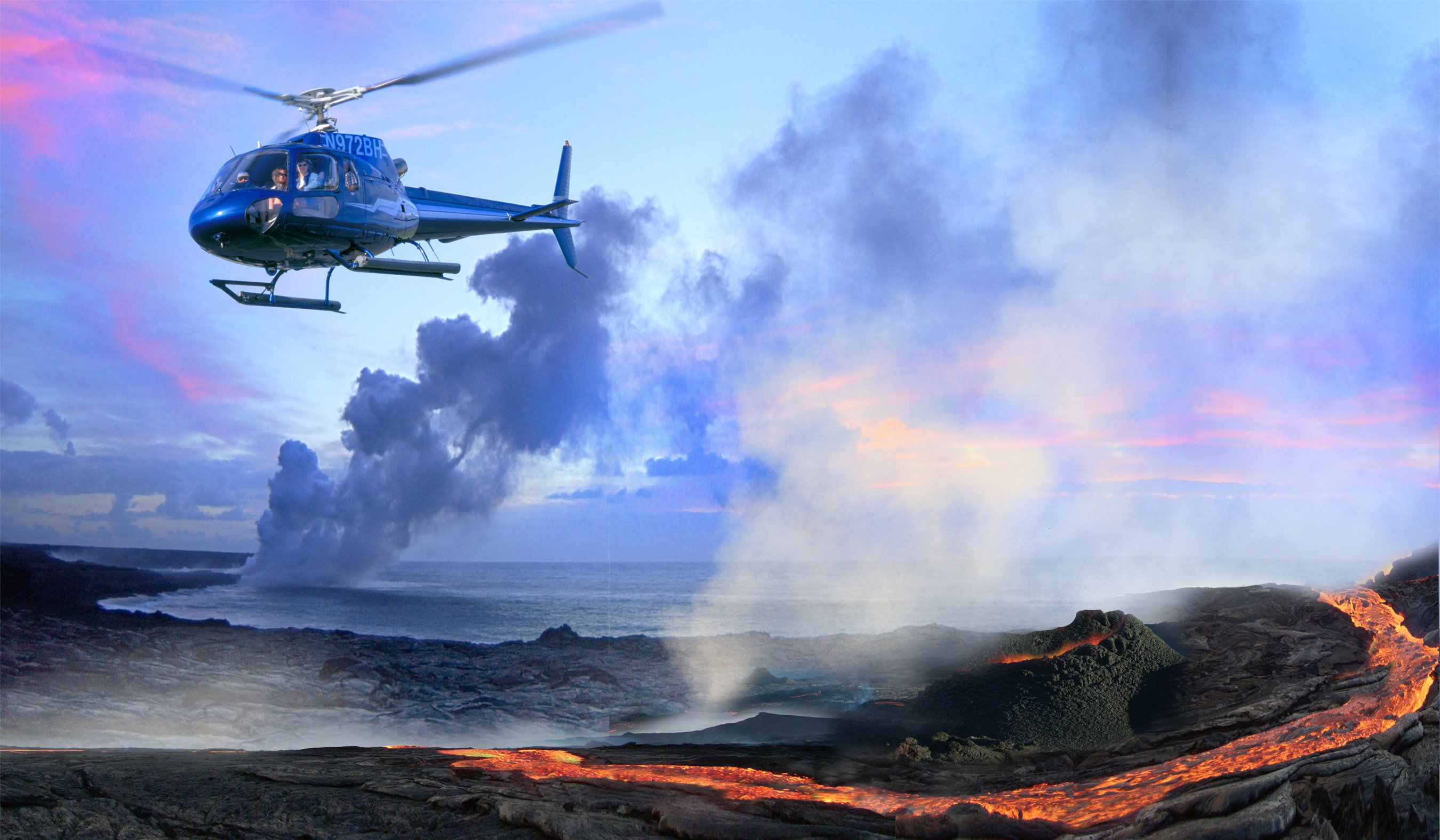
Circle active craters and lava fields, witness the island rising from the sea.
Compare fares, pick the fit — all bookings are mobile-voucher and eligible for free cancellation where shown.
2 hr 30 min
11 hr
7 hr
Selecting the right big island volcano tour helicopter option depends on whether you prefer a focused aerial experience or a comprehensive land-and-air excursion. These specialized big island volcano tour helicopter tours provide unique perspectives of the Kīlauea caldera and surrounding volcanic landscapes.
| Aerial Only Flight-focused |
Top pick Combo Adventure Land and Sky |
|
|---|---|---|
| Duration | 50–60 minutes | 8–12 hours |
| Access Areas | Kīlauea summit and rift zones | Crater Rim Drive and lava tubes |
| Logistics | Hilo Airport departure | Round-trip from major hubs |
| Best for | Time-constrained travelers | First-timers seeking full immersion |
| See tickets & prices |
Verdict: For a complete perspective of Hawaii Volcanoes National Park landmarks, the combo adventure is the ideal way to enjoy your big island volcano tour helicopter tickets.
Skip the helicopter—ground access delivers full value
A big island volcano tour helicopter promises aerial views of Kilauea's summit crater and active lava flows, but the reality is more nuanced. None of the available tours on this page include helicopter flights—what's offered are ground-based park tours paired with stargazing, coffee tastings, or Hilo discovery. That's actually the smarter play. Hawaii Volcanoes National Park charges just $30 per vehicle and grants direct access to Kilauea caldera overlooks, lava tubes, steam vents, and Chain of Craters Road—features helicopters fly over but can't let you walk through. Aerial tours typically cost $250–$400 per person for 45–60 minutes, and while they reveal remote coastal lava entry points inaccessible by road, those flows are intermittent and not guaranteed. Ground tours let you spend hours exploring volcanic landscapes at your own pace, photograph sulfur banks up close, and understand the geology through ranger talks—depth a flyover can't match. For most travelers, big island volcano tour helicopter tickets are an expensive upgrade that sacrifices tactile exploration for fleeting aerial perspective.
Bottom line: Ground exploration delivers richer volcanic encounters than a brief helicopter flyover, and the park's $30 fee proves Hawaii Volcanoes National Park rewards patience over altitude.
They complement each other; most visitors who do both call the aerial perspective the more thrilling way to grasp the scale of the lava fields.
|
Top pick Aerial Tour |
Ground Tour | |
|---|---|---|
| Perspective | Expansive panoramic aerial views | |
| Accessibility | Requires flight transfer to airfield | |
| Physical Effort | None (seated) | |
| Total Duration | 45–90 minutes | |
| Interaction with Terrain | Remote observation only | |
| Surface Access | None | |
| See tickets & prices |
Verdict: Securing big island volcano tour helicopter tickets provides immediate geological context, while ground tours allow visitors to walk the caldera floor and observe endemic flora closely, making big island volcano tour helicopter tour options and ground-based big island volcano tour helicopter tours ideal for a complete experience.
Hand-picked experiences loved by thousands of travelers
12 hours
Free Cancellation
Journey through Hawaii's volcanic wonders at dusk, then gaze at stars beneath pristine island skies
5 hours
Free Cancellation
Journey from Hilo's historic sites to one of Earth's most active volcanic landscapes in five hours
1 hour
Free Cancellation
Soar above Kilauea's active landscape, lava fields, and jungle waterfalls on this unforgettable aerial adventure
7 hours
Free Cancellation
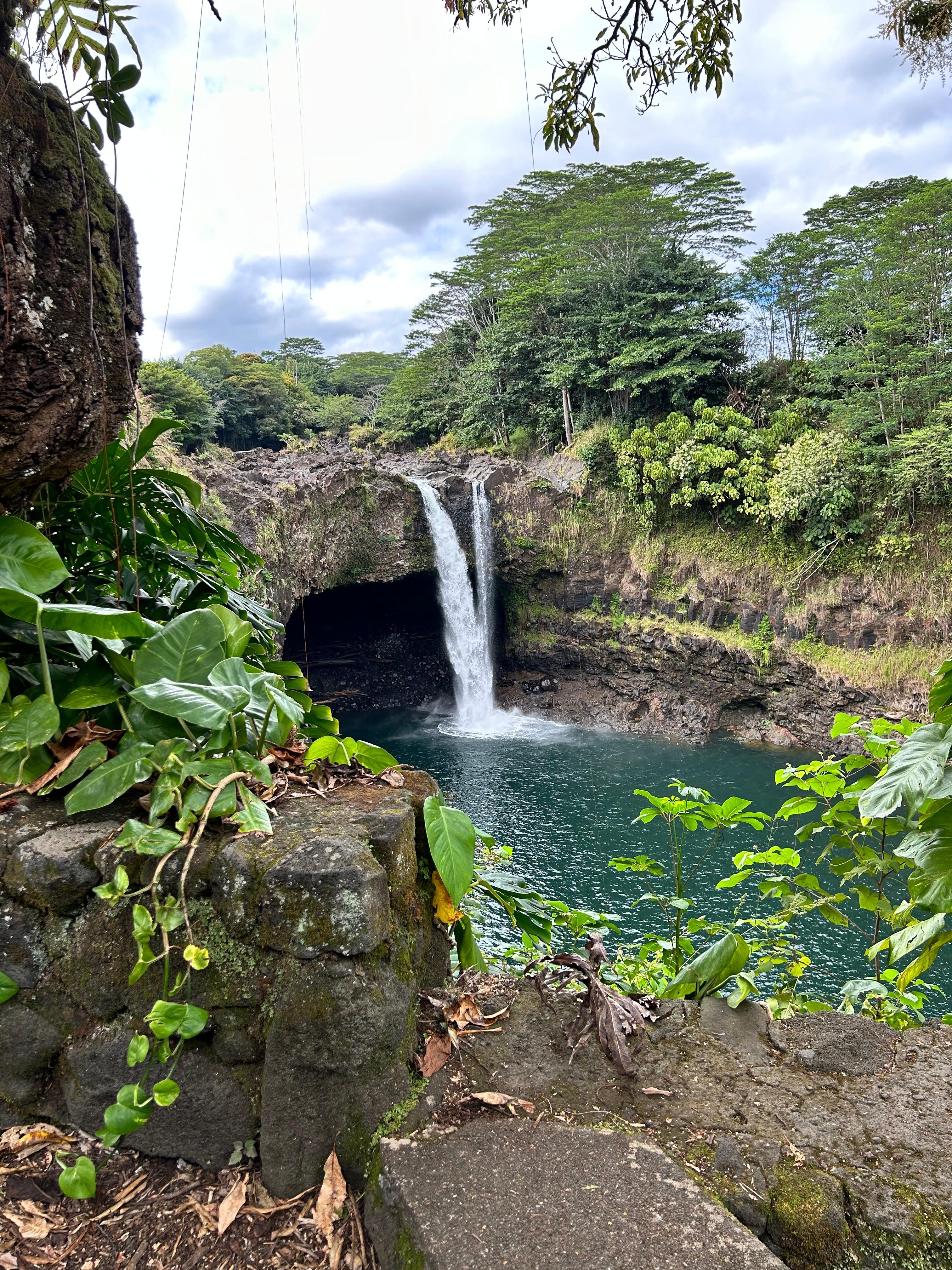
Journey through volcanic landscapes, rainforest cascades, and coastal tide pools on this full-day Big Island immersion.
7 hours
Free Cancellation
Explore Kilauea volcano, walk through a lava tube, and visit a black sand beach where sea turtles rest
6 hours
Free Cancellation
Journey through lava landscapes, volcanic craters, and cascading waterfalls on this full-day Big Island adventure
1 hour 30 minutes
Free Cancellation
Fly above Hawaii's most active volcano and witness molten lava flows reshaping the Big Island in real time
15 hours 30 minutes
Free Cancellation
Full-day aerial and ground exploration of Hawaii's volcanic landscapes with flights included
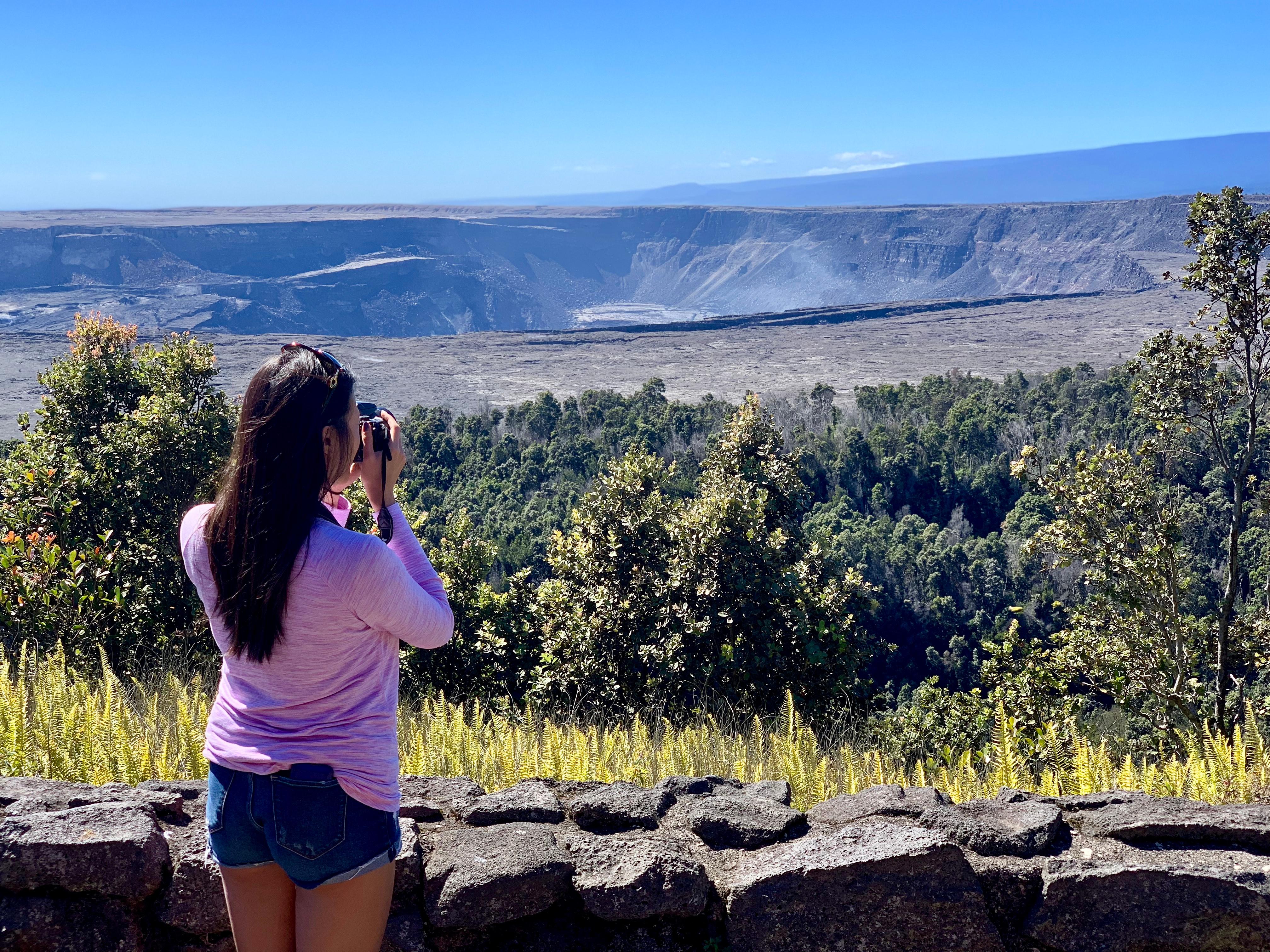
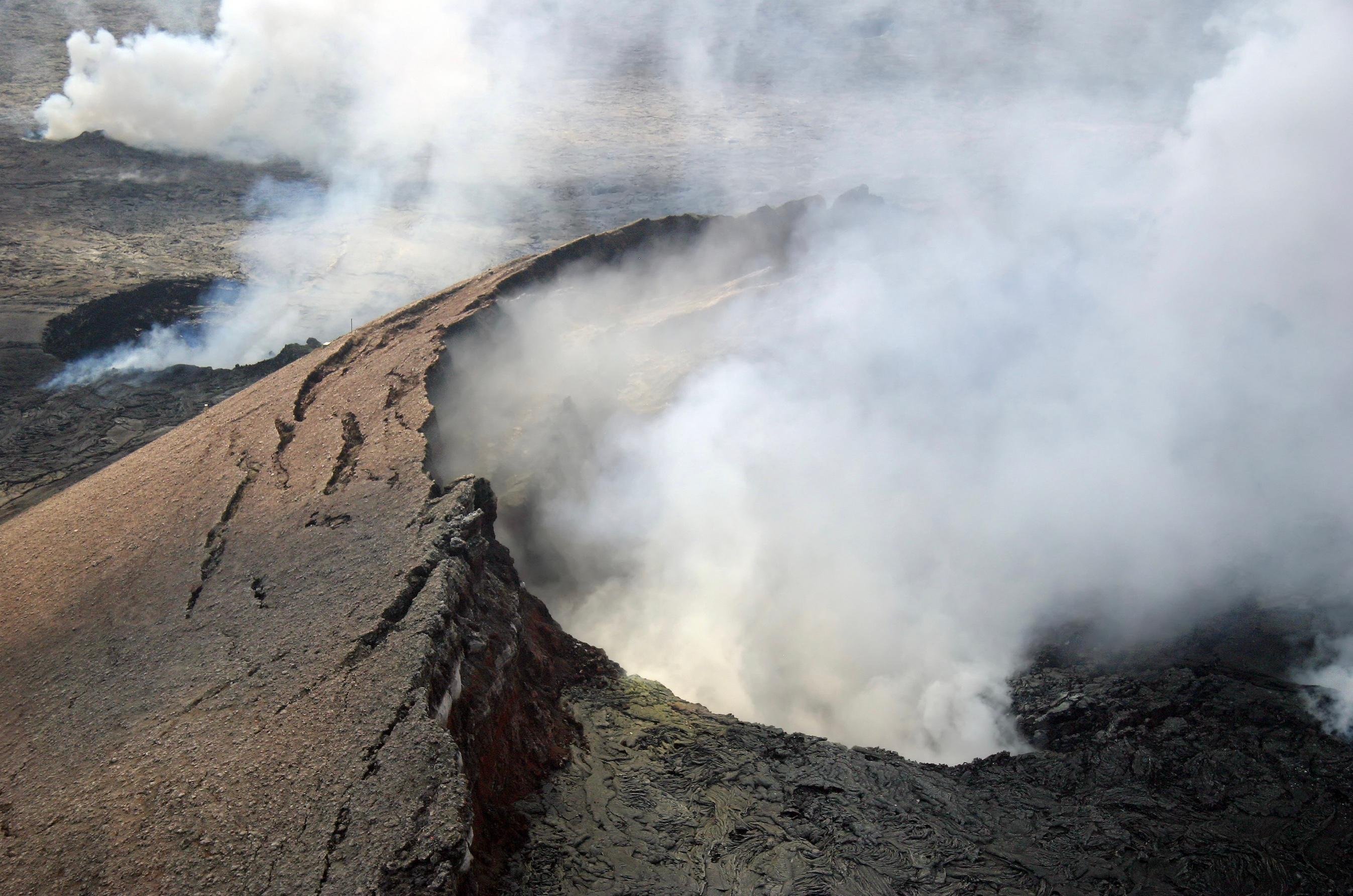
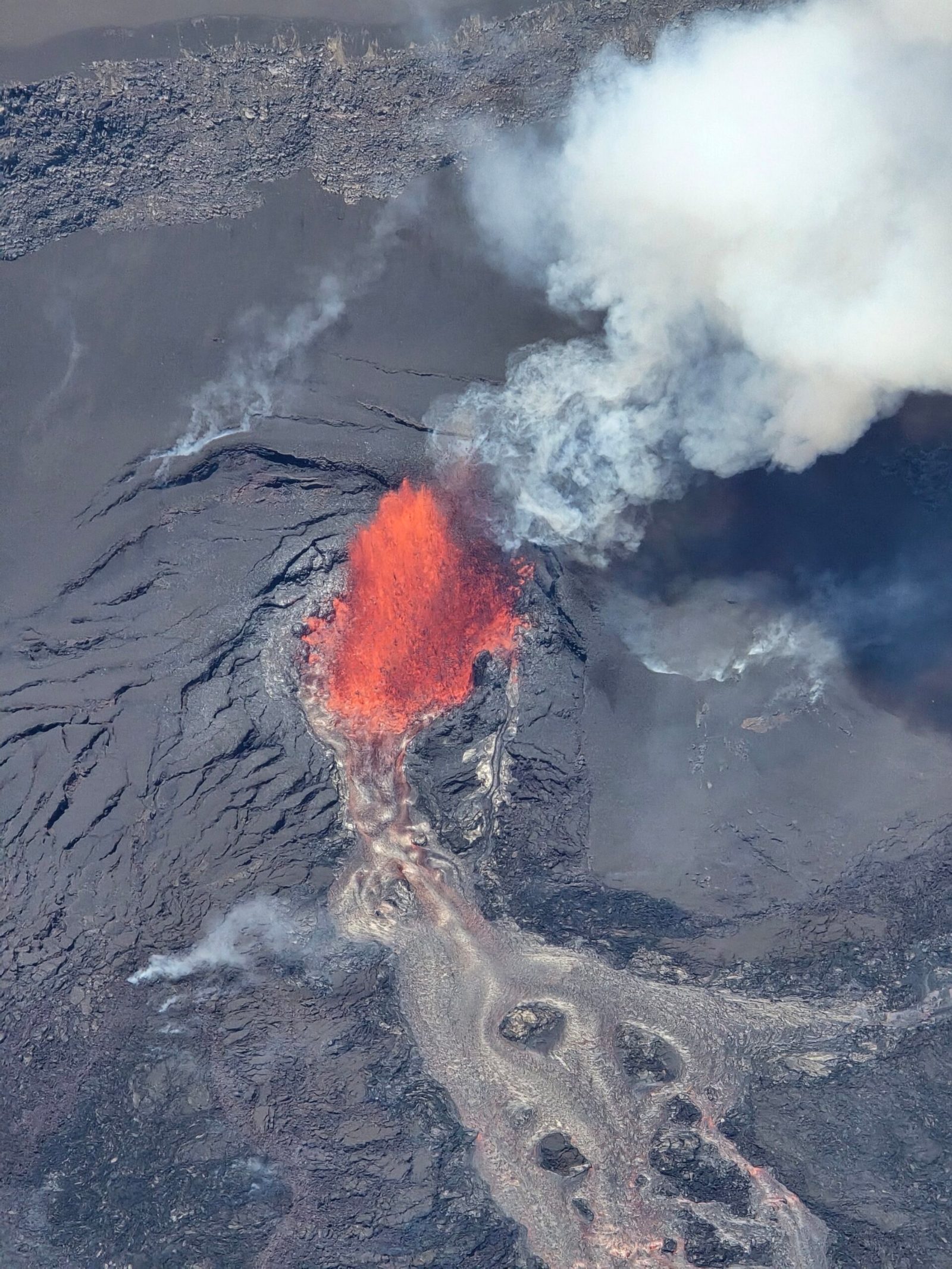
The central crater has undergone massive changes, including significant deepening during recent eruptions. It remains the most active part of the volcanic system
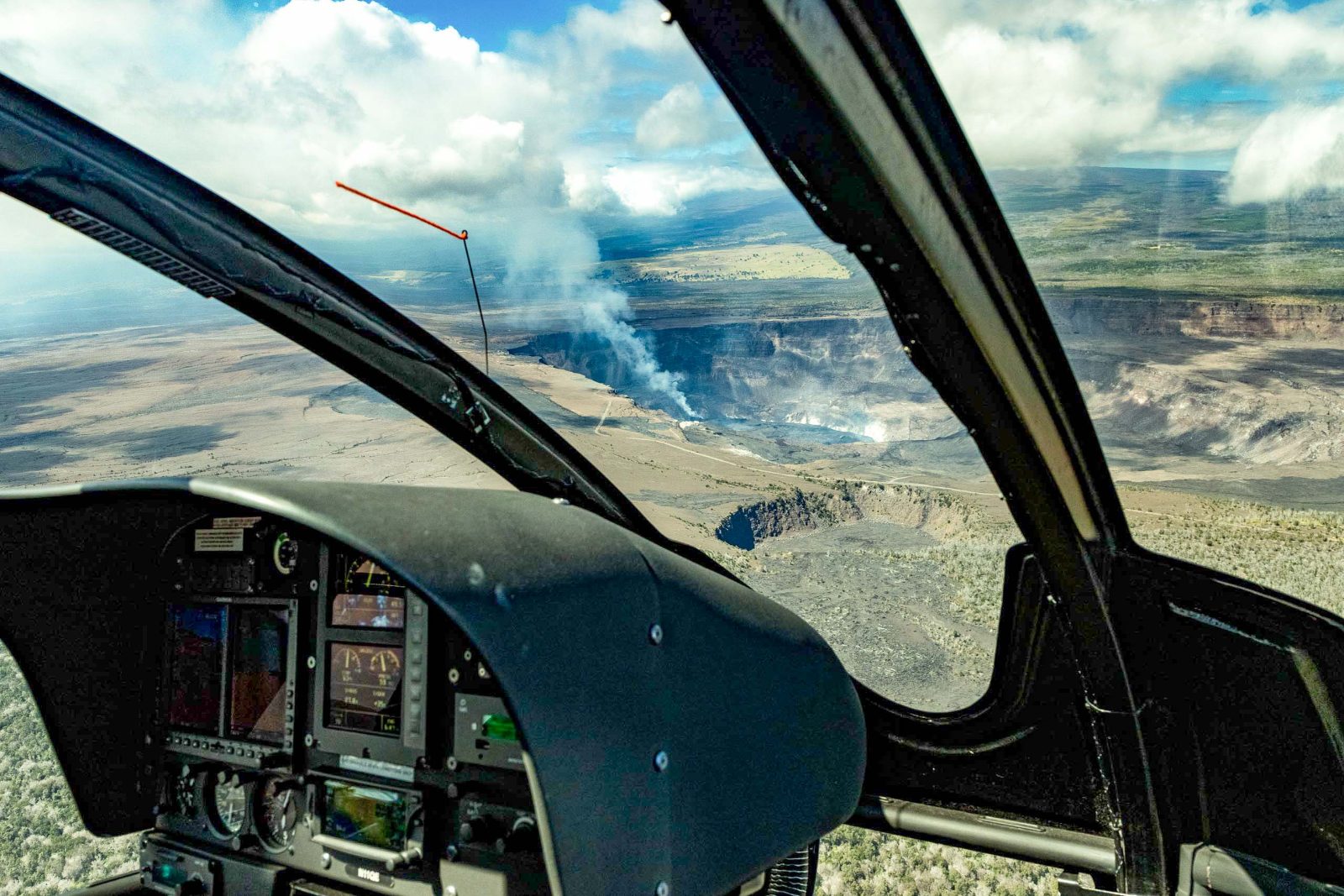
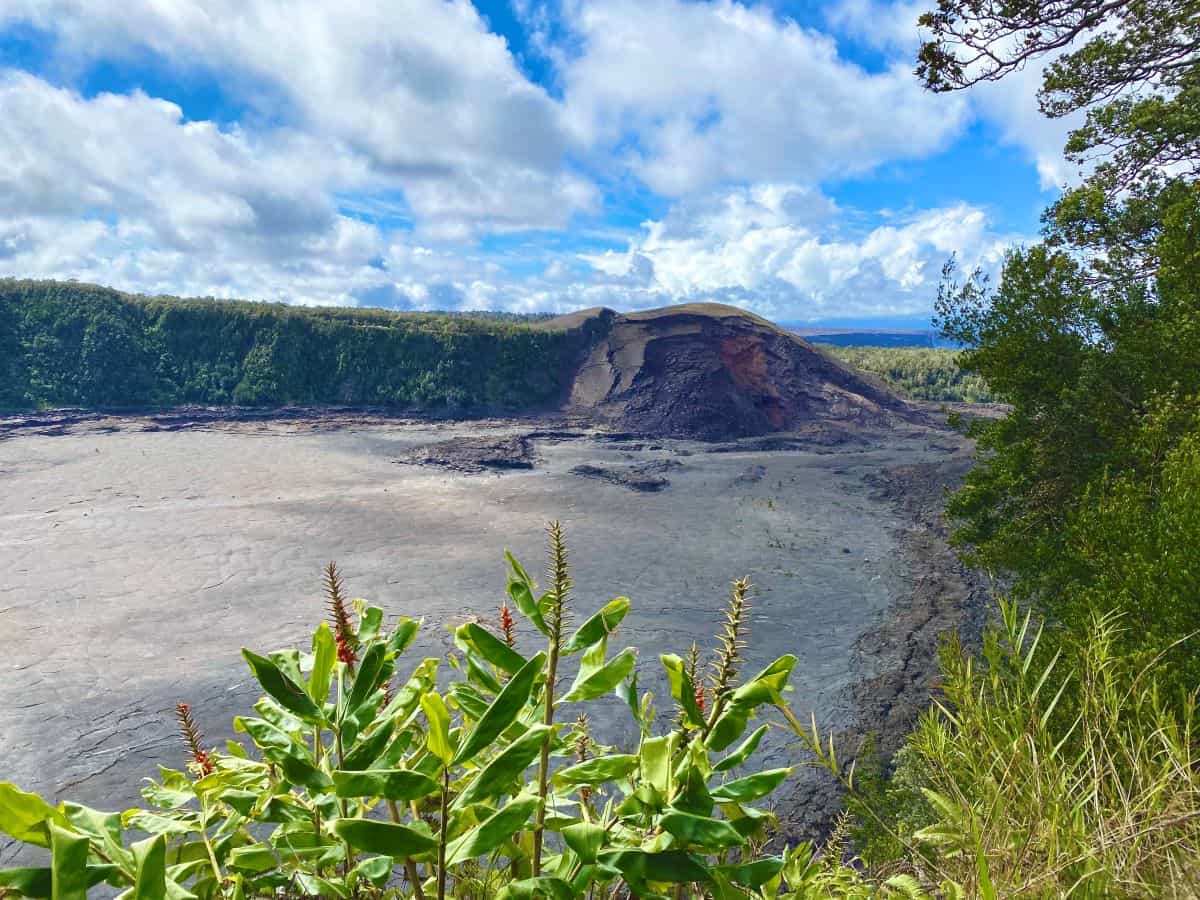
This expansive basin spans roughly 3 by 5 kilometers. It serves as the primary focal point for most aerial observation tours
A major volcanic vent that was active for decades. Its remnants provide a stark view of past flow patterns
The massive shield volcano occupies a significant portion of the island. Its gradients are visible from higher altitudes during the flight
Deep green vegetation contrasts sharply with dark, hardened lava flows. This ecosystem is a key feature of the eastern park zones
You lift off from Hilo's heliport just after dawn, when trade winds are calm and visibility stretches 40 miles. The helicopter banks south, crossing sugar cane fields and macadamia orchards before the landscape darkens into 'a'ā lava—rough, clinkered basalt that looks like frozen black waves.
Your pilot points out the 1984 Mauna Loa flow, which stopped just seven miles from Hilo, and the forested kipuka—islands of green surrounded by lava—where native 'ōhi'a trees survived.
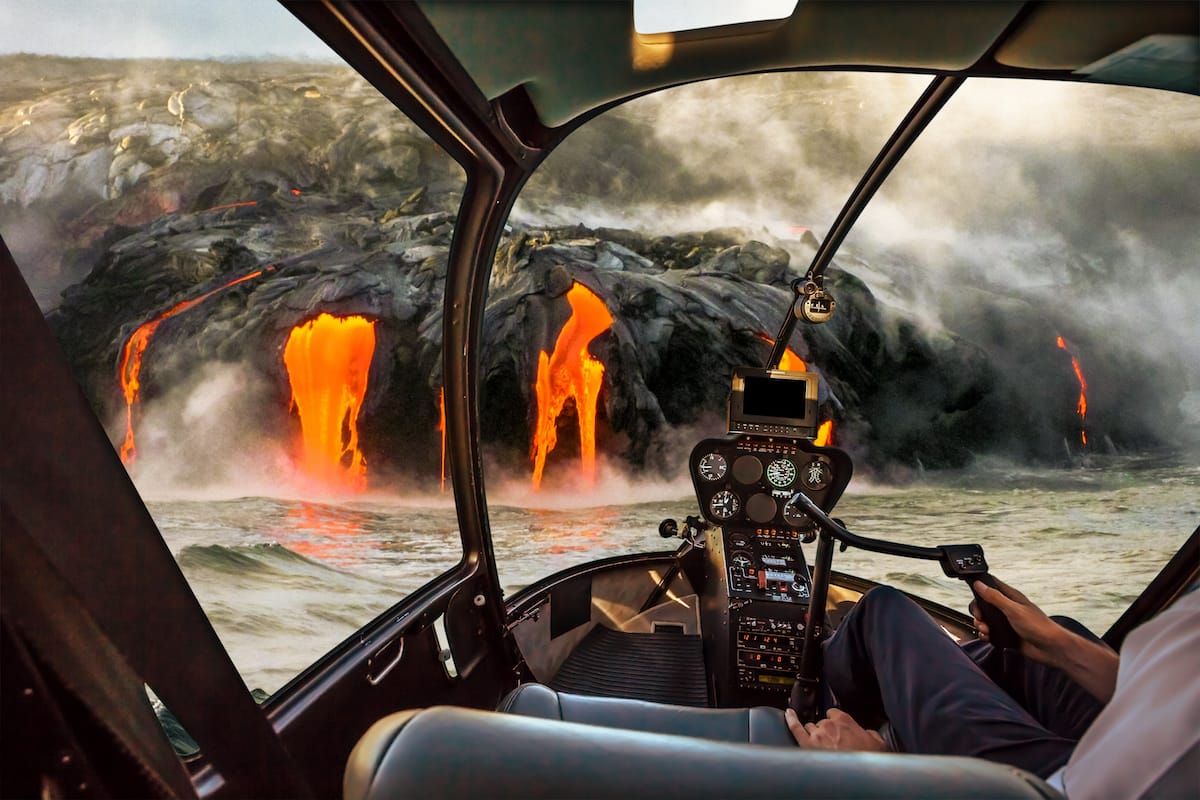
The caldera appears suddenly: a two-mile-wide depression with sheer walls striped in yellow sulfur and rust. Halema'uma'u crater sits inside, its floor a mosaic of hardened lava crusts and glowing cracks. Steam rises in columns, backlit by morning sun. You circle twice, low enough to see the texture of the lava—ropy pāhoehoe near the crater's edge, blocky 'a'ā farther out. The helicopter tilts east, following the rift zone toward the coast, where black sand beaches meet turquoise surf and lava deltas jut into the ocean like unfinished jetties.
All the details about your upcoming adventure in one place
Kīlauea has erupted continuously for longer than most nations have existed. Between 1983 and 2018, the volcano's east rift zone sent rivers of molten rock into the Pacific, adding more than 500 acres of new land to Hawai'i Island.
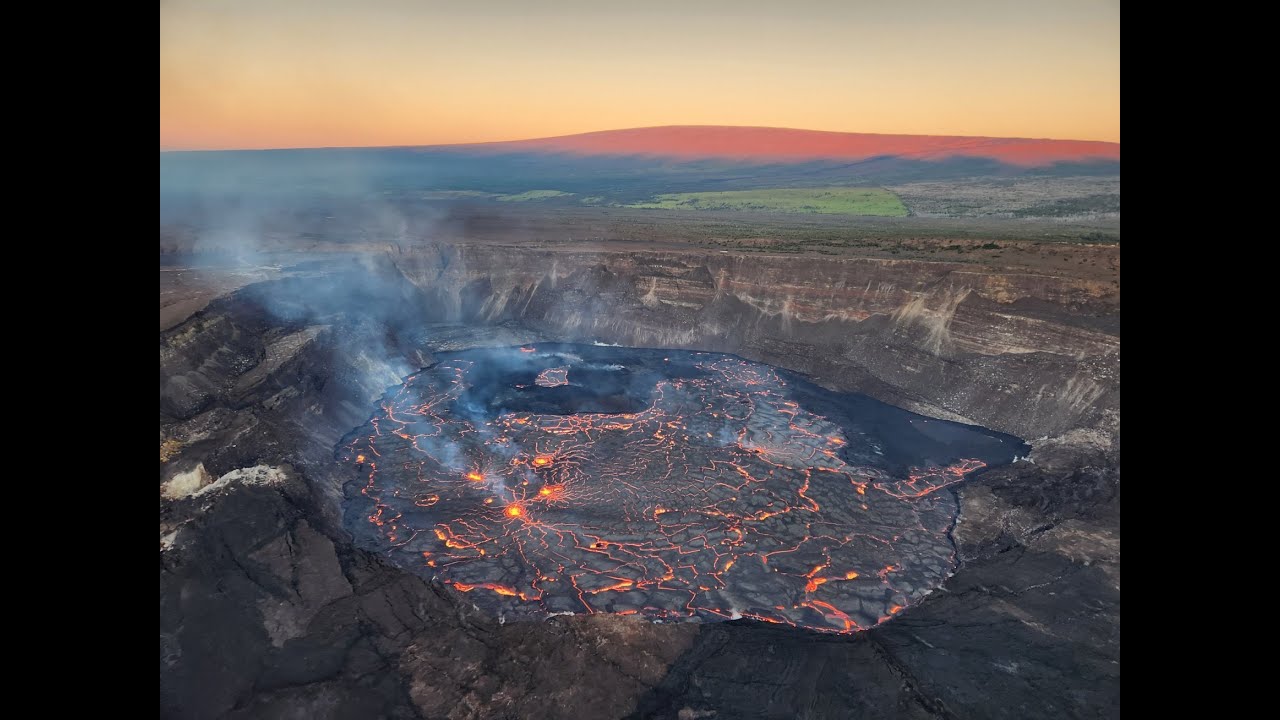
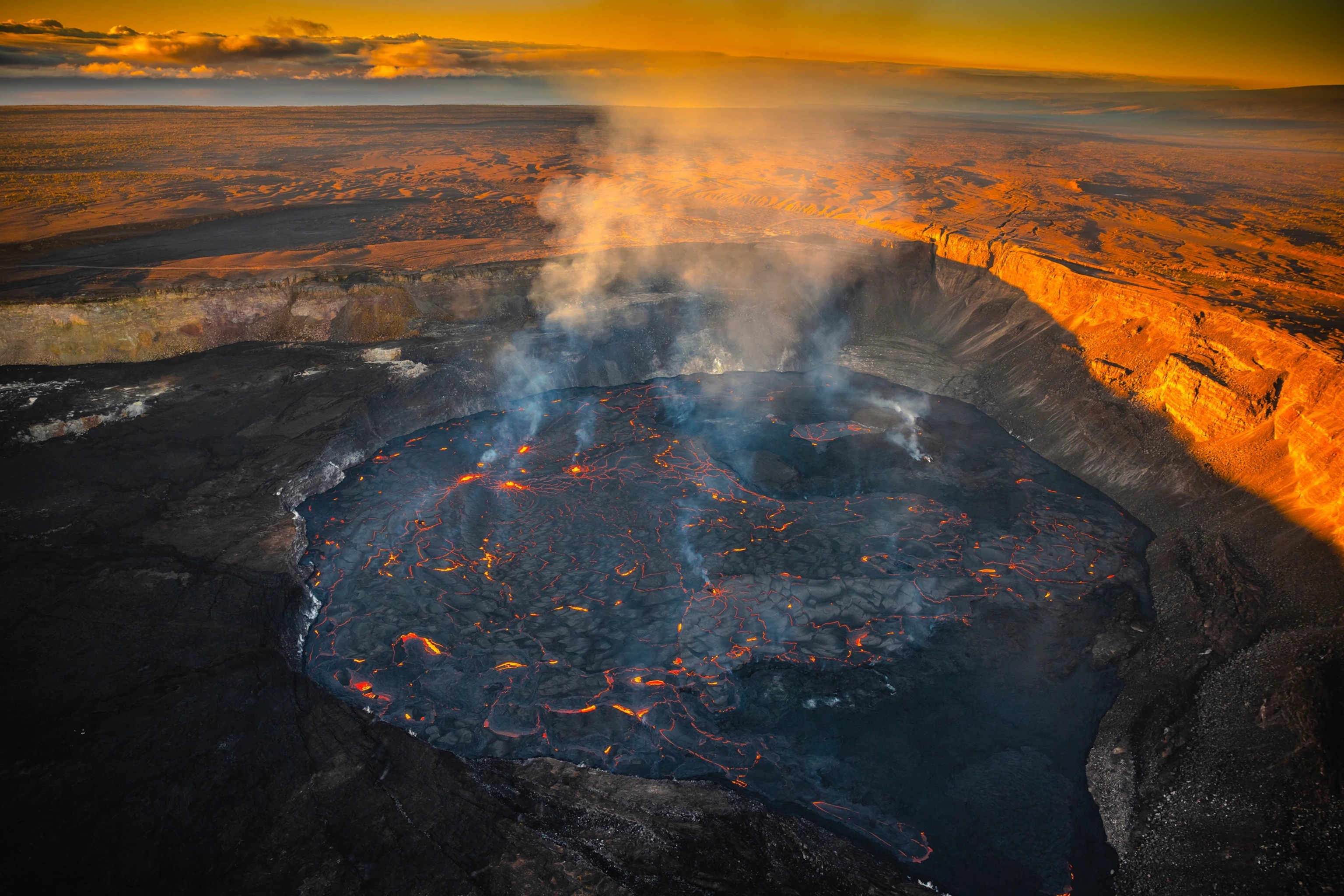
The 2018 collapse of Halema'uma'u crater floor—dropping more than 1,500 feet in three months—reshaped the summit caldera into a basin deeper than the Empire State Building is tall. Today, lava lakes simmer and fade inside the crater rim, visible only from above or from overlooks that require miles of hiking across restricted terrain.
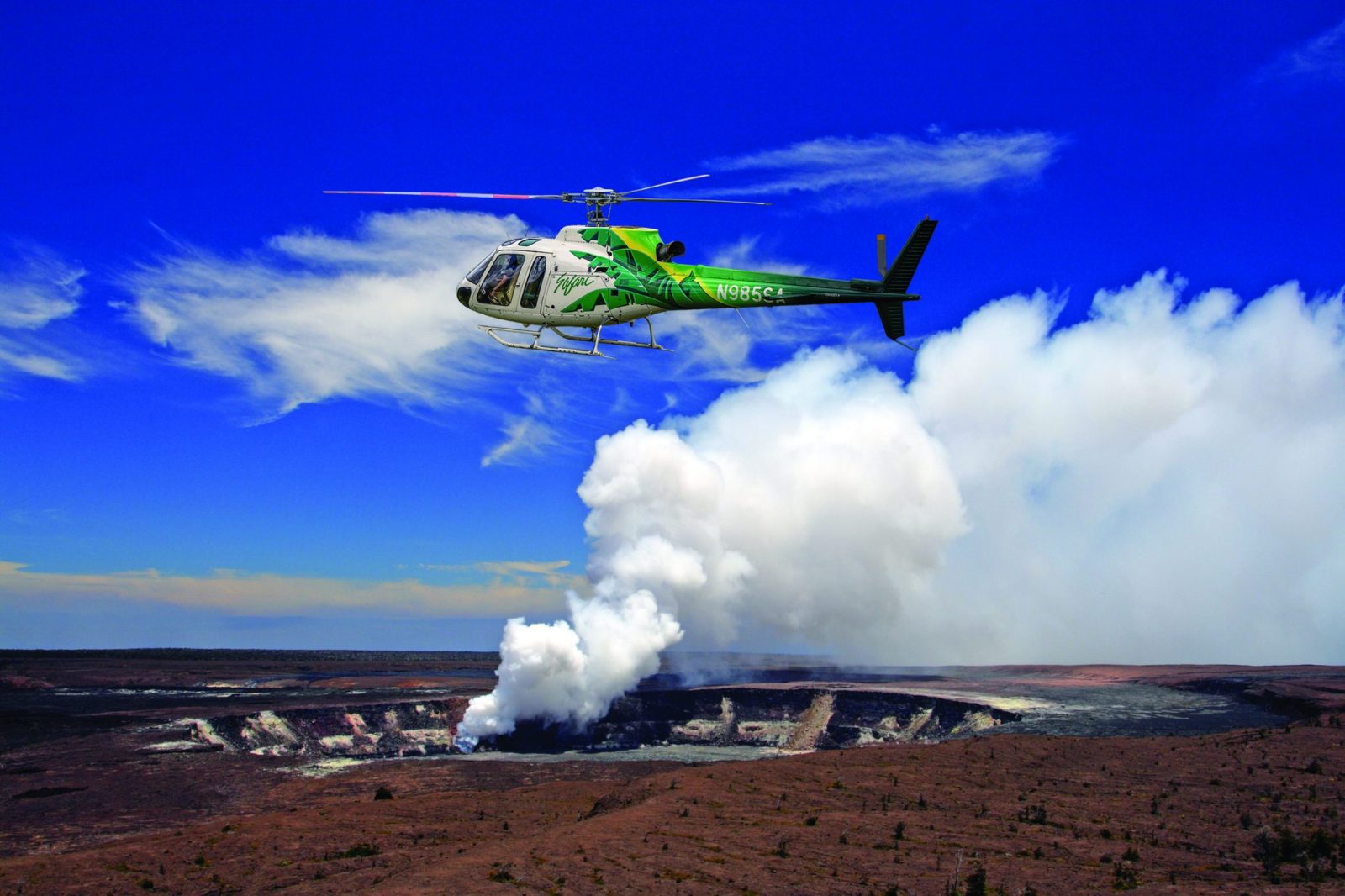
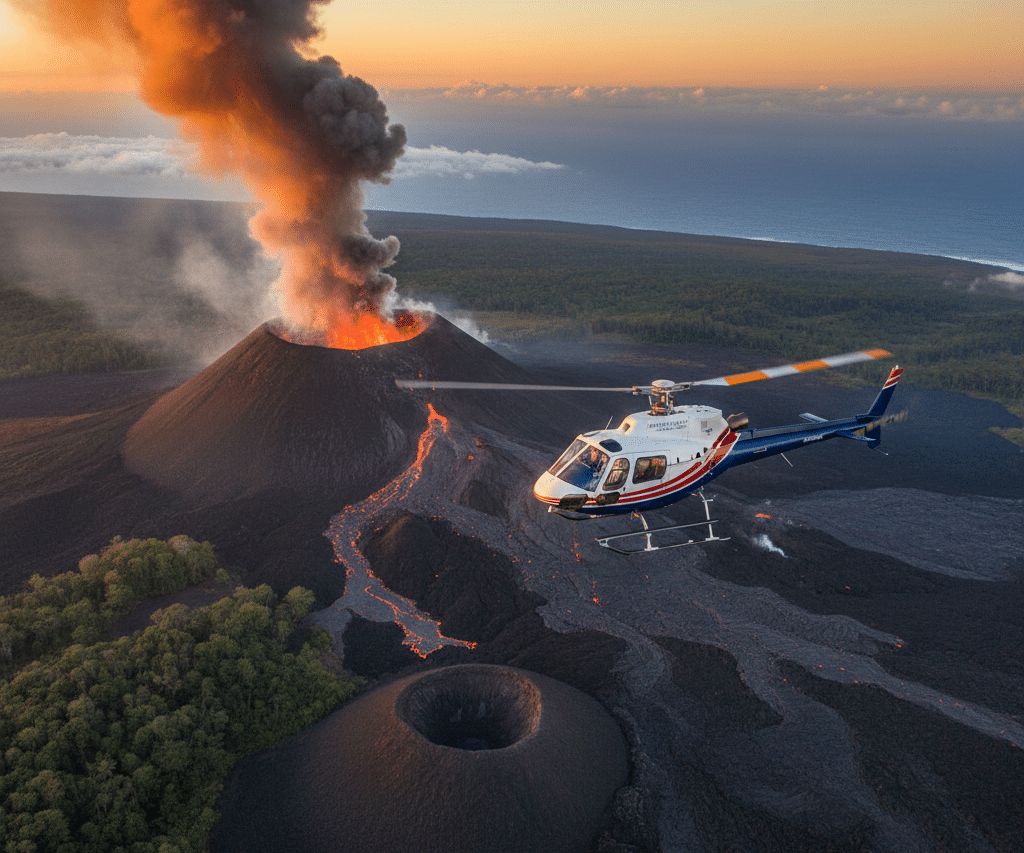
Helicopter tours over Hawaii Volcanoes National Park grant access to landscapes otherwise invisible: the steaming fissures of the Southwest Rift, the black sand deltas where lava met the ocean, the rain forests that cling to the volcano's eastern flank. Flight paths follow the East Rift Zone, circle the summit caldera, and descend over coastal cliffs where hardened lava forms shelves and arches. Pilots narrate the geology—how the Hawaiian hotspot has been building islands for 70 million years, how Kīlauea's shield shape comes from low-viscosity basalt that flows rather than explodes. Most big island volcano tour helicopter flights depart from Hilo, 30 miles northeast of the park, and last between 45 and 90 minutes depending on whether the route includes the Kohala coastline or focuses solely on volcanic features.
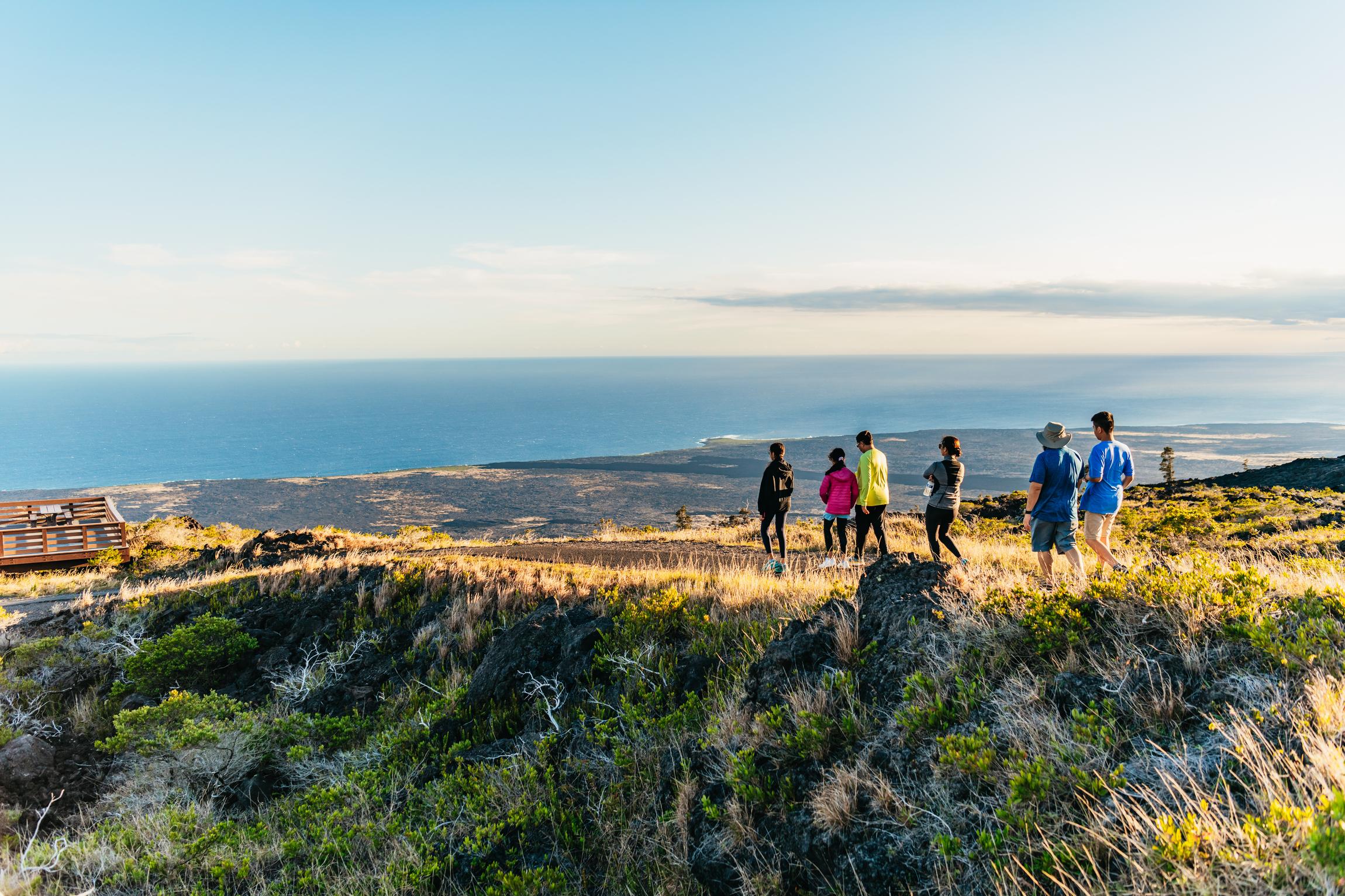
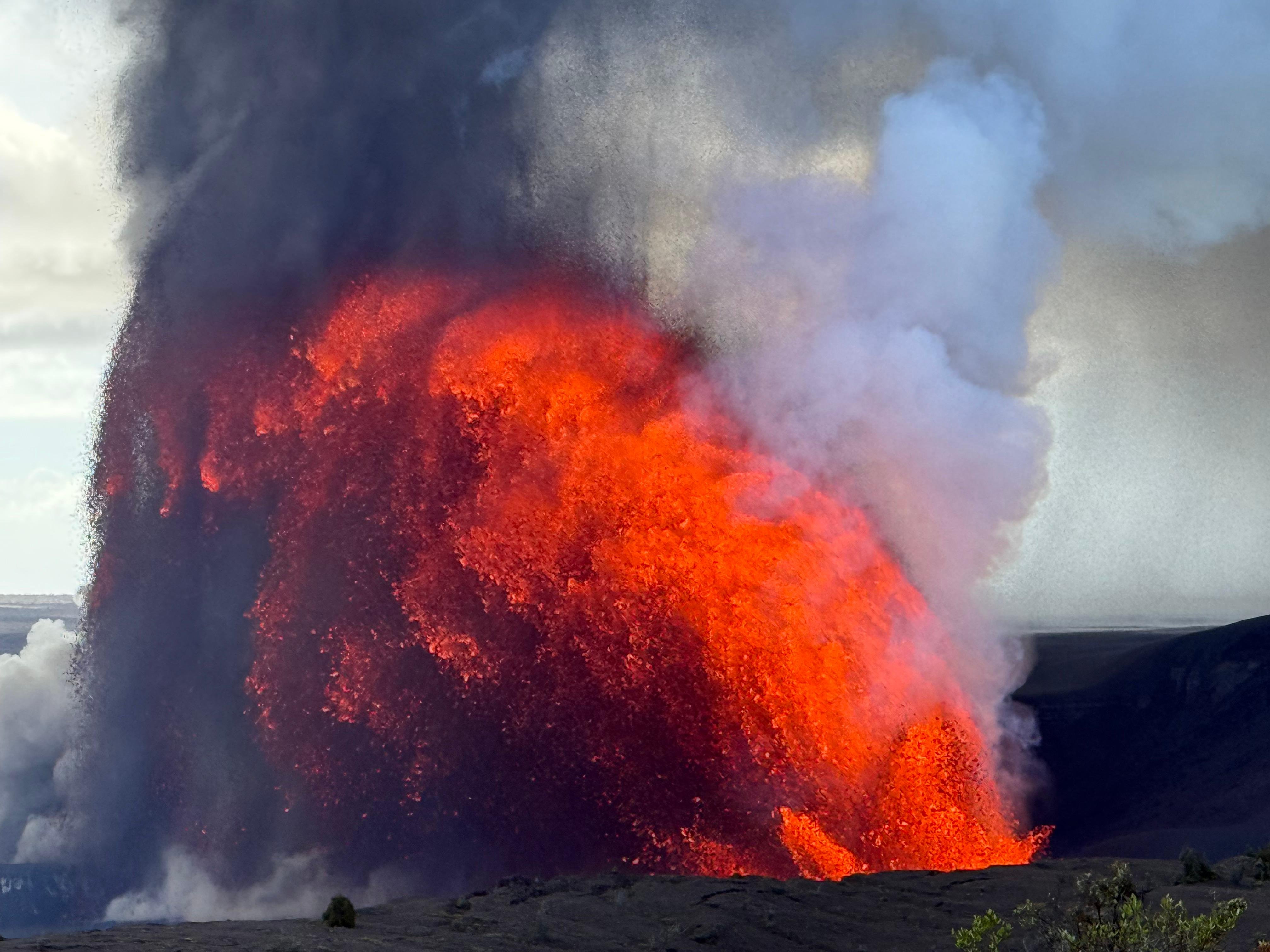
The national park itself covers 335,259 acres, from the 13,681-foot summit of Mauna Loa to the sea. Ground access is limited: Crater Rim Drive remains partially closed since 2018, and lava-viewing areas shift with eruptive activity. Aerial perspectives reveal the scale of the caldera system, the radial pattern of rift zones, and the color gradients of oxidized tephra that range from rust to silver. Evening flights catch the glow of active vents, when incandescent magma illuminates the crater walls and steam plumes turn orange against the sky.

The 2018 collapse of Halema'uma'u crater floor dropped more than 1,500 feet in three months, reshaping the summit caldera into a basin deeper than the Empire State Building is tall.
Wear layers as temperatures fluctuate between the coast and the summit. Closed-toe shoes are recommended for boarding a big island volcano tour helicopter.
Weight limits are strictly enforced by operators for safety. Personal items are often limited to small cameras and sunglasses.
Use high shutter speeds to capture clear images from a moving big island volcano tour helicopter. Flash photography is prohibited inside the cabin.
Children must be able to sit in their own seat with a fastened belt. Verify age and weight minimums with your chosen big island volcano tour helicopter operator.
Most helicopter pads have designated drop-off zones for those with mobility aids. Notify the operator of specific needs when booking your big island volcano tour helicopter.
Consumption is restricted during the flight to ensure passenger safety. Plan to eat at park facilities before or after your big island volcano tour helicopter flight.
Hours
00:00–23:59
Address
1 Crater Rim Drive, Volcano, HI 96785
Entry
30 USD per private non-commercial vehicle
Arrival Window
06:00–10:00
Navigation
Use Crater Rim Drive for park access
Car · N/A · 30 USD entrance fee
Follow Highway 11 to the park entrance. Ample parking is available near the visitor center for those taking a big island volcano tour helicopter.
Cancellation policies vary by specific aerial operator. Most require notification 48 hours in advance for a full refund.
Recommended time
Half a day
A typical visit to explore the crater rim and hiking trails requires at least half a day to appreciate the geothermal landscape. Aligning your schedule with a big island volcano tour helicopter allows you to observe the steam vents and caldera from above before transitioning to ground-level exploration. By adhering to the best arrival window of 06:00–10:00, visitors can secure parking and experience fewer people on the primary trails. Consider purchasing big island volcano tour helicopter tickets well in advance to coordinate your flight departure with your park ground transit. Travelers often seek out these Hawaii aerial excursions to gain a broader perspective on the lava tubes and diverse ecosystem before their road-based sightseeing begins.
Crowd levels through the day
Weather · crowds · average price — dots go green to amber to red as each metric rises.
Mild temperatures and clear morning skies offer ideal visibility for aerial photography. Expect lower rainfall in April and May.
Warm weather makes for comfortable viewing. Afternoon thermals can sometimes influence flight paths.
Lower humidity levels in September and October provide high clarity for seeing volcanic activity.
Increased rainfall may lead to flight rescheduling. Mornings remain the best time for calm winds.
Volcanic conditions and wind speeds dictate flight feasibility. Always monitor status updates for your big island volcano tour helicopter.
Demand for prime morning slots is high. Secure your big island volcano tour helicopter tickets weeks in advance.
Arrive at the park entrance between 06:00–10:00 to avoid mid-day crowds and ensure parking availability.
Helicopter cabins are climate-controlled but air outside can be chilly. Wear layers to remain comfortable.
Safety briefings are essential. Pay attention to all instructions provided by the pilot.
Hawaii Volcanoes National Park was established on August 1, 1916, as the eleventh national park in the United States. The original reservation encompassed the summits of Kīlauea and Mauna Loa, two of the world's most active volcanoes. Thomas Jagger, a geologist from MIT, arrived in 1912 and founded the Hawaiian Volcano Observatory at Kīlauea's rim, transforming the site from a curiosity into a center for scientific study. His lobbying efforts, combined with the influence of local businesswoman Lorrin Thurston, secured federal protection for the volcanic landscape. The park's boundaries expanded in 1961 to include coastal areas, adding dramatic sea cliffs and ancient Hawaiian settlements to the protected zone. Big island volcano tour helicopter flights began in the early 1980s, when commercial operators recognized the demand for aerial views of Kīlauea's lava flows. The 1983 eruption of Pu'u 'Ō'ō, which continued for thirty-five years, created a sustained spectacle that drew pilots and passengers alike. Lava streams reached the ocean, generating towering steam plumes visible from miles away. By the 1990s, helicopter tours had become the primary method for witnessing active lava lakes and fountain events inaccessible by foot. The industry faced scrutiny after a 2007 crash near Kīlauea, prompting stricter altitude and weather protocols. The 2018 collapse of Kīlauea's summit caldera reshaped both the park and the tour industry. A series of explosive eruptions destroyed Jaggar Museum and forced evacuations across the eastern rift zone. The caldera floor dropped more than five hundred meters, doubling the depth of Halema'uma'u Crater. Volcanic activity paused in September 2018, resuming intermittently in 2020 and 2023. Today, big island volcano tour helicopter tickets grant access to views of the reshaped summit, glowing lava within the crater, and the petroglyphs and lava tubes that mark centuries of Hawaiian habitation along the rift zones.
Thomas Jagger establishes the Hawaiian Volcano Observatory on Kīlauea's rim, initiating systematic monitoring of eruptions.
Hawaii Volcanoes National Park is created on August 1, protecting the summits of Kīlauea and Mauna Loa.
Pu'u 'Ō'ō erupts continuously for thirty-five years, creating lava flows that reach the ocean and fuel the growth of aerial tour operations.
A helicopter crash near Kīlauea prompts federal review and stricter flight safety protocols for volcanic tour operators.
Kīlauea's summit collapses in May, destroying infrastructure and doubling the depth of Halema'uma'u Crater.
Lava returns to Halema'uma'u in December, restoring the active lava lake that draws helicopter tours today.
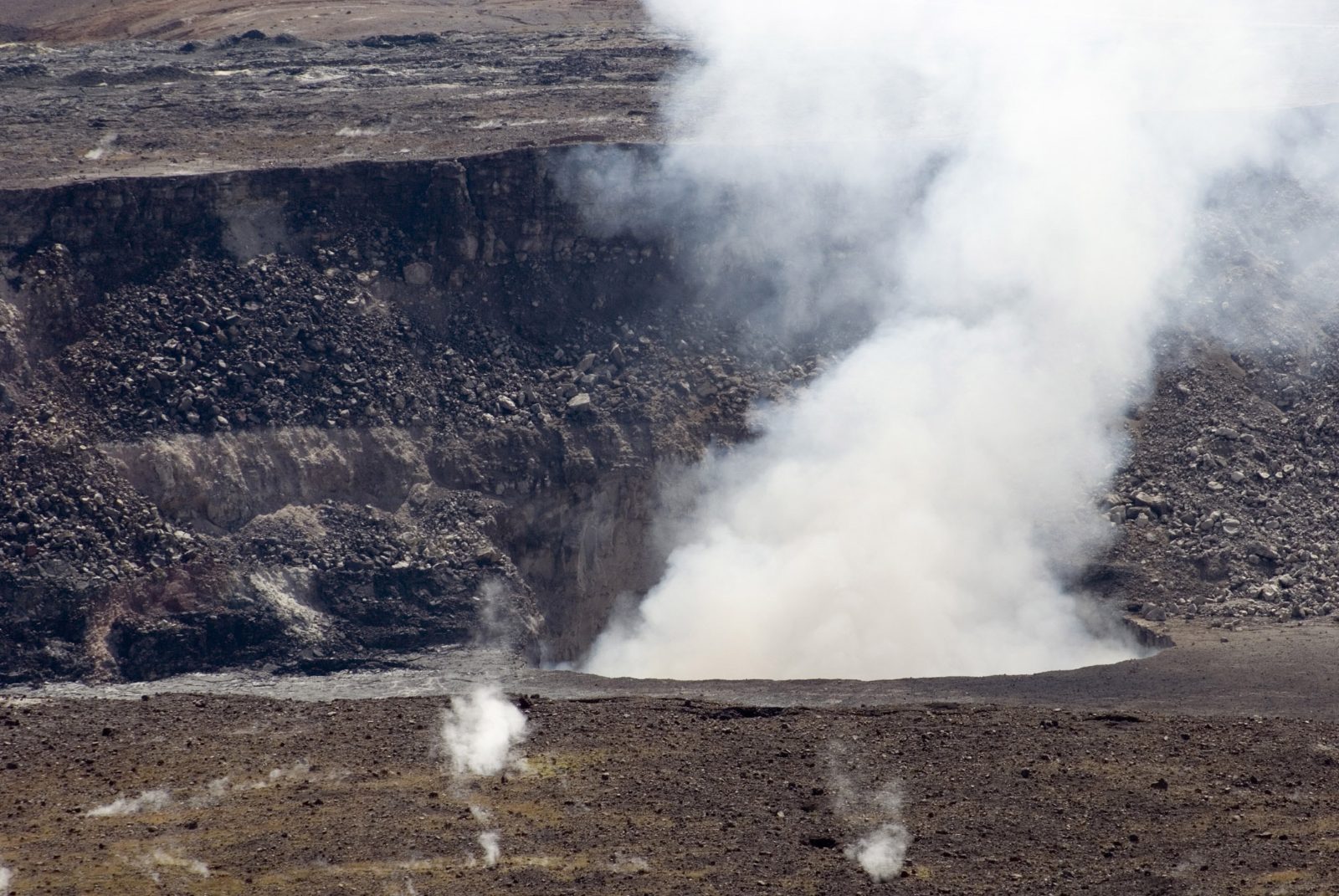
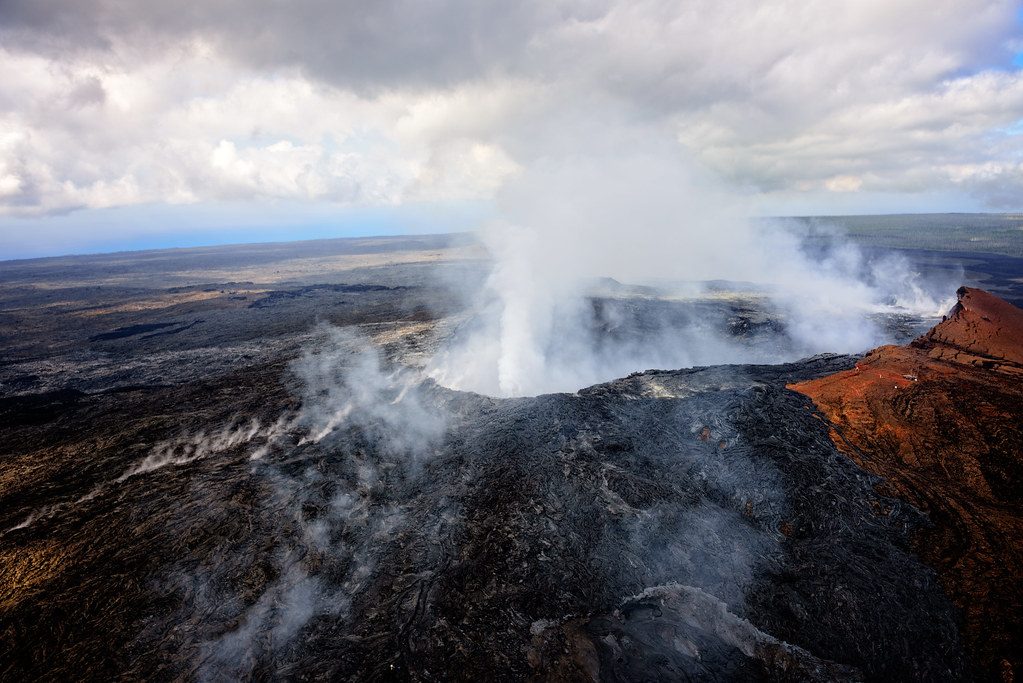
Capture the massive scale of the summit caldera where steam plumes rise from the floor, providing a central focus for a big island volcano tour helicopter shot.
Focus your lens on the active vent area to highlight the contrast between cooled basaltic rock and active geothermal activity seen during a big island volcano tour helicopter tour.
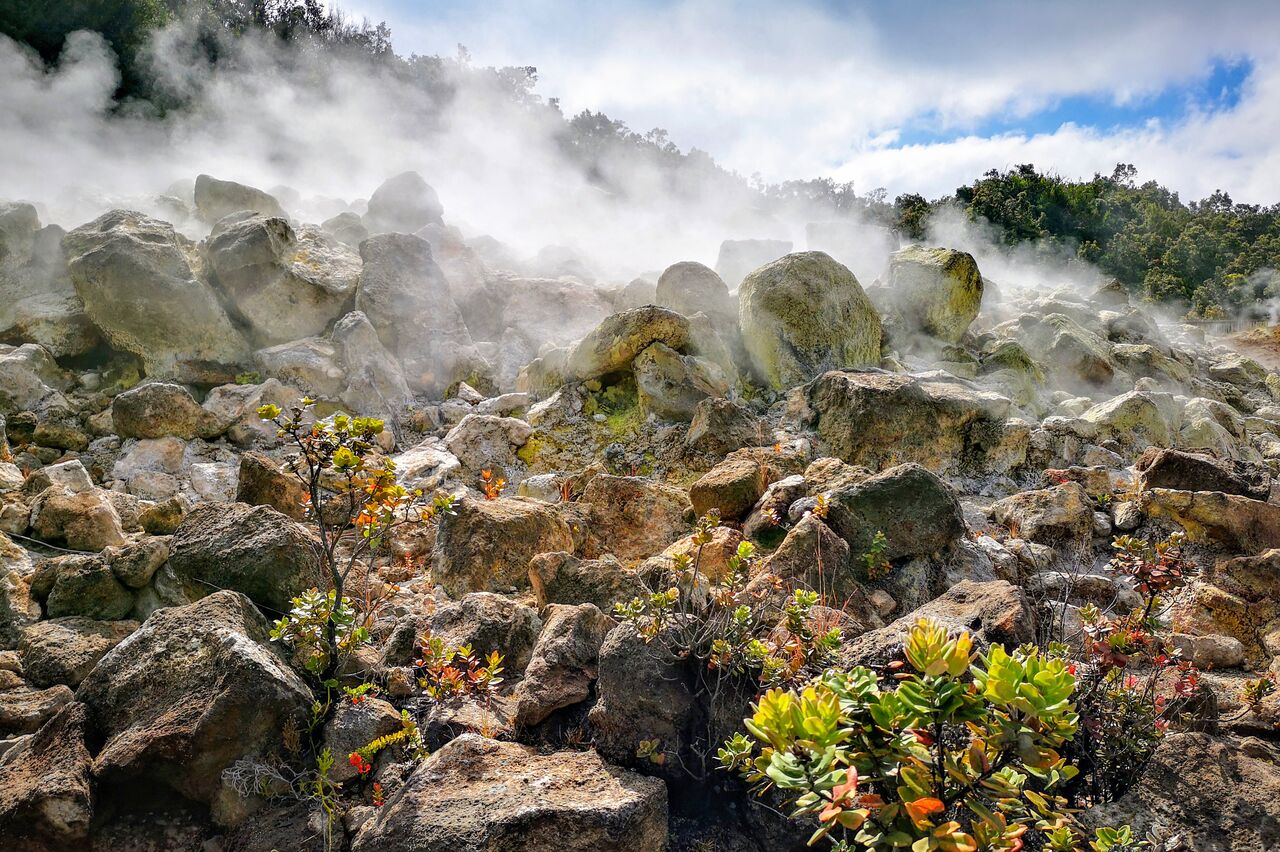
Frame the ethereal white clouds emerging from the landscape near the crater rim, offering a unique perspective often missed by those without big island volcano tour helicopter tickets.
Photograph the distinct cinder cone and surrounding volcanic landscape that serves as a historic site for major eruptions within the park boundaries.
Exploring the park provides a rare opportunity for children to witness geological forces firsthand, making a big island volcano tour helicopter ride a memorable highlight for families. While ground activities focus on crater rim trails, aerial views offer a perspective on lava flows and sulfur vents that young explorers find fascinating.
Most paved trails near the visitor center accommodate strollers, though soft volcanic surfaces beyond these paths require carriers for infants and toddlers. You can easily manage park logistics when you secure your big island volcano tour helicopter tour in advance.
Restrooms with baby-change stations are located at the Kilauea Visitor Center and various main overlooks. Keep your big island volcano tour helicopter tickets organized in a digital folder to streamline boarding at the helipad.
Young children often benefit from a morning schedule to avoid mid-day heat. We suggest following our best arrival window of 06:00–10:00 to ensure parking availability for families planning their big island volcano tour helicopter tours.
The park has limited dining, so packing sufficient snacks and water for the entire day is necessary. You will find that an aerial view of the caldera provides a great lunch-time conversation starter.
Visitors planning a big island volcano tour helicopter excursion will find limited dining options within the park boundaries, primarily centered around the historic summit area. It is recommended to secure food near the park entrance or carry supplies, as these big island volcano tour helicopter tours often depart from nearby regional airfields.
Located at the Volcano House, this venue offers caldera views and a full menu. It is an ideal spot to relax after securing your big island volcano tour helicopter tickets.
Everything you need to know for your journey
Yes, park access is open daily, though flight schedules depend on weather and operator availability.
The recommended arrival window is 06:00–10:00 to avoid mid-day crowds and ensure parking availability.
Yes, the entrance fee is 30 USD per private non-commercial vehicle to enter the park where the flight departs.
Prohibited items include tripods, large backpacks, selfie sticks, and drones for safety during your big island volcano tour helicopter flight.
Visitors often spend a full day exploring the park to complement their big island volcano tour helicopter tour.
Yes, children are allowed if they meet the operator's weight and seat belt requirements.
Policies vary by operator, but generally require 48 hours notice for refunds on big island volcano tour helicopter bookings.
Yes, cameras are permitted, though large lenses and tripods are not allowed on the flight.
Wear layers and closed-toe shoes suitable for the varied terrain and altitude changes of a big island volcano tour helicopter tour.
Yes, many landmarks like the Steam Vents and Thurston Lava Tube are short drives from the main park area.
A solidified lava lake accessible via a popular hiking trail that offers immense geological perspective.
Natural geothermal features where groundwater meets hot volcanic rock to create visible steam columns.
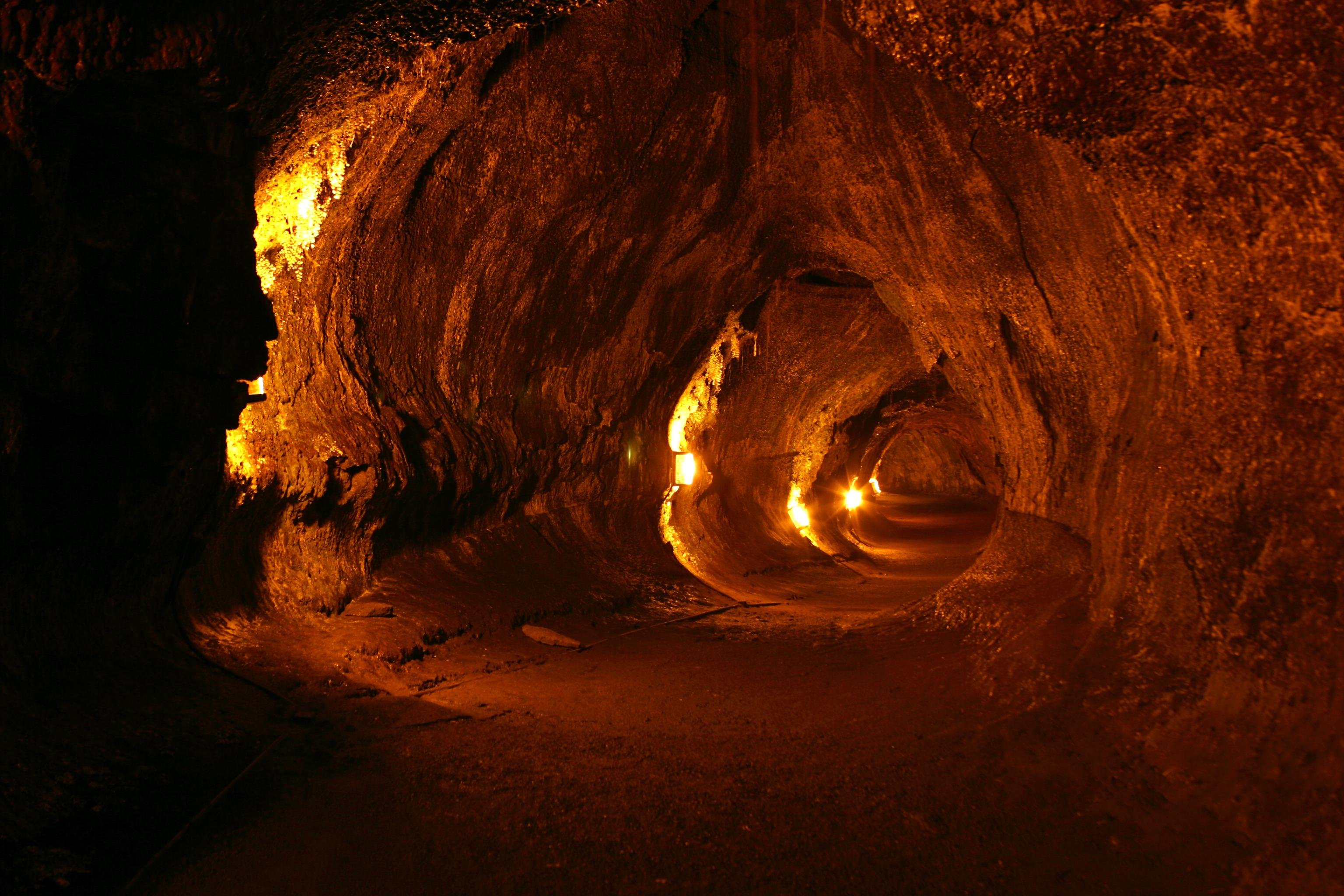
A large cavernous tunnel formed by flowing lava centuries ago and surrounded by rainforest.
Historical site providing an excellent vantage point of the caldera.
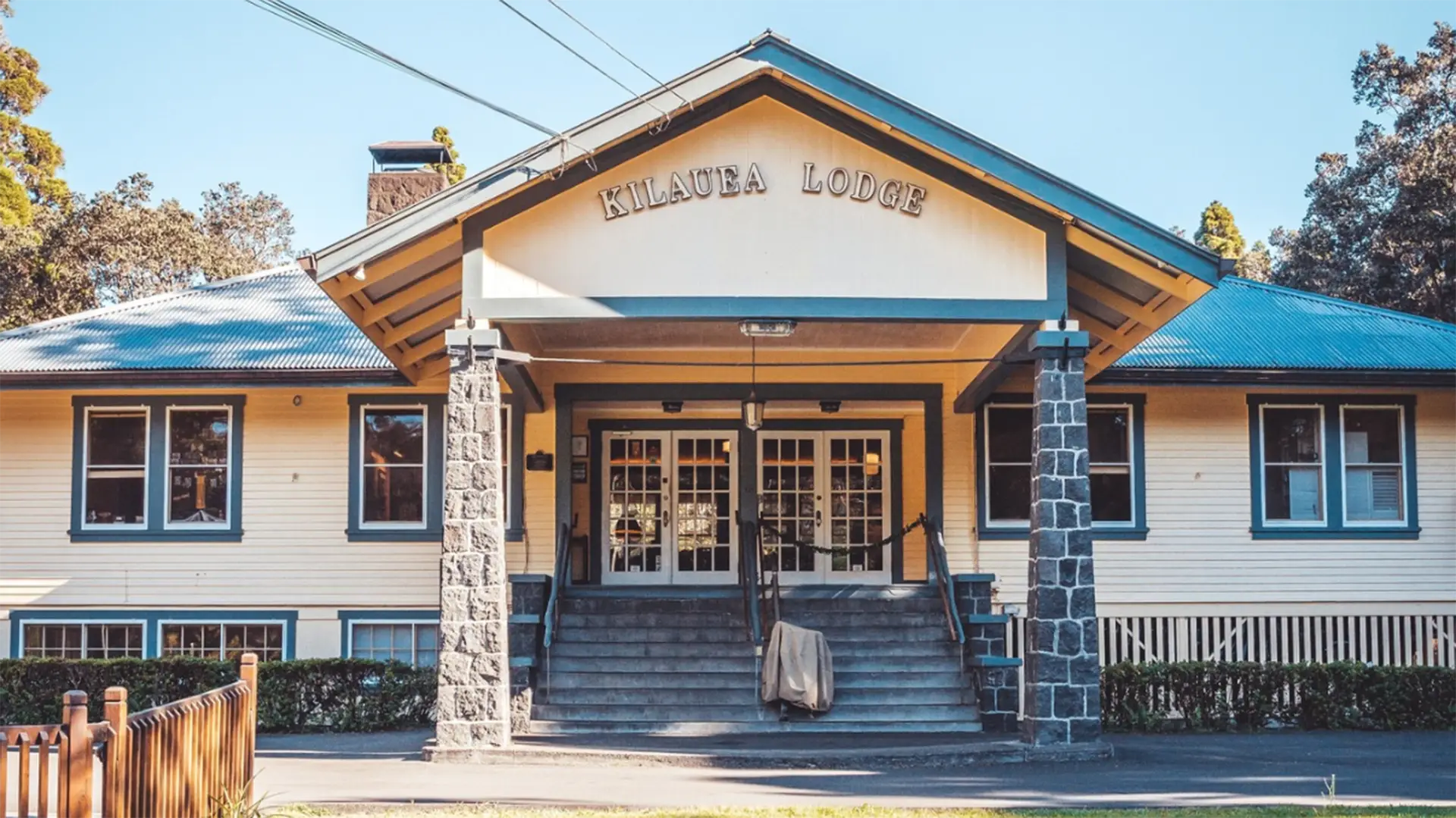
Historic lodge located inside the park boundaries with caldera views.
Charming mountain-style accommodation near the village.
Area featuring various rental cottages and guest houses.
Join thousands of happy travelers who have discovered this incredible experience
Book Your Experience Now