2 hr 30 min
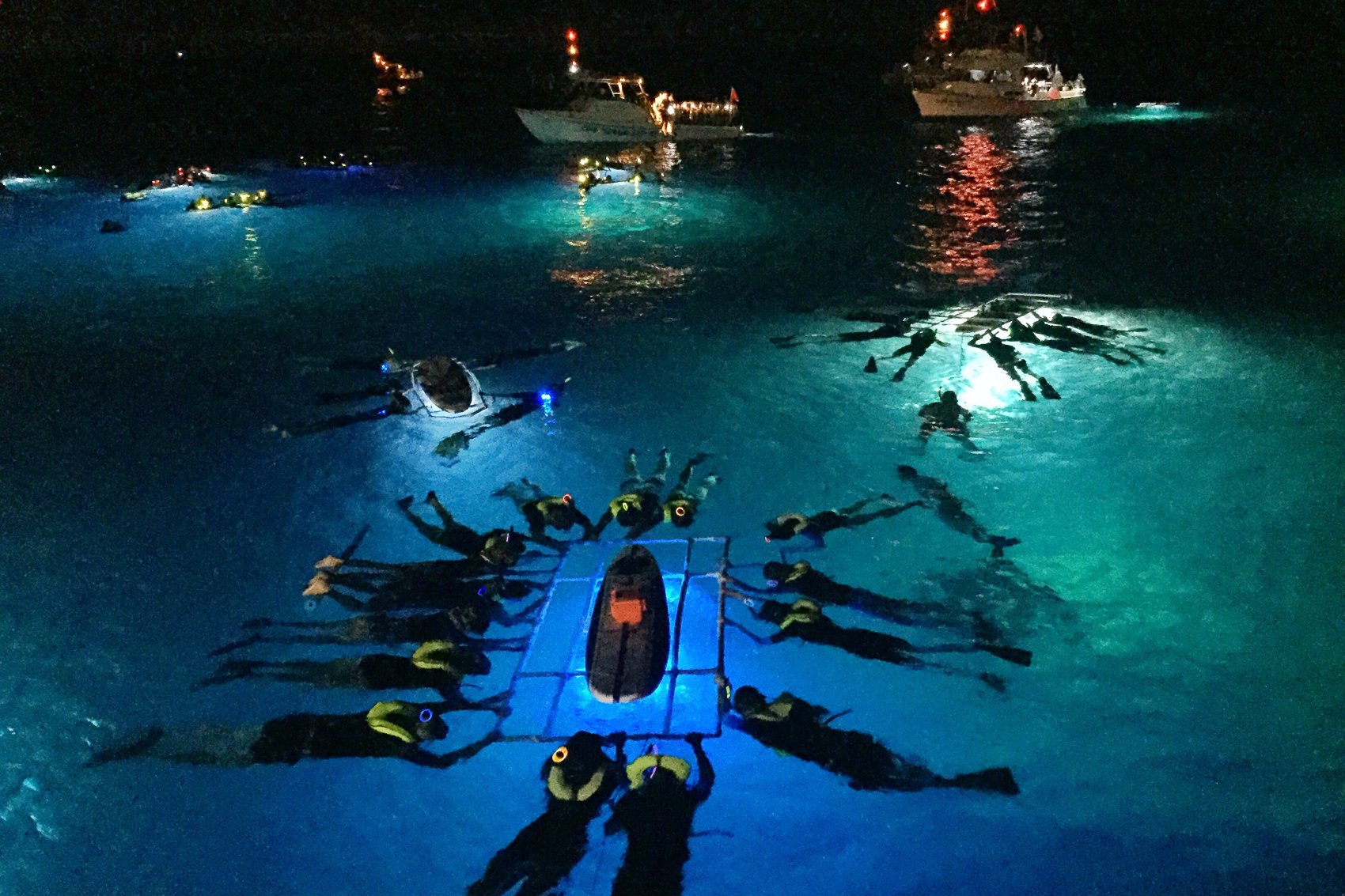
Night Manta Ray Snorkel Adventure
- Entry ticket
- Mobile voucher
- Valid same day
- Free cancellation
Big Island Volcano Tour From Kona — Guided Expeditions to Kilauea
Witness active craters and lava landscapes, guided departures from Kona's west coast
Compare fares, pick the fit — all bookings are mobile-voucher and eligible for free cancellation where shown.
2 hr 30 min
11 hr
12 hr
Choosing the right entry method for your big island volcano tour from kona depends on whether you prefer the autonomy of a self-drive adventure or the convenience of a professionally guided excursion. Each option grants access to the diverse volcanic landscapes of Hawaii Volcanoes National Park.
|
Top pick Private Vehicle Pass Standard Admission (Self-Drive) |
Guided Volcano Tour Full-Service Experience | |
|---|---|---|
| Price | 30 USD per vehicle | Varies by operator |
| Validity | Seven consecutive days | Single-day excursion |
| Access Level | Full park exploration | Curated itinerary coverage |
| Best Arrival Window | 06:00–10:00 | Per tour schedule |
| Primary Benefit | Flexible schedule for independent visitors | Transportation and local interpretation provided |
| See tickets & prices |
Verdict: For most visitors seeking flexibility, the self-drive big island volcano tour from kona tickets provide the best value and independence for exploring the park at your own pace.
Worth it for geology enthusiasts and adventurers
A big island volcano tour from kona delivers access to one of Earth's most active volcanic landscapes, with Kīlauea's ongoing activity visible through steam vents, sulfur banks, and the dramatic Halemaʻumaʻu crater. The drive from Kona spans roughly 2.5 hours each way across diverse terrain—from coastal lava fields to upland forests—making guided tours a practical choice that bundle transportation, narration, and strategic stops at Thurston Lava Tube and the volcanic caldera rim. Park entrance is $30 per vehicle for seven days, but organized volcano tours from Kona typically range from half-day excursions to full-day experiences that add waterfalls, coffee farm visits, or stargazing components. The value equation tilts positive if you want expert geological interpretation and prefer not to navigate unfamiliar roads in the dark after sunset viewing. For travelers prioritizing convenience and educational depth over independent exploration, volcano tour packages justify their cost through curated itineraries that maximize limited time on the island while covering significant ground across the volcanic zone.
Bottom line: If witnessing active volcanism and learning from knowledgeable guides outweighs the time investment, big island volcano tour from kona options deliver genuine geological spectacle worth the commitment.
They complement each other; most visitors who do both call the Manta Ray Night Snorkel the more thrilling, intimate marine experience while the big island volcano tour from kona offers a more expansive, geological journey.
|
Top pick Volcano Park Tour |
Manta Ray Snorkel | |
|---|---|---|
| Primary focus | Volcanic landscapes and history | |
| Typical duration | 9–12 hours | |
| Ideal time | 06:00–10:00 (morning) | |
| Activity intensity | Moderate walking | |
| Best for | Geology enthusiasts | |
| Cost range | 150–300 USD (summer) | |
| See tickets & prices |
Verdict: If you have time for only one big island volcano tour from kona tickets purchase, choose the park for its educational depth, but prioritize the manta ray snorkel if you prefer a high-energy aquatic memory.
Hand-picked experiences loved by thousands of travelers
7 hours
Free Cancellation
Seven-hour guided expedition from Kilauea's steaming craters to black sand shores and cascading waterfalls
5 hours
Free Cancellation
Journey from Hilo's historic sites to one of Earth's most active volcanic landscapes on this enriching 5-hour excursion
7 hours
Free Cancellation
Seven-hour journey from Hilo exploring active volcanic craters, lava tubes, and black sand beaches
7 hours
Free Cancellation
Seven-hour journey through volcanic landscapes, rainforest waterfalls, and a tri-color beach with lunch included
12 hours
Free Cancellation
A full-day adventure around Hawaii's Big Island with coffee tasting, volcanoes, and black sand beaches.
6 hours 30 minutes
Free Cancellation
Trek through rainforests, volcanic craters, and lava tubes on this full-day exploration of one of Earth's most active volcanic landscapes
6 hours
Free Cancellation
Explore Kilauea's volcanic landscapes, stunning waterfalls, and Hawaii's famous black sand shores
8 hours
Free Cancellation
Explore Hawaii's volcanic wonders, black sand shores, and coffee farms in a luxury SUV with your own driver
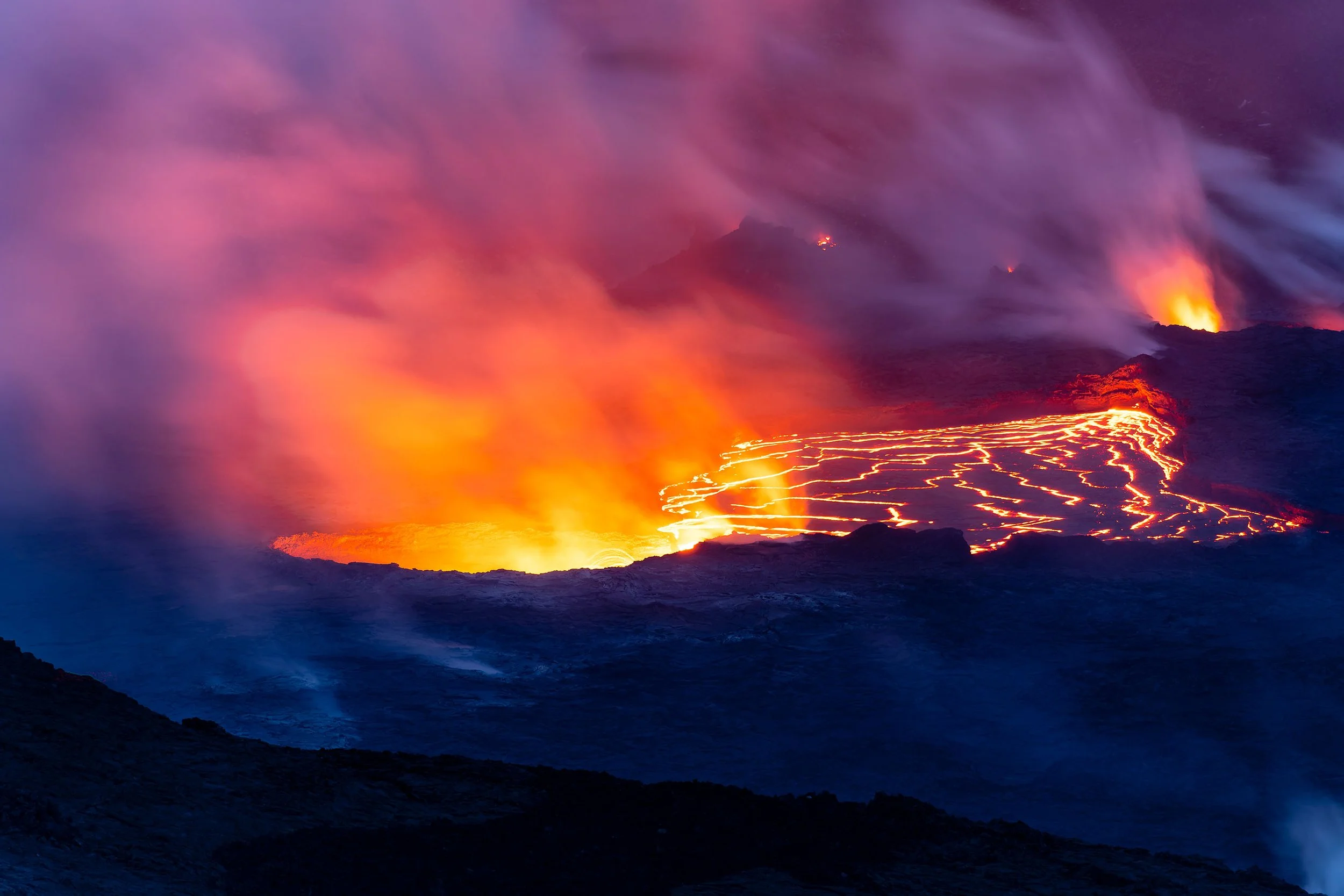
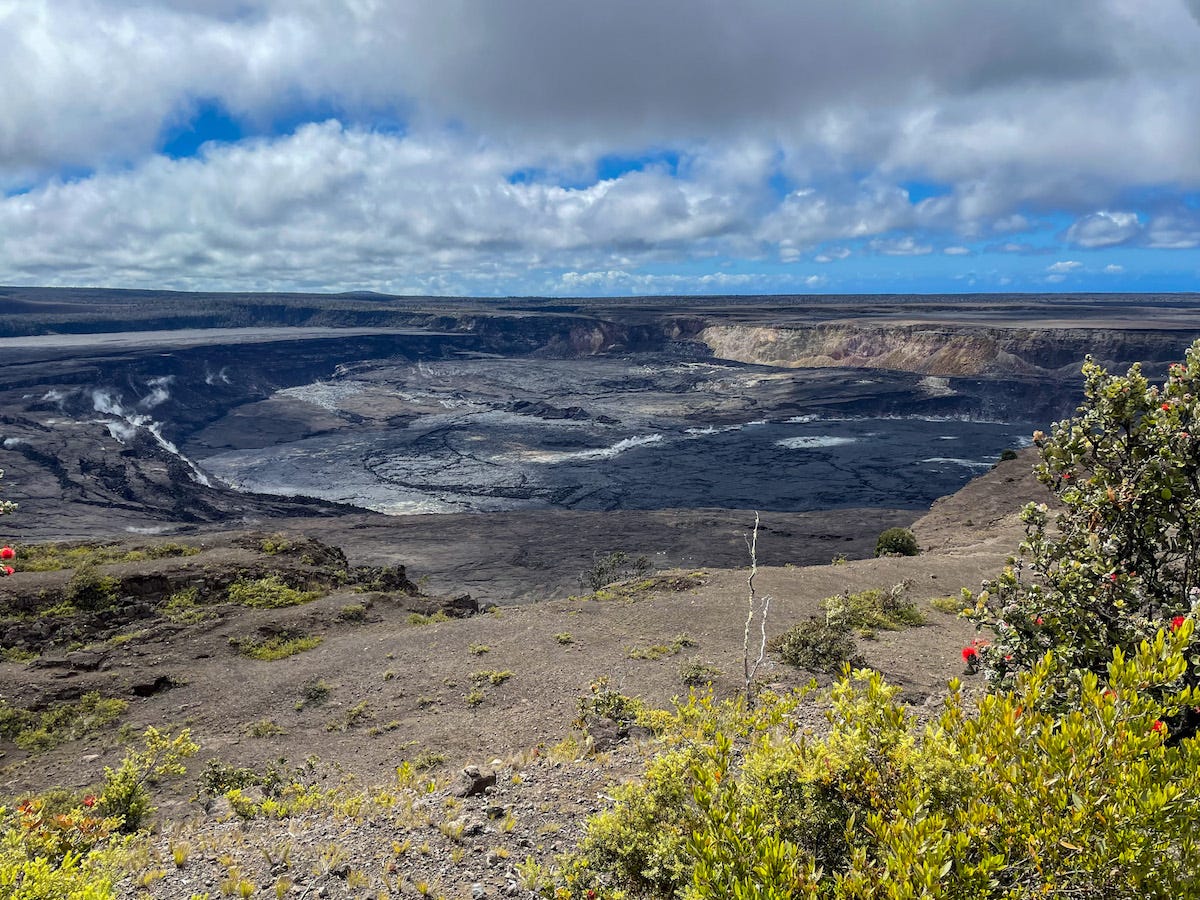
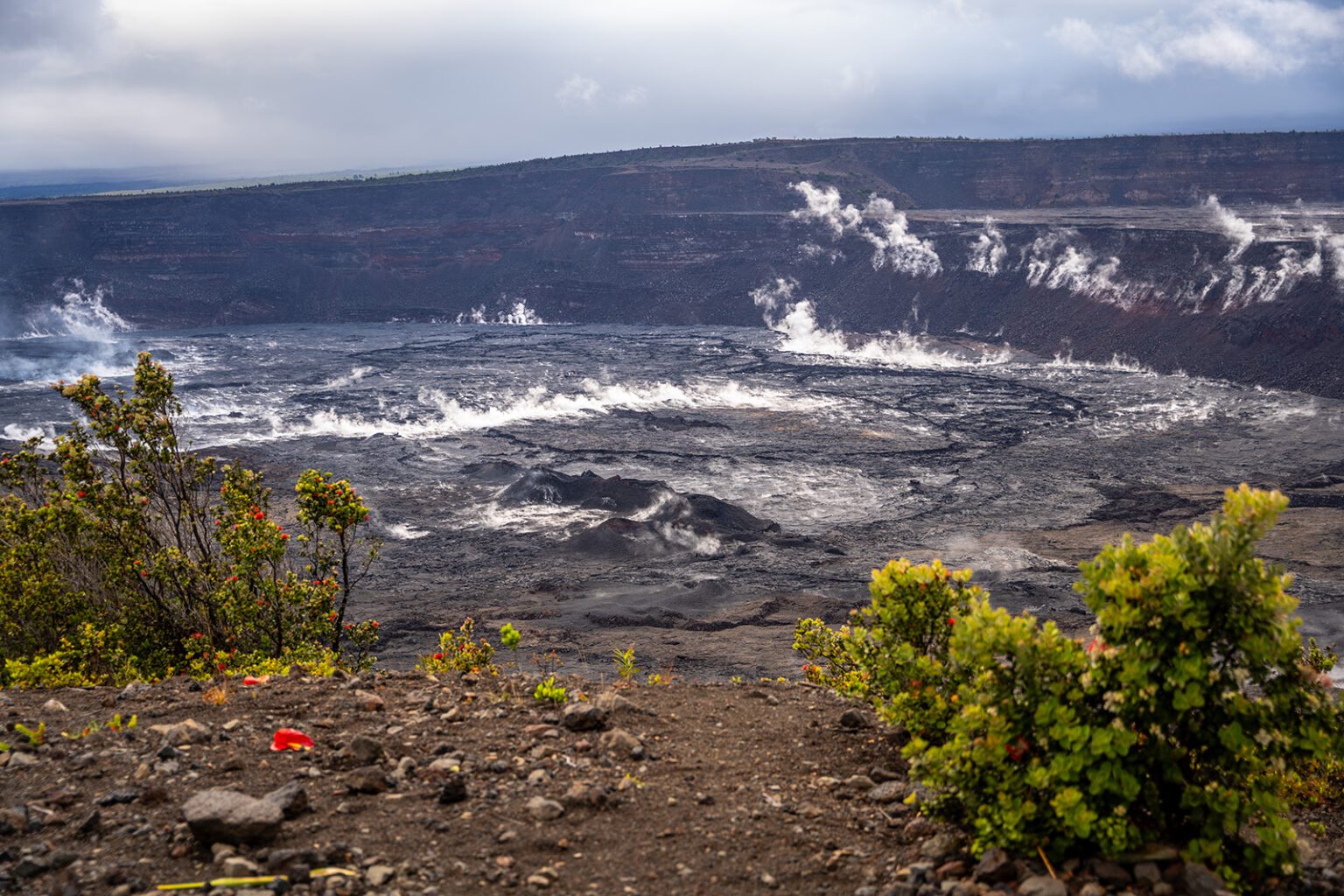
The summit crater is the heart of the park and home to frequent lava activity within Hawaii Volcanoes National Park. It is central to many Hawaiian cultural legends about Pele.
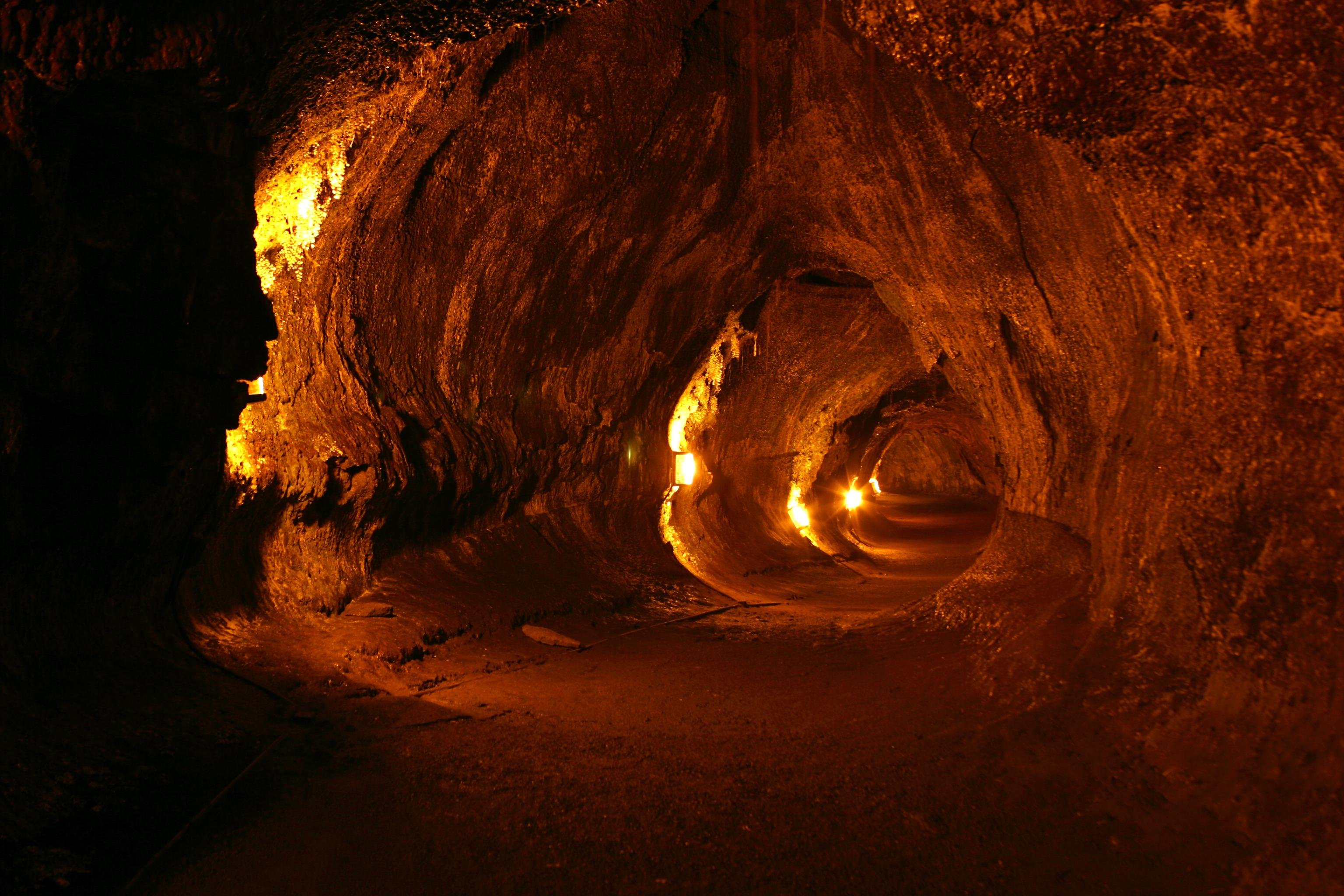
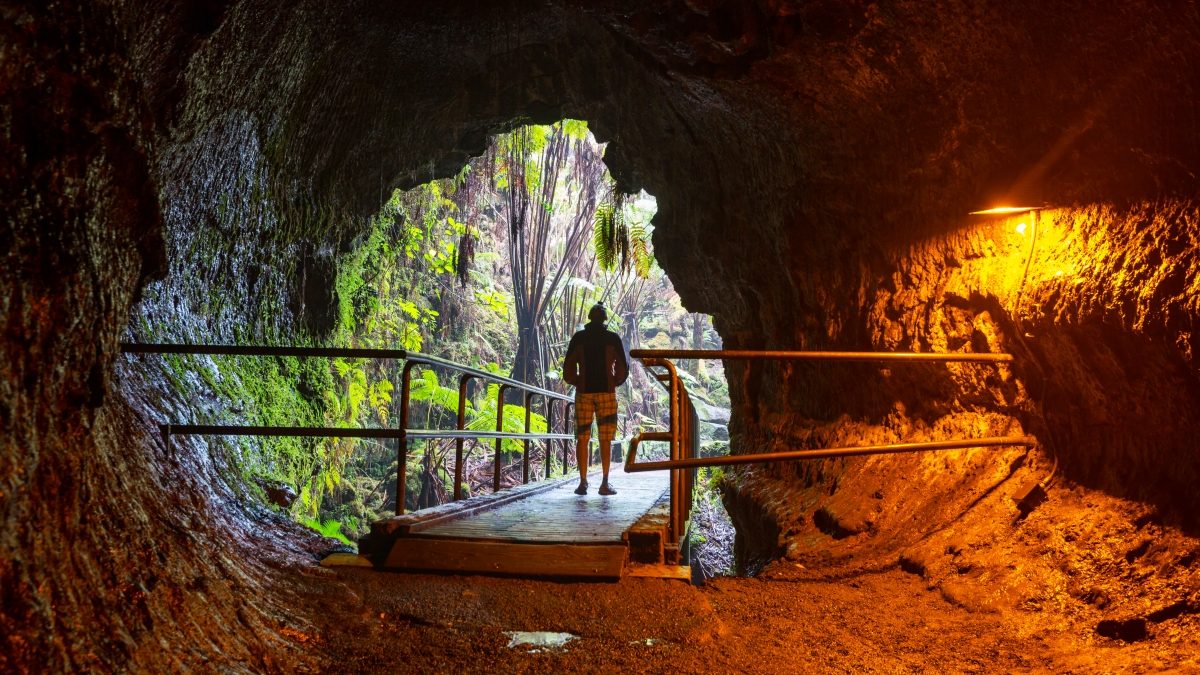
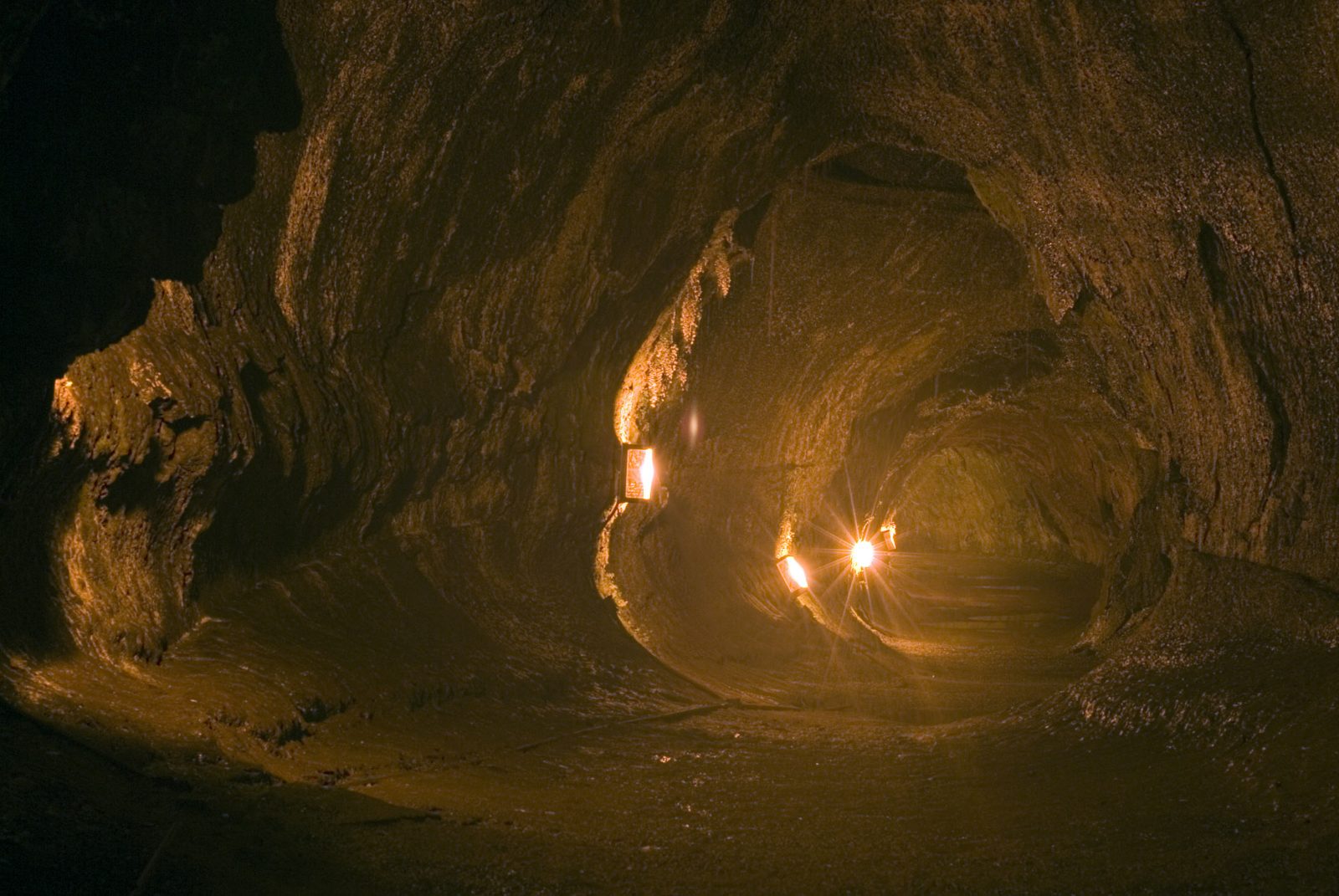
This massive underground conduit formed as a river of lava, leaving a lush fern-covered walkway. It is a 0.5-mile hike through ancient native rainforest.
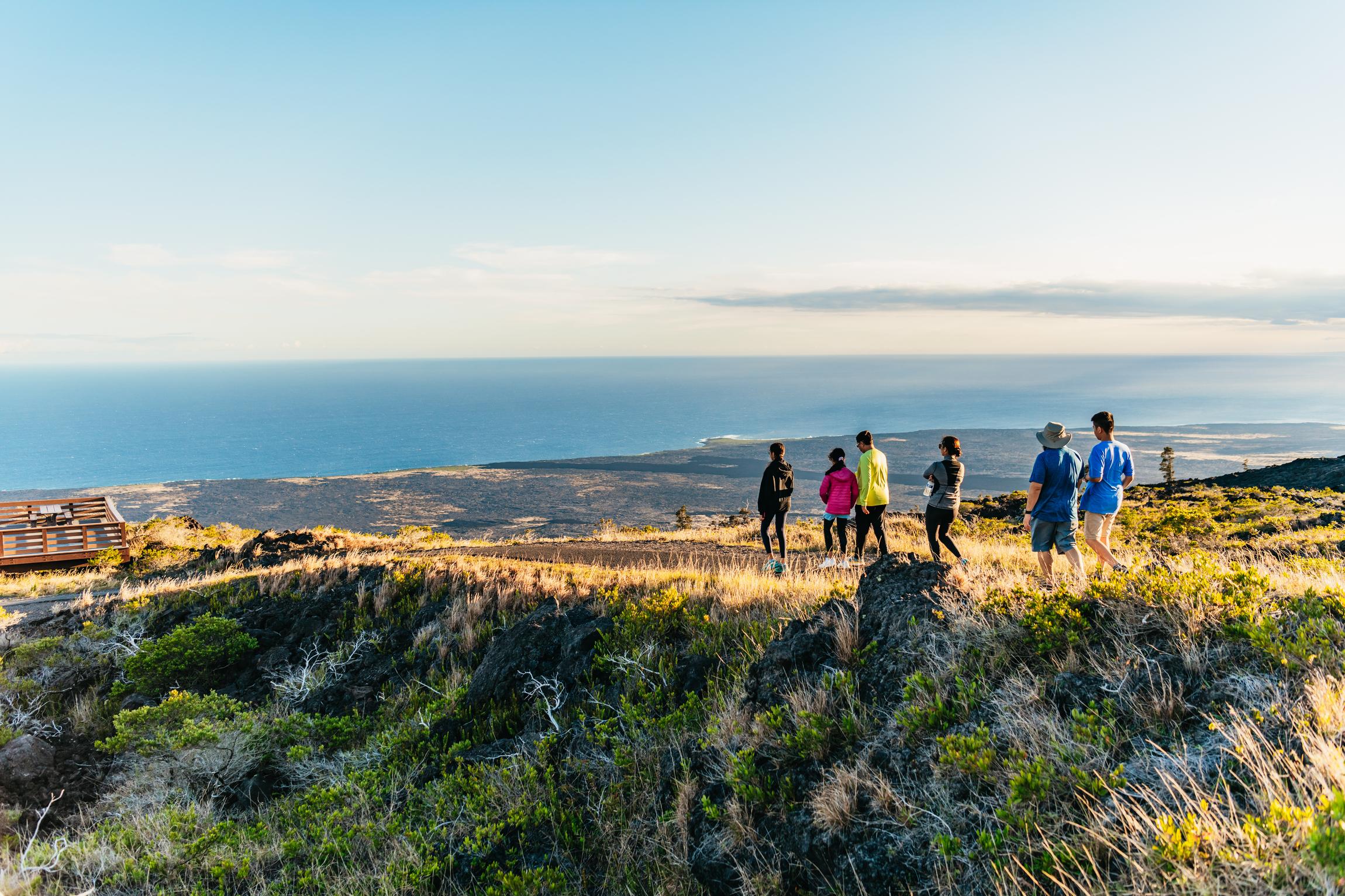
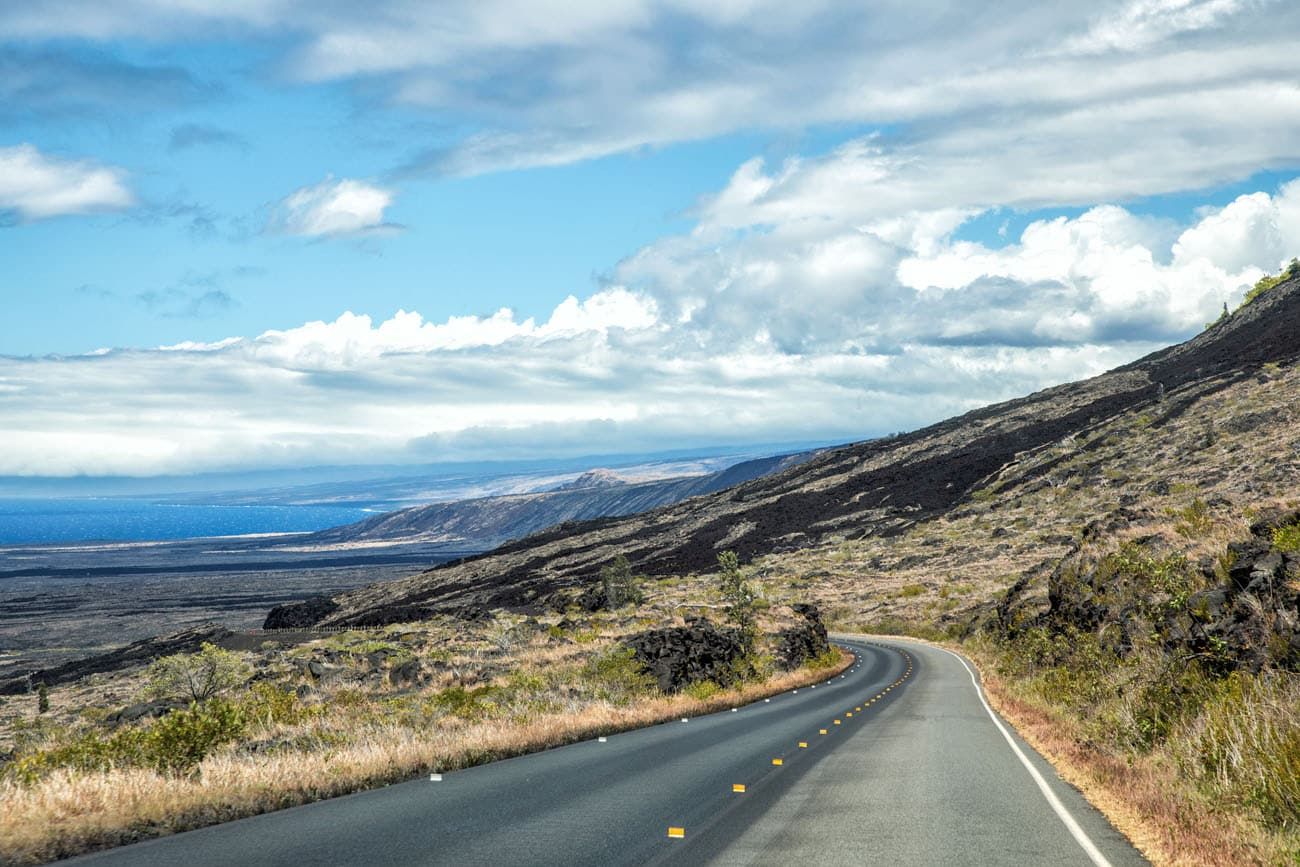
A 19-mile scenic drive descending through diverse volcanic landscapes toward the Pacific Ocean coastline. You will see several historic lava flow fields along the route.
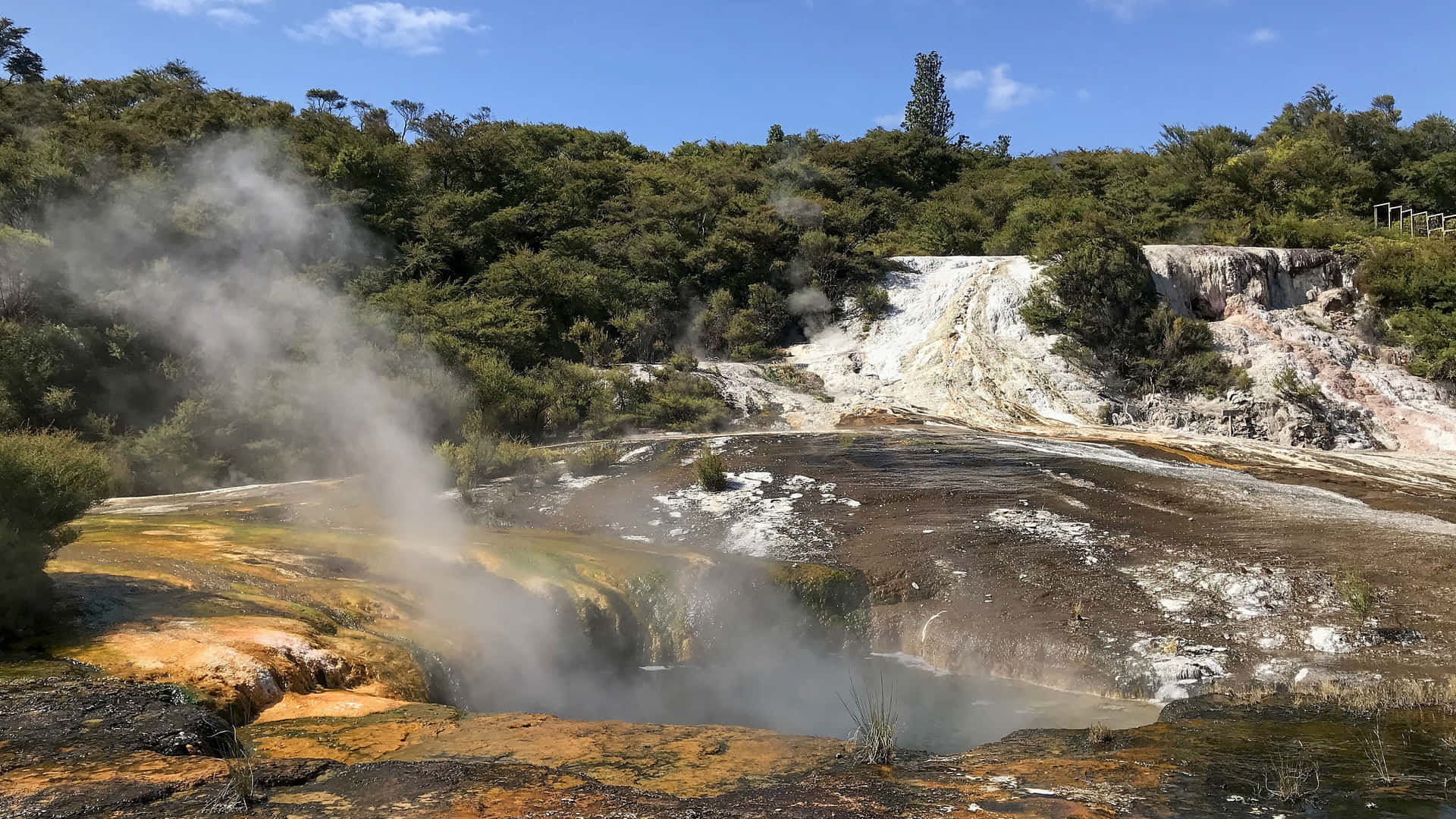
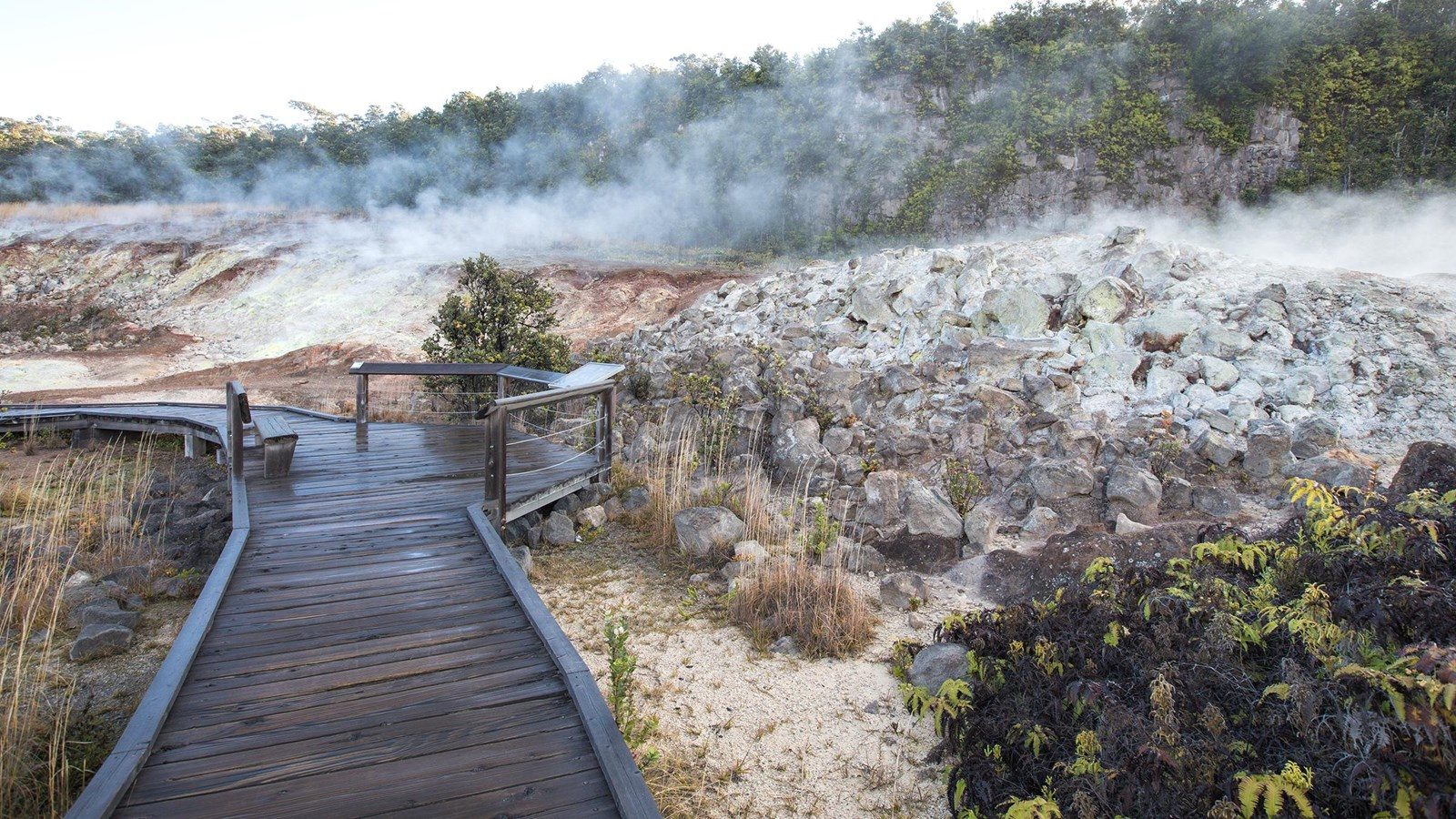
Natural geothermal features where groundwater hits hot volcanic rock to release consistent plumes. This area offers a safe glimpse into the park's heat.
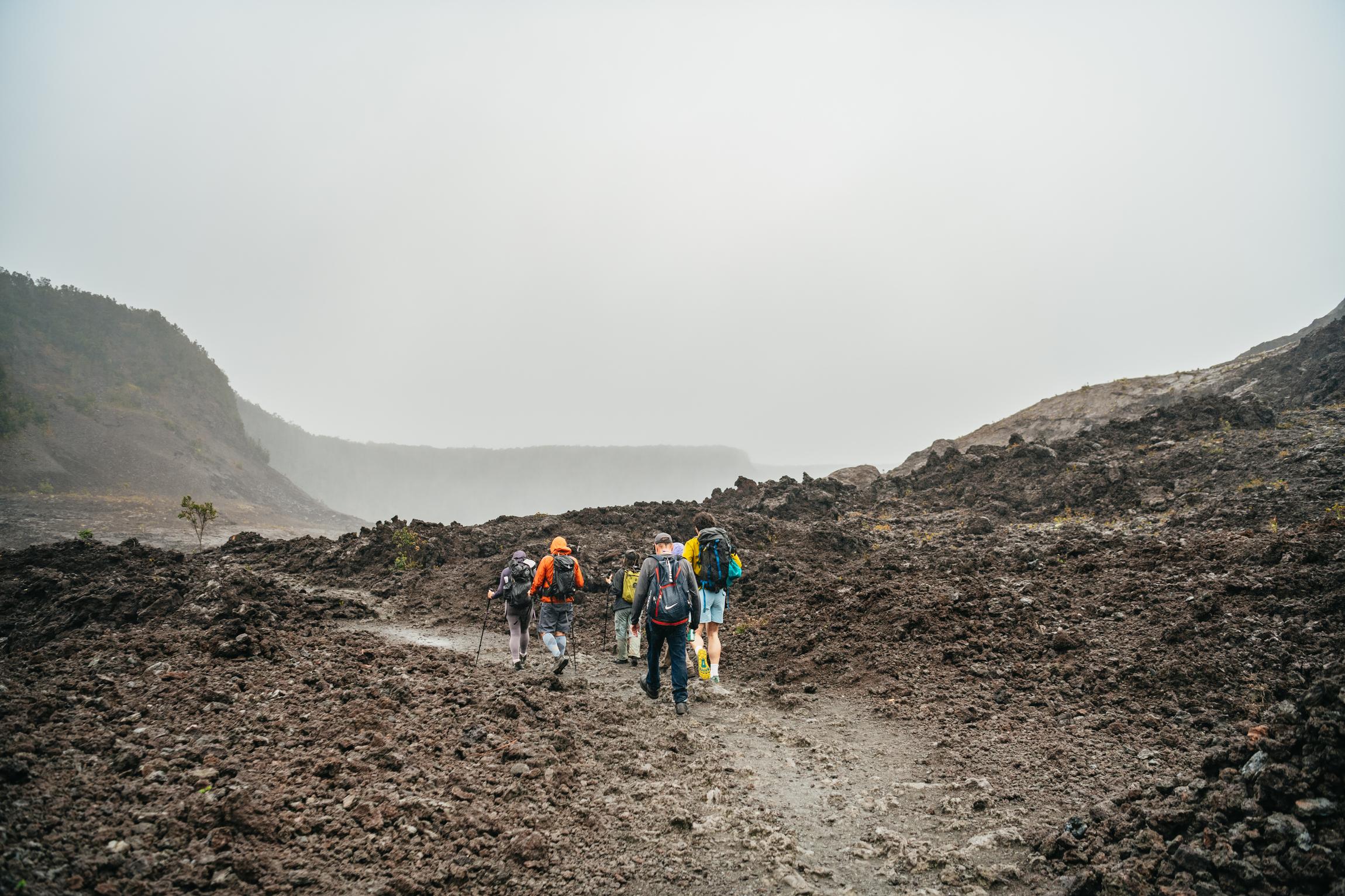
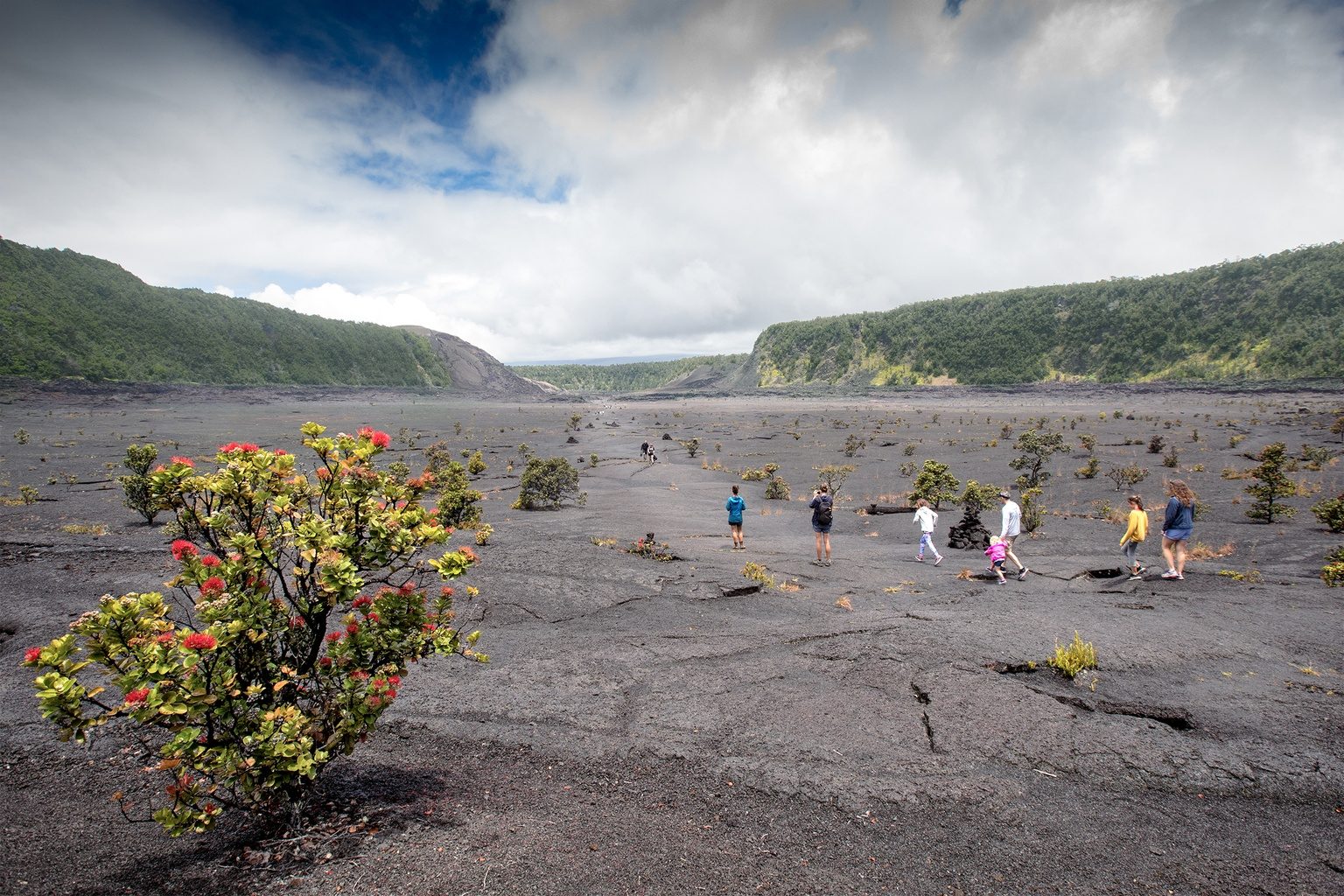
A 3.3-mile hike that descends across a solidified crater floor surrounded by towering walls of hardened basalt. The trail highlights the massive scale of past eruptions.
You depart Kona before dawn, crossing the island's spine as the sun lifts over Mauna Kea. Your guide points out the transition from barren lava fields to ohia forest as you climb into the park's rainforest zone.
You enter through the main gate at Hawaii Volcanoes National Park, where the scent of sulfur announces proximity to the summit. Your first stop is the Kilauea Visitor Center, where seismographs trace real-time tremors and a relief map shows the caldera's depth.
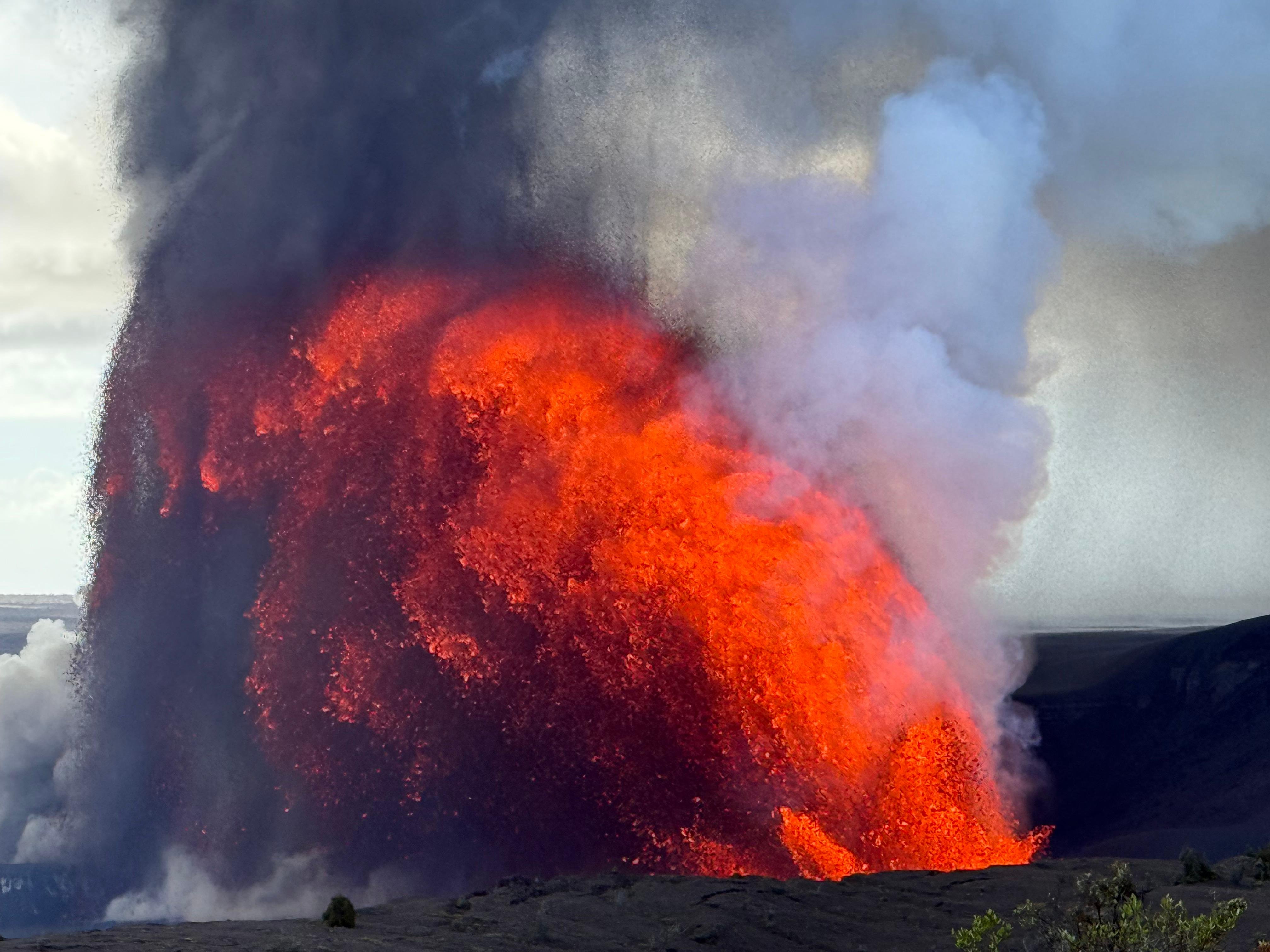
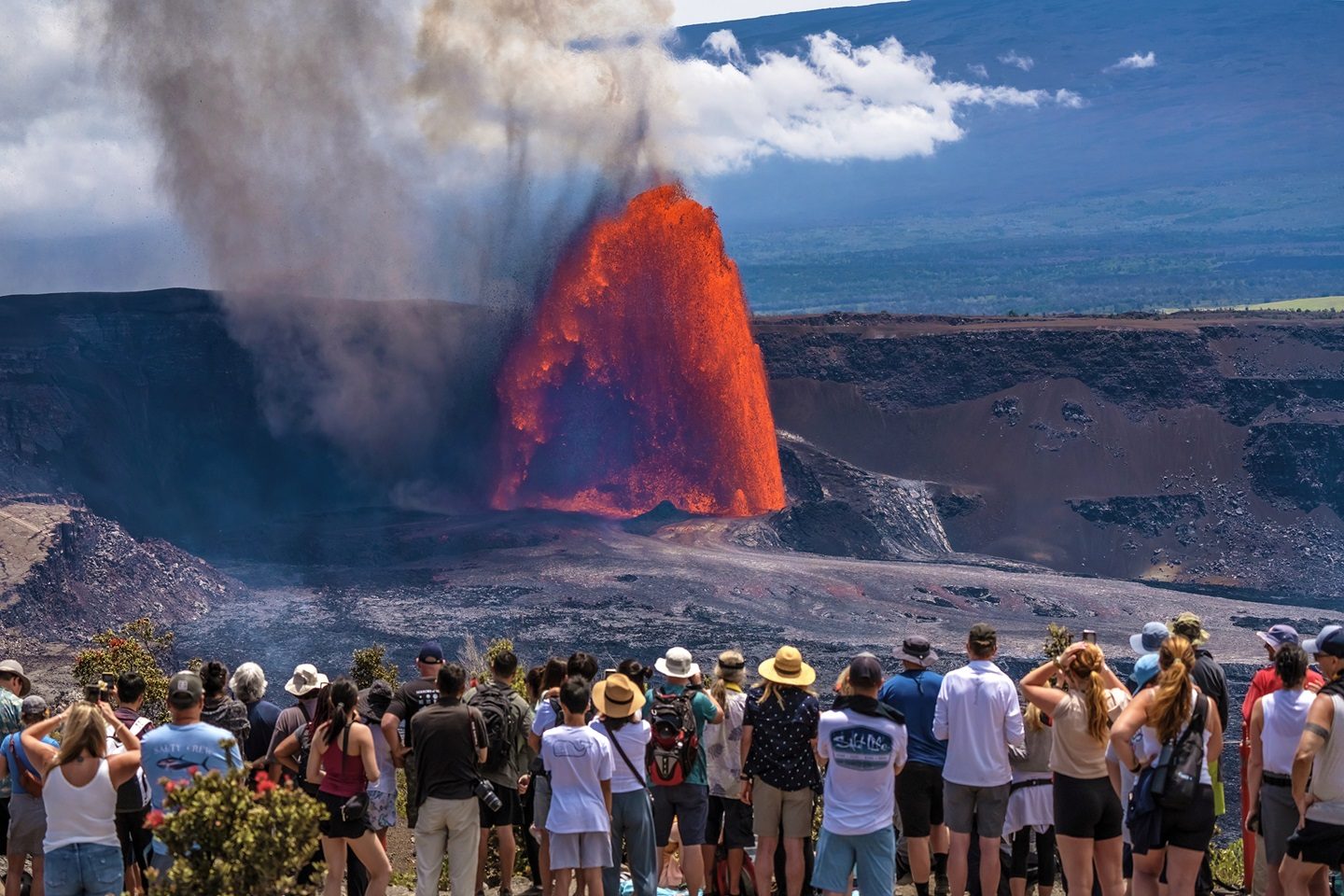
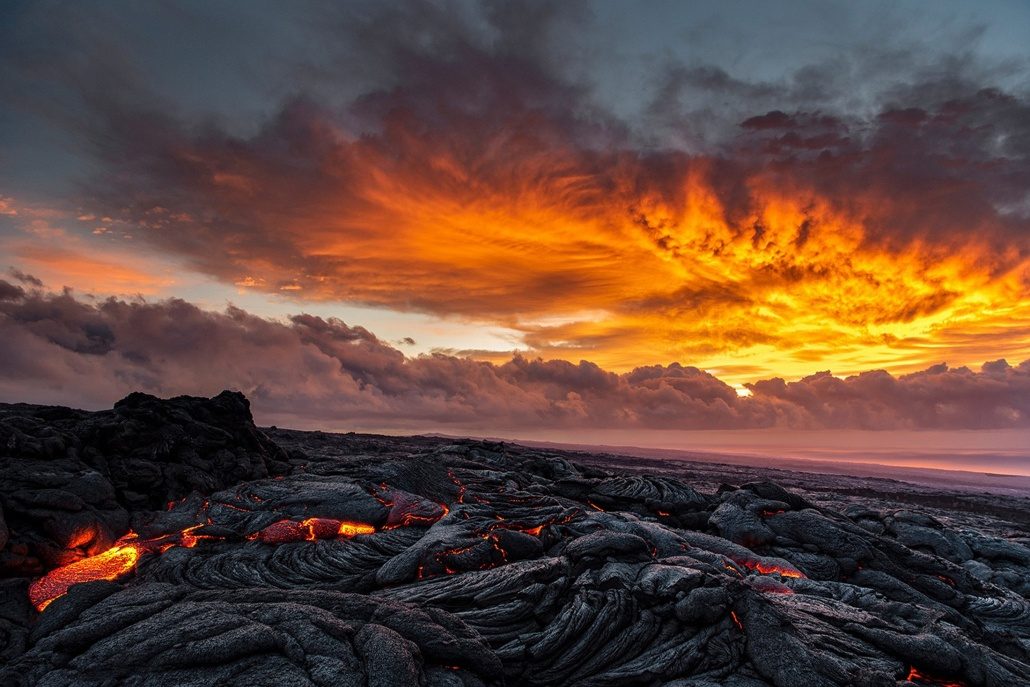
You walk the Crater Rim Trail, pausing at overlooks where steam rises from fissures in hardened basalt. At Halema'uma'u, you peer into the caldera and scan for the glow of the lava lake 600 feet below. If eruption activity is high, you see molten orange pooling at the crater floor. Your guide explains the 2018 collapse, pointing to the scarp where the rim dropped 1,500 feet. You descend Chain of Craters Road, stopping where ropy pahoehoe preserves the texture of flowing lava. At the coast, black sand meets turquoise surf, and you walk across the 1969 flow that buried the original road. You return at dusk, pausing at 4,000 feet for stargazing, Mauna Kea's domes silhouetted to the north.
All the details about your upcoming adventure in one place
Kilauea, one of Earth's most active volcanoes, has erupted continuously for centuries, reshaping the Big Island's southeastern flank with every flow.
Hawaii Volcanoes National Park, established in 1916, protects 333,308 acres of volcanic terrain where magma still moves beneath your feet and sulfur vents exhale into trade winds. The summit caldera, collapsed in 2018 after a seismic sequence drained the lava lake, now holds Halema'uma'u Crater — a cauldron that refilled with molten rock in 2020 and glows at night when conditions allow. The park's elevation spans sea level to 13,680 feet at Mauna Loa's summit, creating climate zones from coastal desert to subalpine shrubland within a single drive.
Big island volcano tour from kona departures cross 96 miles of the island's midsection, climbing from Kona's dry leeward coast through ranch country and coffee belt before reaching the park's rainforest threshold. The journey takes two to three hours depending on route and stops, with most operators integrating waterfalls, orchid farms, or black sand beaches into the return leg. Guided volcano tours from the west coast solve the logistics: park entry, narration from geologist-trained guides, and coordination with real-time eruption updates from the Hawaiian Volcano Observatory, which monitors seismic activity and gas emissions daily. Solo drivers often miss the interpretive depth — the difference between pahoehoe and a'a lava, the role of Pele in Hawaiian cosmology, the 1959 Kilauea Iki eruption that fountained 1,900 feet into the sky.
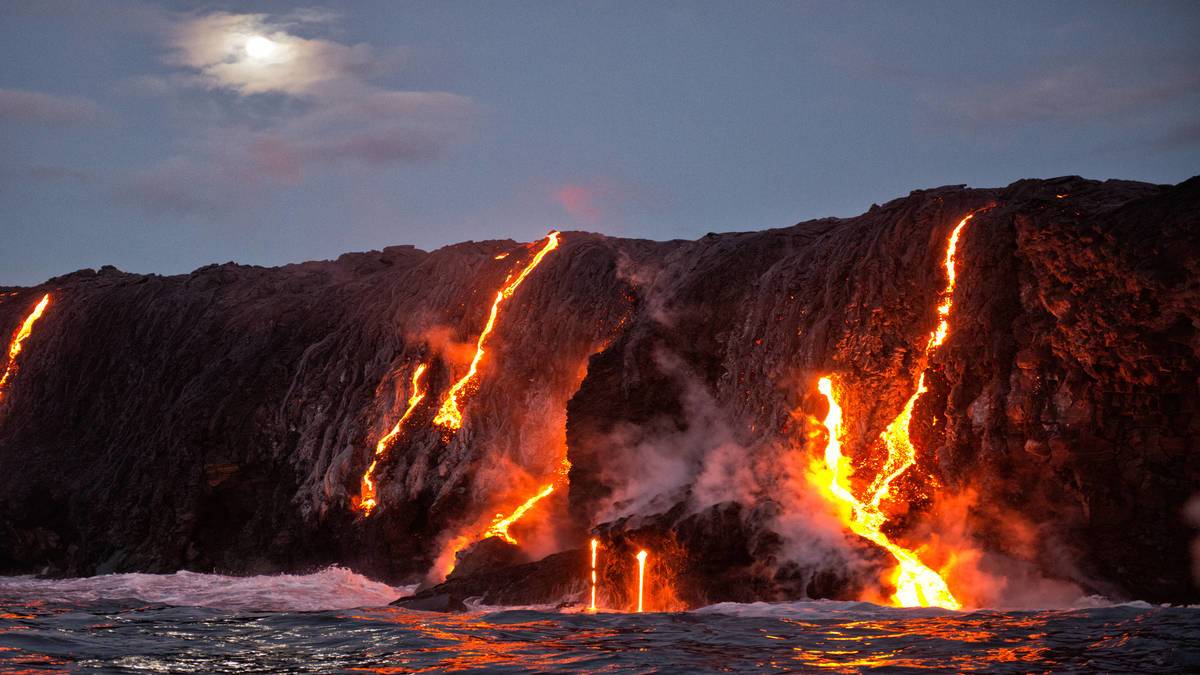
Inside the park, Crater Rim Drive arcs past steam vents, the Jaggar Museum overlook site (closed since 2018 but viewable from Chain of Craters Road), and the Thurston Lava Tube, a 500-year-old tunnel where fern roots dangle from basalt ceilings. Chain of Craters Road descends 3,700 feet over 19 miles, crossing lava fields from eruptions in 1969, 1974, and 2018, ending where molten rock met the Pacific and added 875 acres of new coastline. Evening big island volcano tour from kona itineraries time arrival for sunset glow on the caldera and stargazing at 4,000 feet, where Mauna Kea's summit observatories dot the northern horizon. The park remains open 24 hours, though ranger programs and the Kilauea Visitor Center operate daylight schedules. Volcanic activity fluctuates — the current Halema'uma'u lava lake rose 350 feet between December 2020 and May 2021, then paused, then resumed in September 2021. Real-time webcams and USGS alerts inform whether active lava is visible during your visit.

The summit caldera collapsed in 2018 after a seismic sequence drained the lava lake, then refilled with molten rock in 2020.
Wear sturdy hiking shoes and dress in layers. Conditions change rapidly between the cool 4,000-foot summit and hot coastal areas.
No bag checks, but visitors are responsible for their gear. Leave valuables at your accommodation before starting a big island volcano tour from kona.
Photography is permitted. Capture the landscape safely from designated paths; stay behind barriers to avoid hazardous volcanic ground.
The park is family-friendly. Use the Kīlauea Military Camp facilities for breaks and always keep children within sight near steaming vents.
Many summit overlooks are paved and accessible. Some volcanic trails have uneven terrain, making assistance necessary for those with limited mobility.
Pack sufficient water and food, as dining options are limited. Do not dispose of trash in the wild; practice Leave No Trace principles.
Operating Hours
00:00–23:59
Address
1 Crater Rim Drive, Hawaii National Park, HI 96718
Accessibility
Wheelchair-accessible paths and visitor areas
Best arrival window
06:00–10:00 — Avoid mid-day heat and large tour group crowds.
Baggage
No secure lockers; carry your belongings
Navigation
Use official park maps for remote trailheads
Car · 2.5 hours from Kona · Parking fee included in park pass.
Drive via Highway 11 for the most direct route to the park entrance.
Passes are non-refundable and non-transferable. Entrance fee is 30 USD per private vehicle, valid for seven days.
Recommended time
6-8 hours
A big island volcano tour from kona requires significant travel time, making a full day necessary to explore the Kilauea caldera and solidified lava fields. To ensure you experience the park efficiently, prioritize a visit between 06:00–10:00 to avoid mid-day heat and large tour group crowds. Those booking big island volcano tour from kona tours often find that staying through the late afternoon provides better opportunities to view the steam vents and geologic formations. Securing your big island volcano tour from kona tickets early helps manage expectations for this extensive outing, allowing for a structured exploration of the island's primary landscape features.
Crowd levels through the day
Weather · crowds · average price — dots go green to amber to red as each metric rises.
March–May offers mild weather and fewer crowds before summer peaks.
June–August is warm but sees higher visitor numbers on a big island volcano tour from kona.
September–November provides comfortable hiking temps and quieter trail conditions.
December–February is peak season with potential for rain and high visitor volume.
Arriving between 06:00–10:00 ensures parking access for a big island volcano tour from kona.
The glow from the crater is best viewed after dark when the park is less crowded.
Air quality can change quickly; visit the park website before your big island volcano tour from kona.
Temperatures drop significantly at the summit elevation.
Entrance fee covers your vehicle for seven days, ideal for a multi-day big island volcano tour from kona.
Stay on marked trails to avoid unstable lava rock and steam vents.
1 Crater Rim Drive, Hawaii National Park, HI 96718
Primary meeting point for many big island volcano tour from kona tours
Get directionsCongress established Hawaii Volcanoes National Park on August 1, 1916, making it the eleventh national park in the United States and the first in a territory. The park initially protected 116 square miles surrounding Kīlauea and Mauna Loa, two of the planet's most active volcanoes. Thomas Jaggar founded the Hawaiian Volcano Observatory in 1912 at Kīlauea's summit, creating the first permanent volcanology research station in the nation. His instruments recorded continuous eruptive activity that would inform modern understanding of shield volcano behavior. Native Hawaiians recognized Kīlauea as the sacred home of Pele, the volcano deity, long before Western contact. Oral traditions document eruptions dating back centuries, with the 1790 explosion killing part of Chief Keoua's army as footprints preserved in ash still testify today. The 1924 Halemaʻumaʻu explosions ejected blocks weighing tons and created a crater 1,300 feet deep. Jaggar's team documented each phase from the rim. The 1969 Mauna Ulu eruption lasted five years, adding 200 acres of new land and burying sections of Chain of Craters Road under 300 feet of basalt. UNESCO designated the park a World Heritage Site in 1987, recognizing both its geological significance and its Native Hawaiian cultural landscape. The Puʻuhonua o Hōnaunau petroglyphs and coastal temple platforms within park boundaries preserve centuries of habitation. The 2018 Lower East Rift Zone eruption collapsed Halemaʻumaʻu summit crater, doubling its volume and draining the lava lake that had drawn visitors since 2008. The event reshaped interpretive programs and necessitated infrastructure reconstruction that continued through 2020. Today, big island volcano tour from kona departures carry over 1.3 million annual visitors to witness geology in motion, where steam vents and fresh lava fields demonstrate processes that built the Hawaiian archipelago over 70 million years.
Thomas Jaggar establishes Hawaiian Volcano Observatory on Kīlauea's rim, launching systematic eruption monitoring.
Congress designates Hawaii Volcanoes National Park, protecting 116 square miles of active volcanic terrain.
Halemaʻumaʻu undergoes explosive eruptions, ejecting ton-weight blocks and deepening the crater to 1,300 feet.
Mauna Ulu eruption buries Chain of Craters Road and adds 200 acres of new coastline.
UNESCO inscribes the park as a World Heritage Site for geological and cultural significance.
Halemaʻumaʻu summit lava lake reappears after 26-year absence, becoming major visitor attraction.
Lower East Rift Zone eruption collapses summit crater and forces months-long park closure for safety.
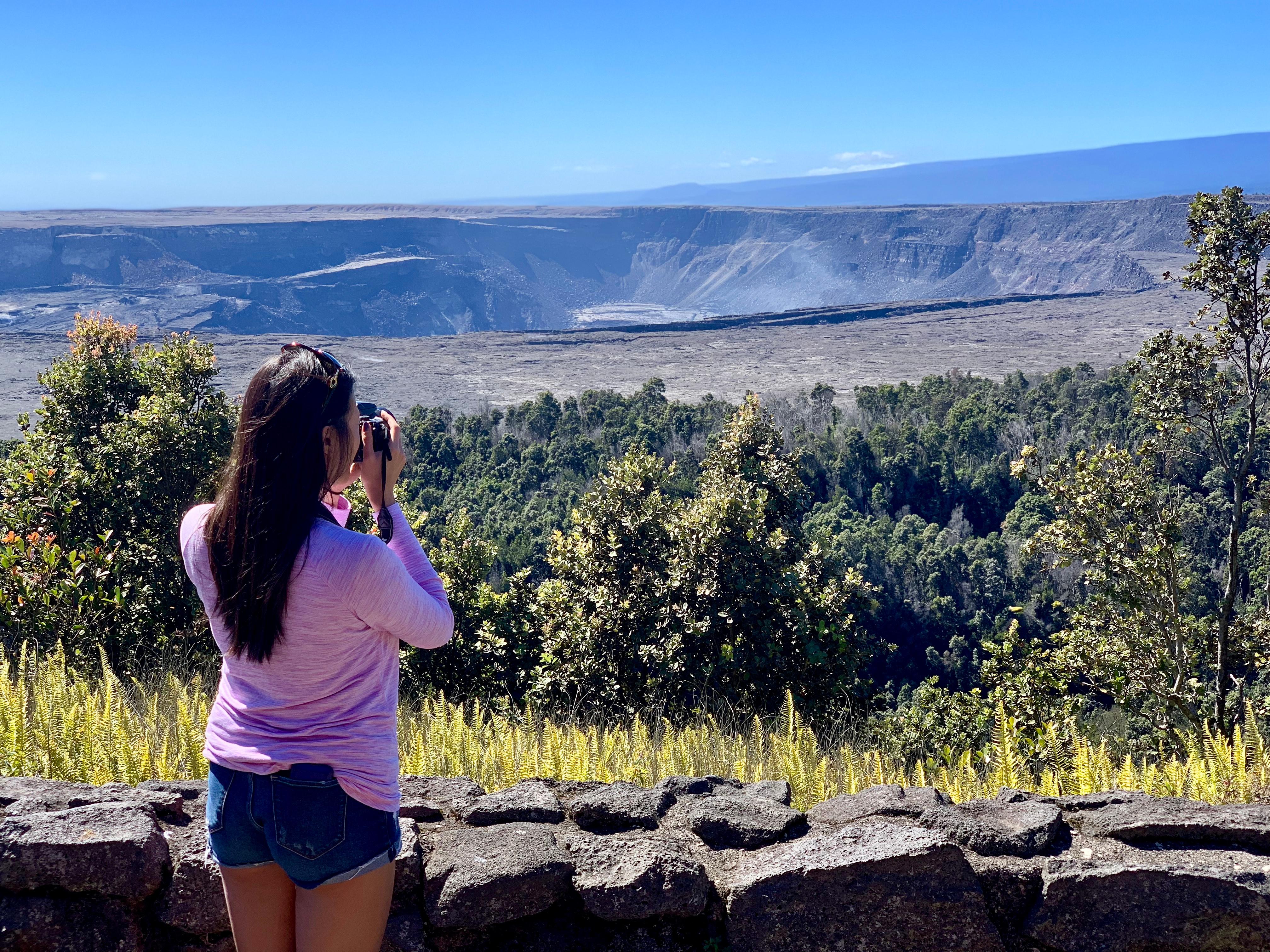
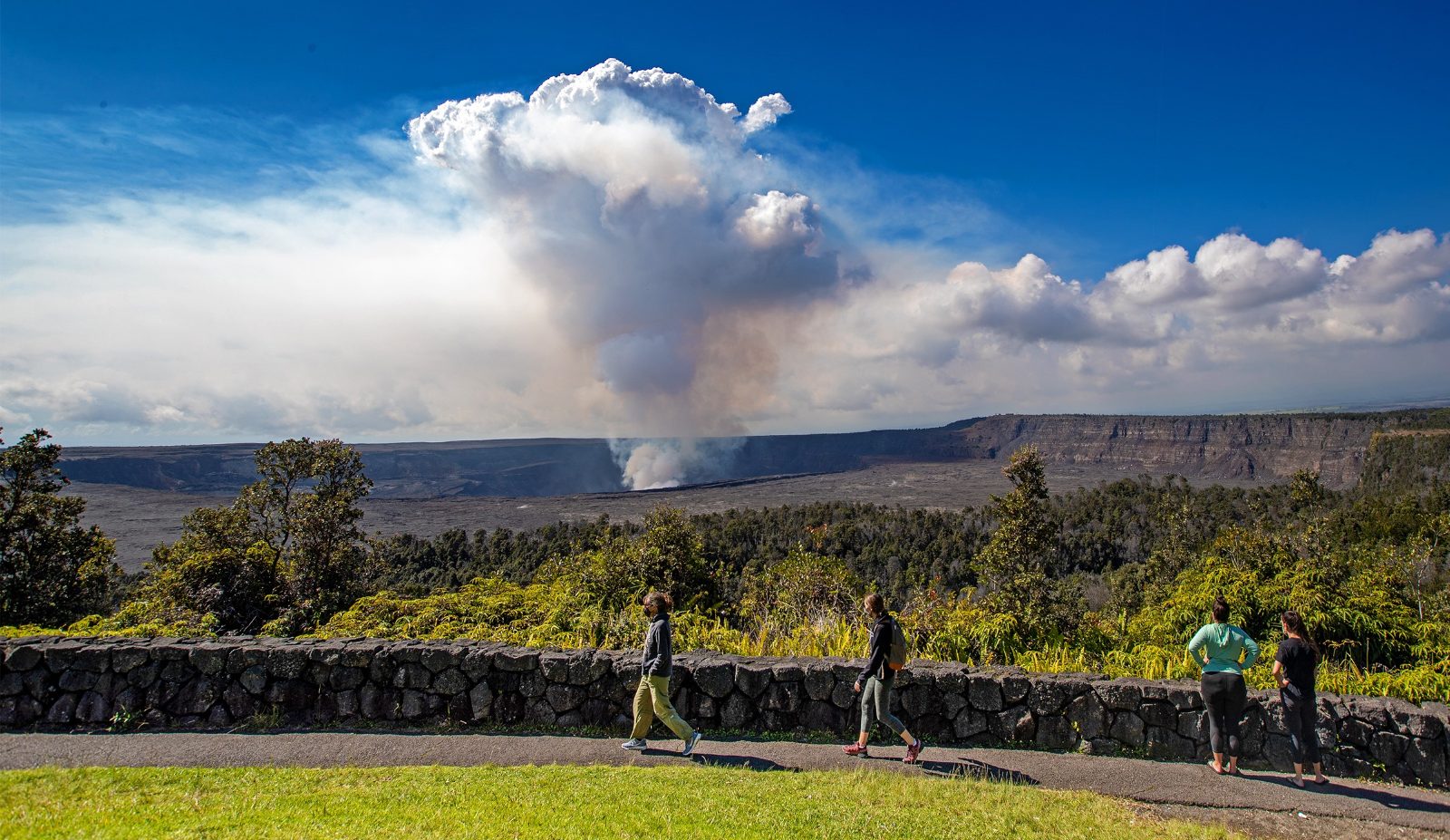
Stand at the edge of the fenced viewing area to capture panoramic views of the caldera and steam vents. This location is a standard stop for every big island volcano tour from kona, providing a clear perspective of the vast volcanic landscape.
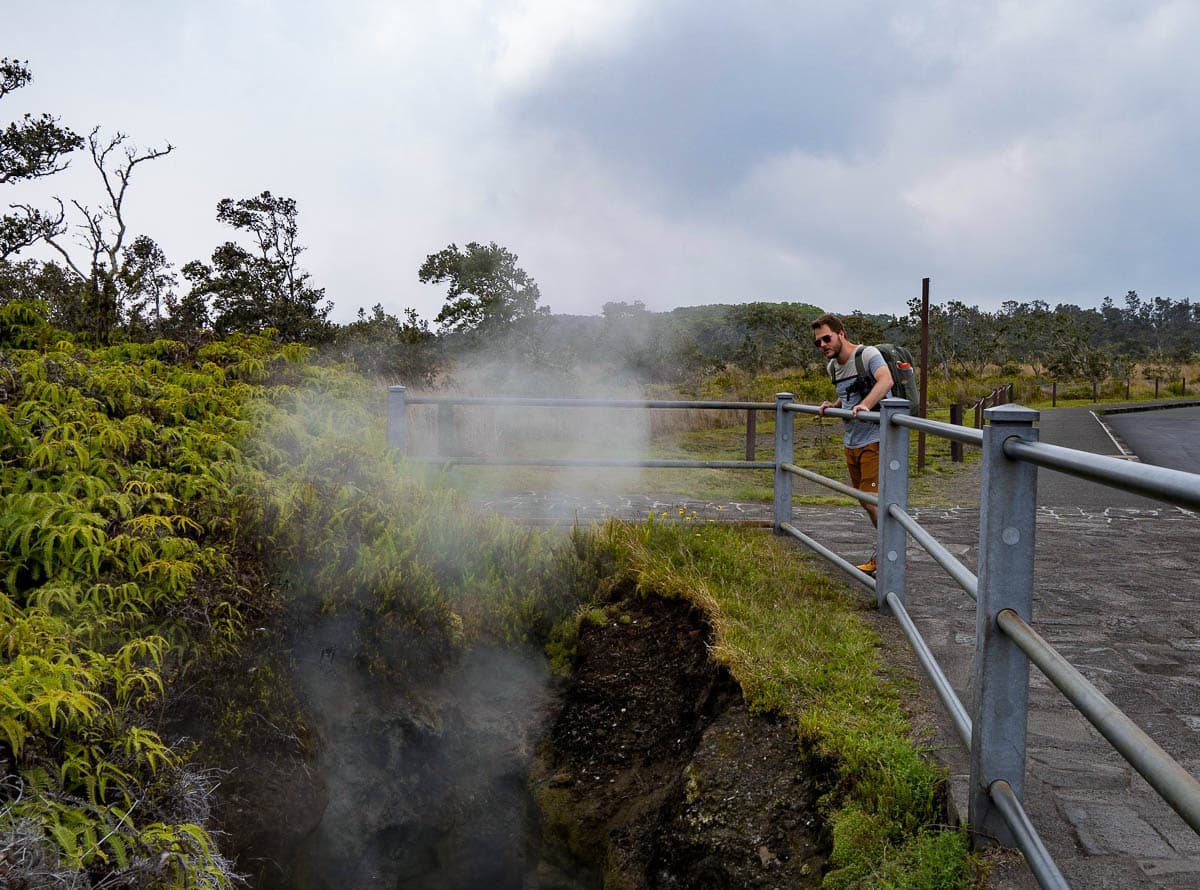
Walk the paved path to photograph natural steam rising from deep underground fissures. These white plumes against the dark basalt rock offer excellent contrast for landscape photography.
Enter this lush fern-covered corridor to capture the arched tunnel formed by cooling lava. The contrast between the dark interior and the surrounding rainforest makes it a highlight for big island volcano tour from kona tours.
Follow the boardwalk to photograph colorful yellow and orange mineral deposits against the backdrop of native vegetation. This site showcases the active geothermal nature of the area after booking your big island volcano tour from kona tickets.
Planning a big island volcano tour from kona allows families to explore diverse geological landscapes within Hawaii Volcanoes National Park. Navigating this vast volcanic terrain requires preparation for changing weather and extensive walking paths.
Most paved trails are stroller-accessible, but rugged terrain like the Thurston Lava Tube requires a carrier for younger children. Plan to bring a comfortable hiking backpack to navigate uneven surfaces with ease.
Children aged six and older often engage best with the geology, though the park welcomes all ages. Families should utilize big island volcano tour from kona tours for professional guidance and simplified logistics.
Restrooms and baby-changing stations are located at the Kīlauea Visitor Center and near major parking areas. Check for big island volcano tour from kona tickets to ensure your group has all required access for a smooth arrival.
The park is expansive, so limit your itinerary to one or two major sites to keep children from becoming overstimulated. Consider a big island volcano tour from kona tour that includes frequent stops to manage energy levels throughout the day.
Finding sustenance near your big island volcano tour from kona requires planning, as on-site dining is limited to historic lodges. Most visitors rely on the singular park restaurant for a sit-down meal or stop in the nearby village for local provisions before utilizing their big island volcano tour from kona tickets.
Located at the Volcano House, this venue offers caldera views and regional cuisine. It serves as the primary sit-down option for those participating in a big island volcano tour from kona tour.
Everything you need to know for your journey
Yes, a guided big island volcano tour from kona provides essential context on geological activity and safe viewing locations. Always check the official NPS site for the latest conditions.
Hawaii Volcanoes National Park is open 24 hours a day, every day.
Entrance fee is 30 USD per private vehicle, which is valid for seven days.
The best arrival window is 06:00–10:00 to avoid mid-day heat and large tour group crowds.
There are no skip-the-line tickets; entry is managed via a standard fee paid at the park entrance station.
Children are welcome, though parents should keep them away from steam vents and restricted volcanic zones.
No formal dress code, but sturdy shoes and layers are necessary for a big island volcano tour from kona.
Bring water, sunscreen, a flashlight, and a rain jacket for your big island volcano tour from kona.
Dining options are limited, so bring your own food and water for the duration of your visit.
Many areas are accessible, though hikers should be prepared for uneven lava terrain during a big island volcano tour from kona.
Historic hotel overlooking the caldera with iconic dining views.
Rainforest district with diverse vacation rentals and lodges.
Join thousands of happy travelers who have discovered this incredible experience
Book Your Experience Now