English| USD
Suggested for you
More currencies
Book Now
Open today · 00:00–23:59

Big Island Volcano Tour Night

Big Island Volcano Tour Night — Lava Glow & Summit Stargazing

Witness Kīlauea's crimson glow after sunset, walk cooling lava fields under open sky.

50K+ travelers chose this
Free Cancellation
Right now: Moderate — autumn shoulder season Check NPS website for current volcanic alerts and active eruption closures.
Free Cancellation
Free cancellation Instant confirmation Mobile voucher Verified partner Book now, pay later
110 years
Park age
Established in 1916
354,461 acres
Park size
Vast volcanic landscape
1.4M+
Annual visitors
Based on 2024 data
13,681 ft
Peak elevation
Mauna Loa summit
30 USD
Entrance fee
Per private vehicle
Choose your ticket

Big Island Volcano Tour Night tickets at a glance

Compare fares, pick the fit — all bookings are mobile-voucher and eligible for free cancellation where shown.

Hawaii Volcanoes National Park & Hilo Full-Day Tour 7 hr
Guided Experience

Hawaii Volcanoes National Park & Hilo Full-Day Tour

4.9 (169)
€165
  • Expert local guide
  • Small group
  • Skip-the-line access
  • Free cancellation
Book this ticket
Big Island Highlights: Volcanoes, Waterfalls & Coffee 11 hr
Guided Experience

Big Island Highlights: Volcanoes, Waterfalls & Coffee

4.9 (478)
€240
  • Expert local guide
  • Small group
  • Skip-the-line access
  • Free cancellation
Book this ticket
Compare options

Compare Big Island Volcano Tour Night ticket options

Choosing your entry method for a big island volcano tour night requires balancing flexibility with self-guided exploration of the Hawaii Volcanoes National Park caldera. Visitors can access the summit landscape directly via a standard vehicle pass or through specialized evening excursions.

Top pick
Standard Vehicle Pass Self-Guided Access
Guided Evening Tour All-Inclusive Excursion
Entrance Fee Included in tour price
Access Duration Single event duration
Key Area Access Curated volcanic viewpoints
Arrival Window Per tour operator schedule
Best for Visitors wanting expert insight

Verdict: Opt for the Standard Vehicle Pass if you prefer a self-paced big island volcano tour night, or book a guided option for professional geological commentary.

Is a Big Island Volcano Tour Night Worth the Entrance Fee?

Worth it for volcano enthusiasts and stargazers

A big island volcano tour night delivers rare access to one of the world's most active volcanic landscapes after dark, when Kilauea's lava glow becomes visible against the night sky. The park charges 30 USD per vehicle for seven-day entry, positioning Hawaii Volcanoes National Park as exceptional value compared to single-day attractions elsewhere. Guided big island volcano tour night tours bundle the entrance fee with expert narration, dinner, and stargazing, eliminating navigation stress on unfamiliar roads. Independent visitors pay only the entrance cost but miss context about volcanic geology and Hawaiian cultural significance. The experience rewards those fascinated by lava tubes, steam vents, and crater formations—the park spans 335,259 acres of active volcanic terrain. Travelers seeking quick photo stops or tropical beaches will find the remote location and rugged trails less compelling. Arriving during the recommended 16:00–20:00 window allows daylight exploration followed by after-dark viewing of the glowing summit. Big island volcano tour night tickets provide multi-day flexibility, though most visitors allocate four to six hours for a thorough evening visit.

What makes it worth it

  • Seven-day vehicle pass at 30 USD
  • Active lava glow visible after sunset
  • Guided tours include dinner and stargazing
  • Rare access to Kilauea summit terrain
  • Multi-day entry enables return visits

Keep in mind

  • Remote location requires 45-minute drive from Hilo
  • Limited value for beach-focused travelers
  • Volcanic activity intensity varies by season
  • Trails demand moderate physical fitness

Bottom line: The combination of accessible volcanic features, extended entry validity, and after-dark lava viewing makes the investment worthwhile for geology-minded travelers.

Head to head

Big Island Volcano Tour Night vs. Helicopter Tours — Which Is Better?

They complement each other; most visitors who do both call the ground-based big island volcano tour night experience more immersive for observing crater geology.

Top pick
Volcano Night Tour
Helicopter Tours
Vantage Point
Activity level
Duration
Key Highlight
Booking constraints
Price range
Entrance fee

Verdict: Choose a big island volcano tour night if you prioritize personal exploration of the craters, or opt for a helicopter tour if you seek time-efficient aerial photography.

Featured Experiences

Popular Big Island Volcano Tour Night tours & activities

Hand-picked experiences loved by thousands of travelers

Recommended Experience

Powered by GetYourGuide

Another traveler favorite

Powered by GetYourGuide
Hilo to Hawaii Volcanoes National Park Guided Tour 5 hours Free Cancellation

Hilo to Hawaii Volcanoes National Park Guided Tour

Explore Kilauea's volcanic landscapes, walk through a lava tube, and discover Hilo's botanical gems

4.9 (104)
FromFrom €164.86
See details
Big Island Volcano & Black Sand Beach Adventure 7 hours Free Cancellation

Big Island Volcano & Black Sand Beach Adventure

Seven-hour journey from Kilauea's smoking crater to sea turtle shores, with lunch included

4.9 (64)
FromFrom €164.86
See details
Big Island Volcano, Waterfall & Beach Adventure 7 hours Free Cancellation

Big Island Volcano, Waterfall & Beach Adventure

Experience Hawaiʻi's fiery volcanic landscapes, lush rainforest trails, and rare multicolored sand beaches

5 (65)
FromFrom €173.58
See details
Evening Volcano Explorer from Hilo 8 hours Free Cancellation

Evening Volcano Explorer from Hilo

Journey through lava fields, black sand beaches, and active volcanic landscapes on this guided Big Island adventure.

4.6 (35)
FromFrom €147.41
See details
Evening Volcano Explorer from Kona or Kohala 12 hours Free Cancellation

Evening Volcano Explorer from Kona or Kohala

Witness volcanic wonders, black sand shores, and Kona's coffee heritage on this full-day Big Island adventure

5 (7)
FromFrom €199.75
See details
Kilauea Volcano Guided Trek 3 hours Free Cancellation

Kilauea Volcano Guided Trek

Trek through native rainforest and across hardened lava flows in Hawaii's legendary volcanic park

4.9 (68)
FromFrom €104.67
See details
Hawaii Stargazing & Milky Way Photography 2 hours Free Cancellation

Hawaii Stargazing & Milky Way Photography

Explore deep-space wonders through a smart telescope and take home professional night-sky portraits

5 (1)
FromFrom €479.75
See details
The experience

What visiting Big Island Volcano Tour Night is really like

You leave Kona in the golden hour, watching the coastline drop away as your van climbs through Waimea's ranchlands and into the cloud forest that wraps Kīlauea's shoulders.

Read more Show less

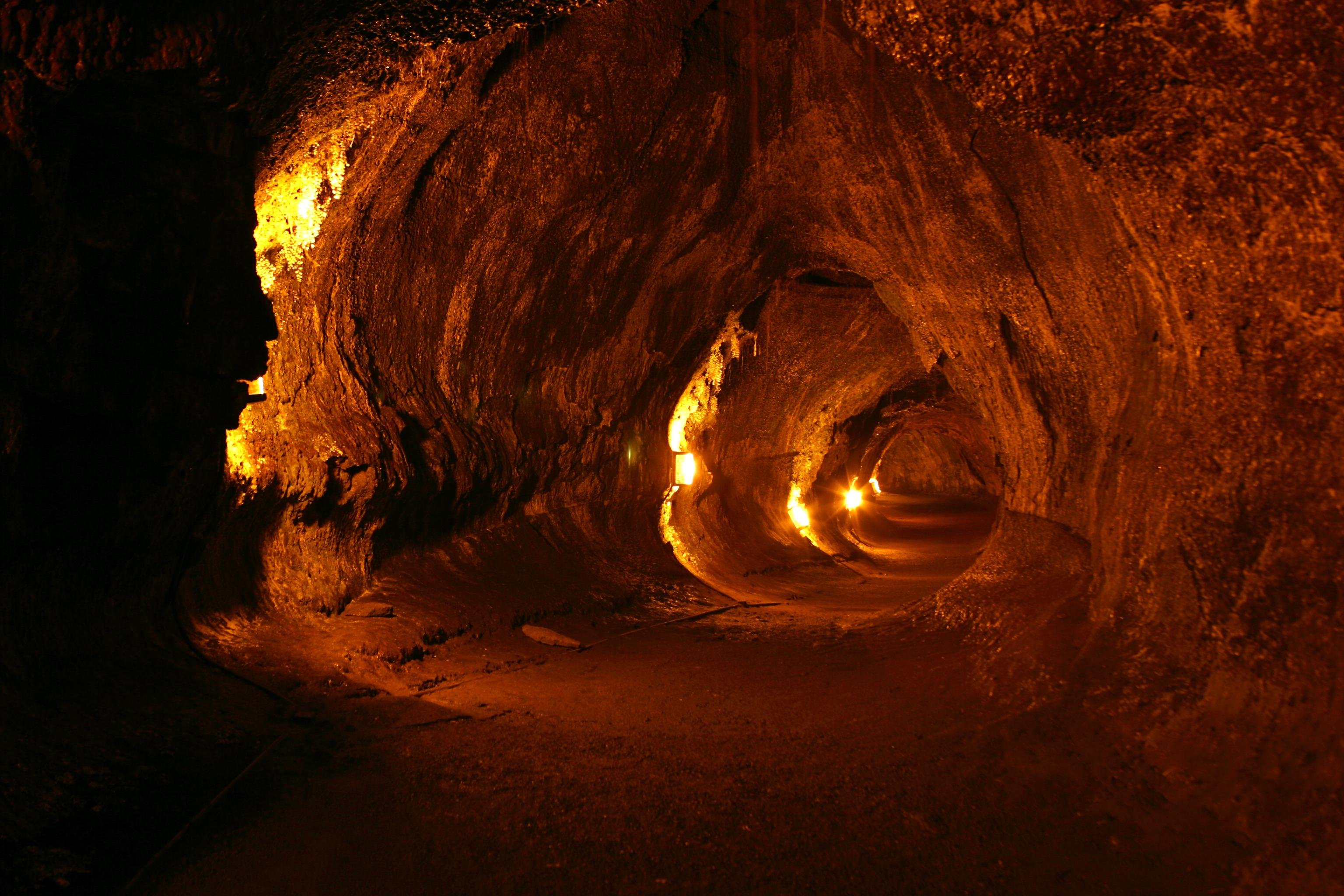
By the time you reach the park entrance at 1 Crater Rim Drive, the sky has shifted to indigo, and your guide distributes headlamps and jackets against the summit's sudden chill. You walk the paved loop at Steam Vents first, feeling the sulfurous heat rise through grates in the asphalt, then continue to Thurston Lava Tube, where your group descends into the fern-draped mouth of a 500-year-old magma channel. The tube's interior is cool and silent, its walls rippled where molten rock once flowed at 2,000 degrees.

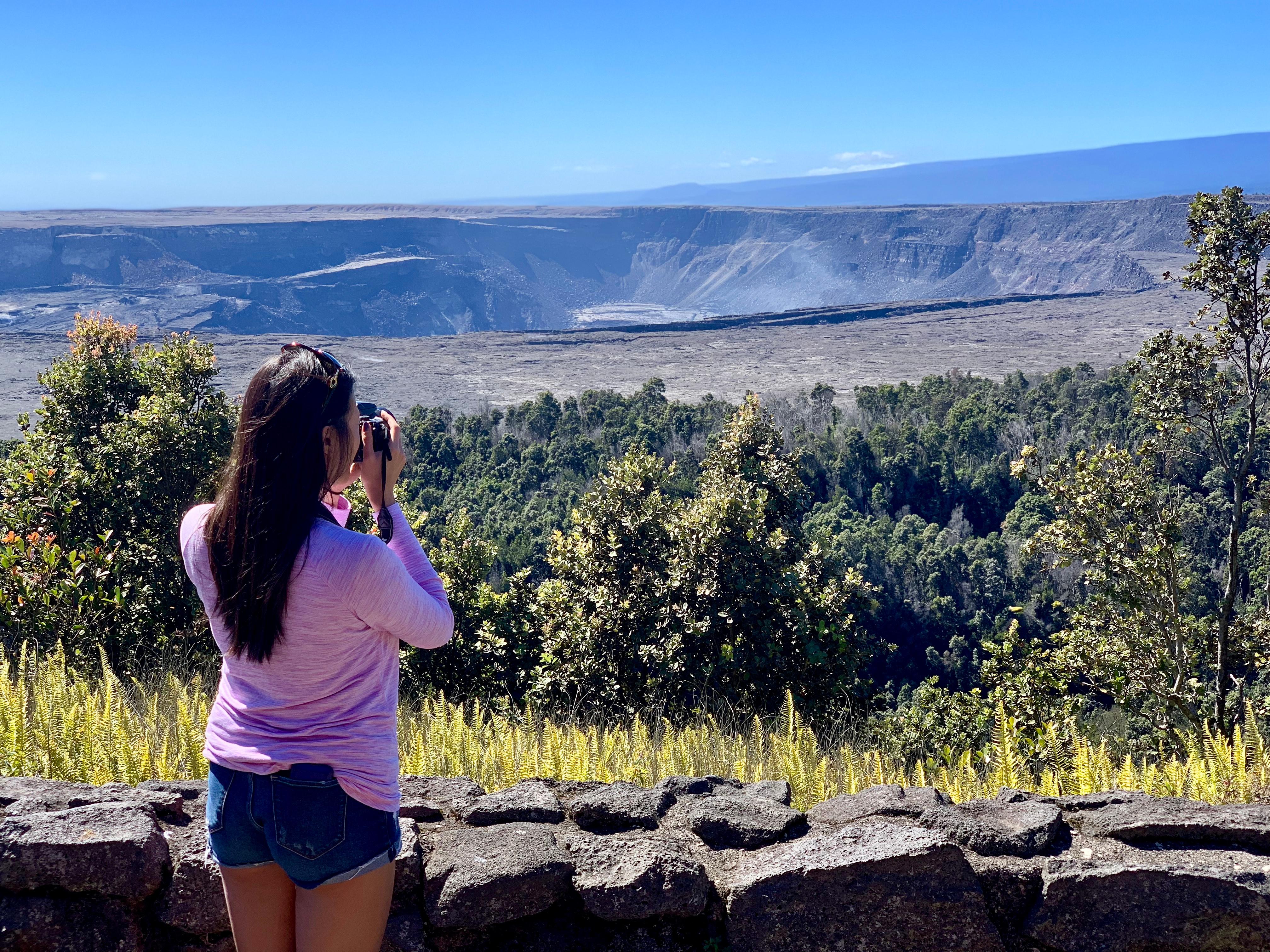
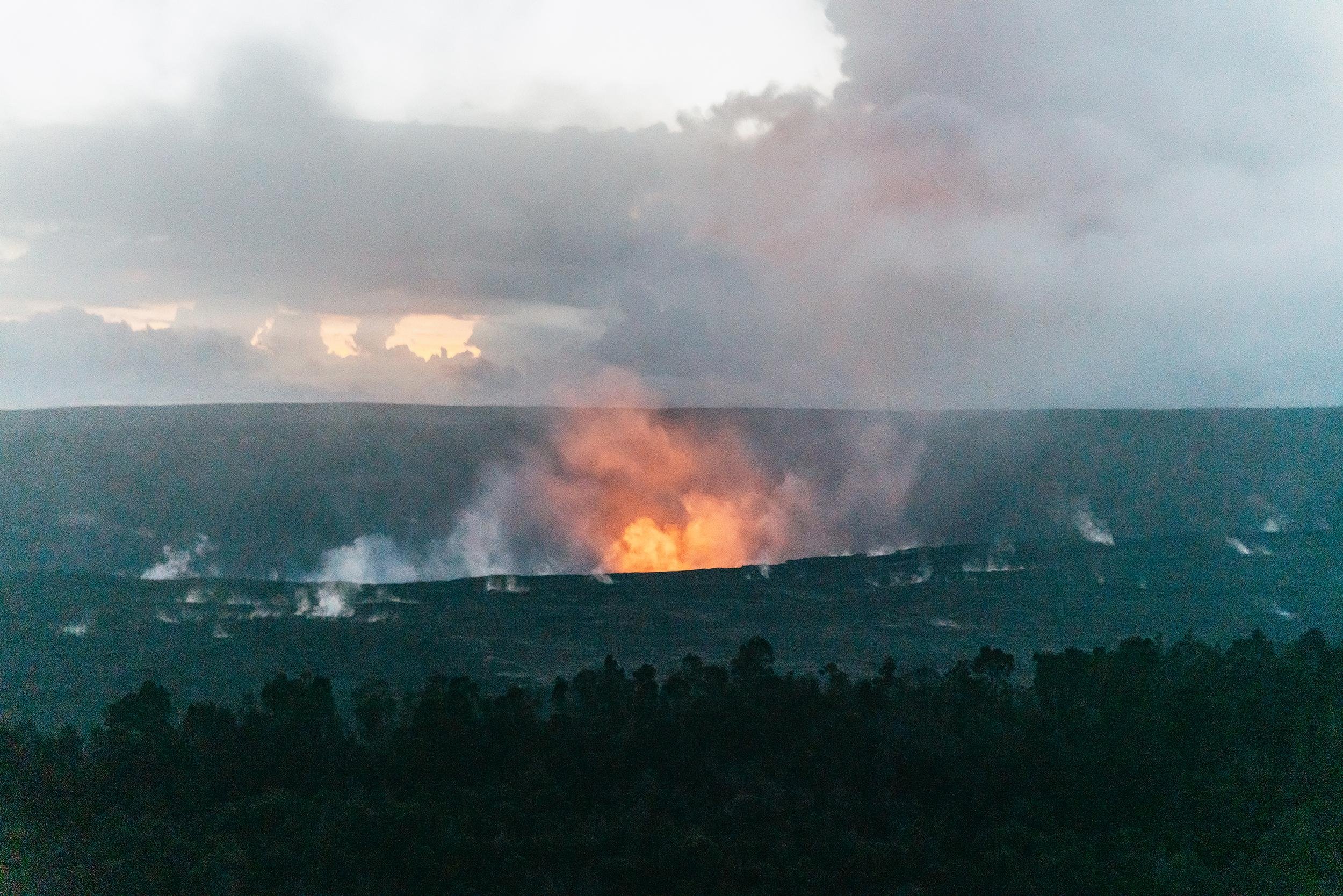
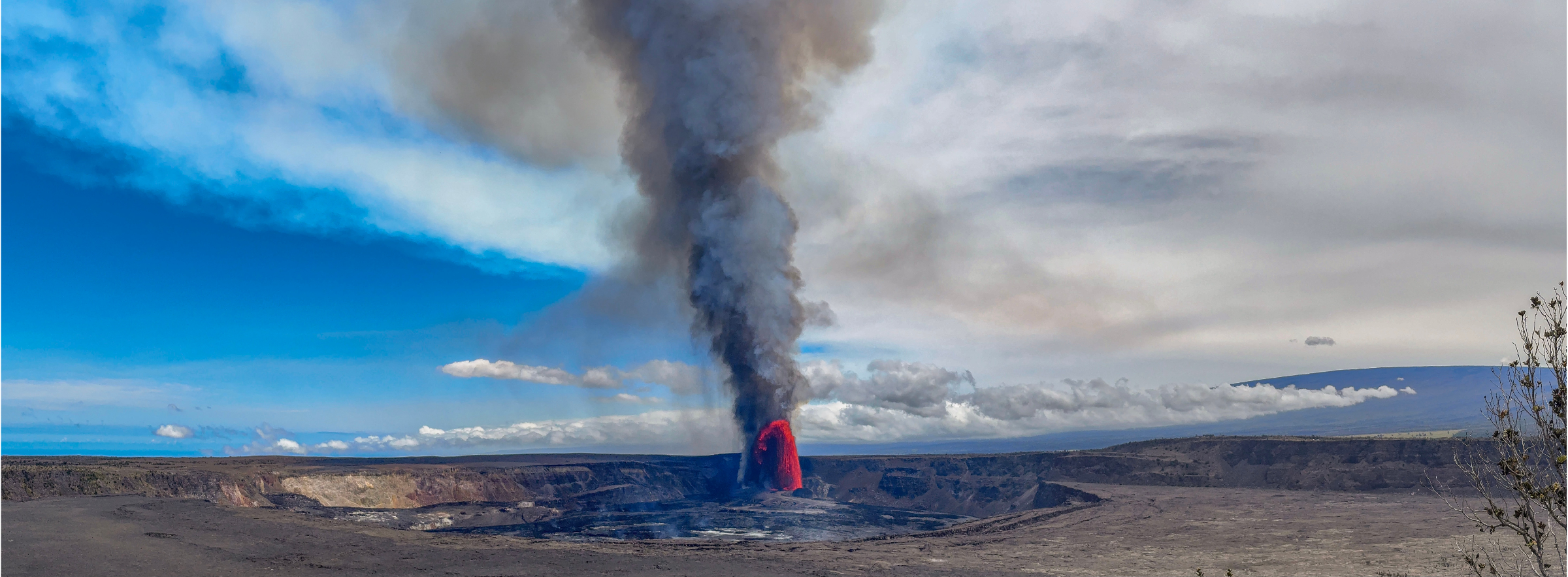
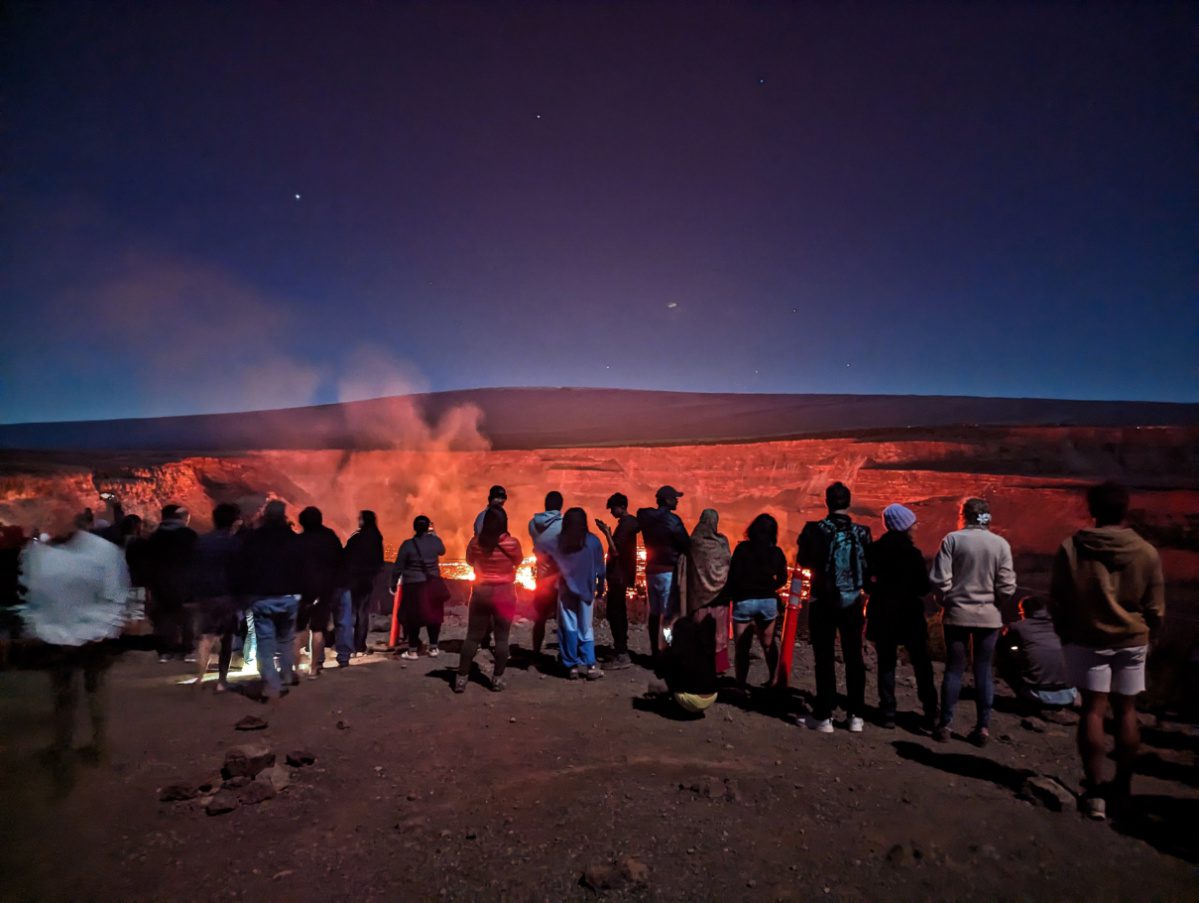
Full darkness arrives as you reach the caldera overlook. Halemaʻumaʻu Crater spreads below, a kilometer-wide basin lit from within by the lava lake's molten surface. The glow pulses with each convection cycle, brightening when gas bubbles burst through the crust, dimming as cooled plates drift across the lake. Your guide points out the Observatory's silhouette on the opposite rim and the faint line of Chain of Craters Road descending toward the coast. On the drive back, you stop at a pullout above the cloud layer, where your group aims binoculars at Saturn's rings and the coal-sack nebula hanging above Mauna Loa's dark summit.

Big Island Volcano Tour Night
Everything You Need to Know

Your complete Big Island Volcano Tour Night guide

All the details about your upcoming adventure in one place

Kīlauea has erupted continuously for longer than the average human lifespan, reshaping 500 square miles of the Big Island's southeast coast since 1983.

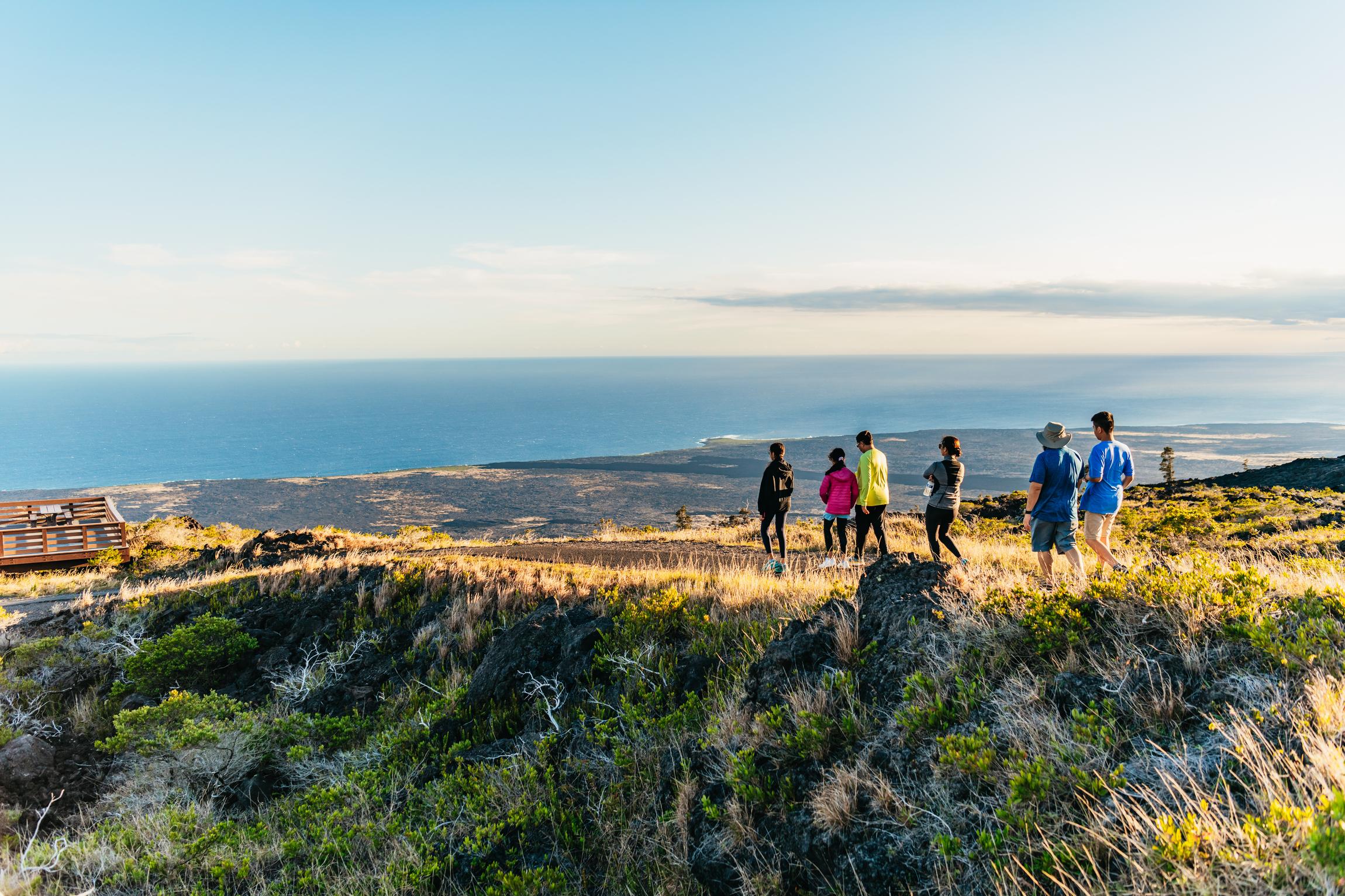
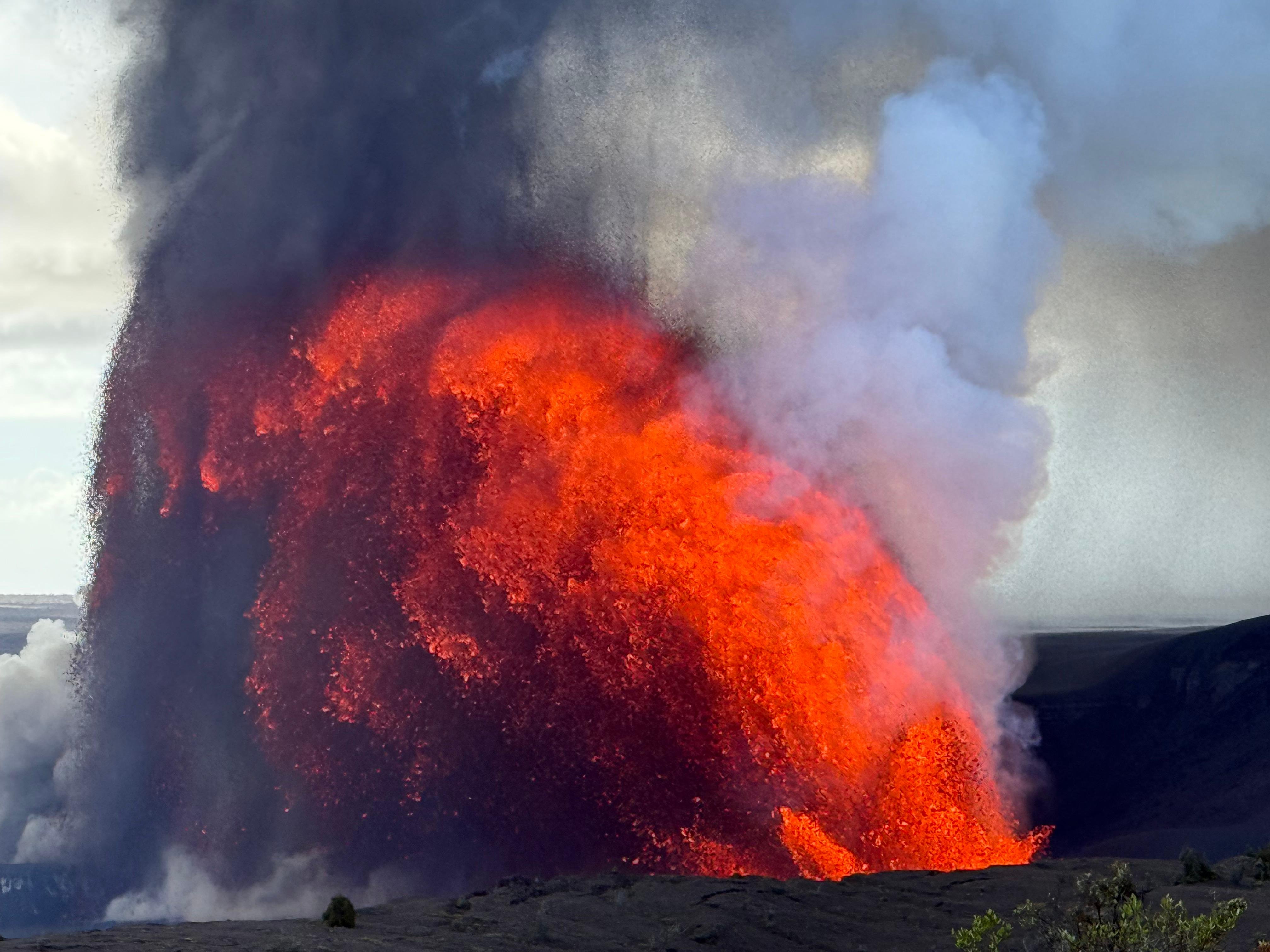
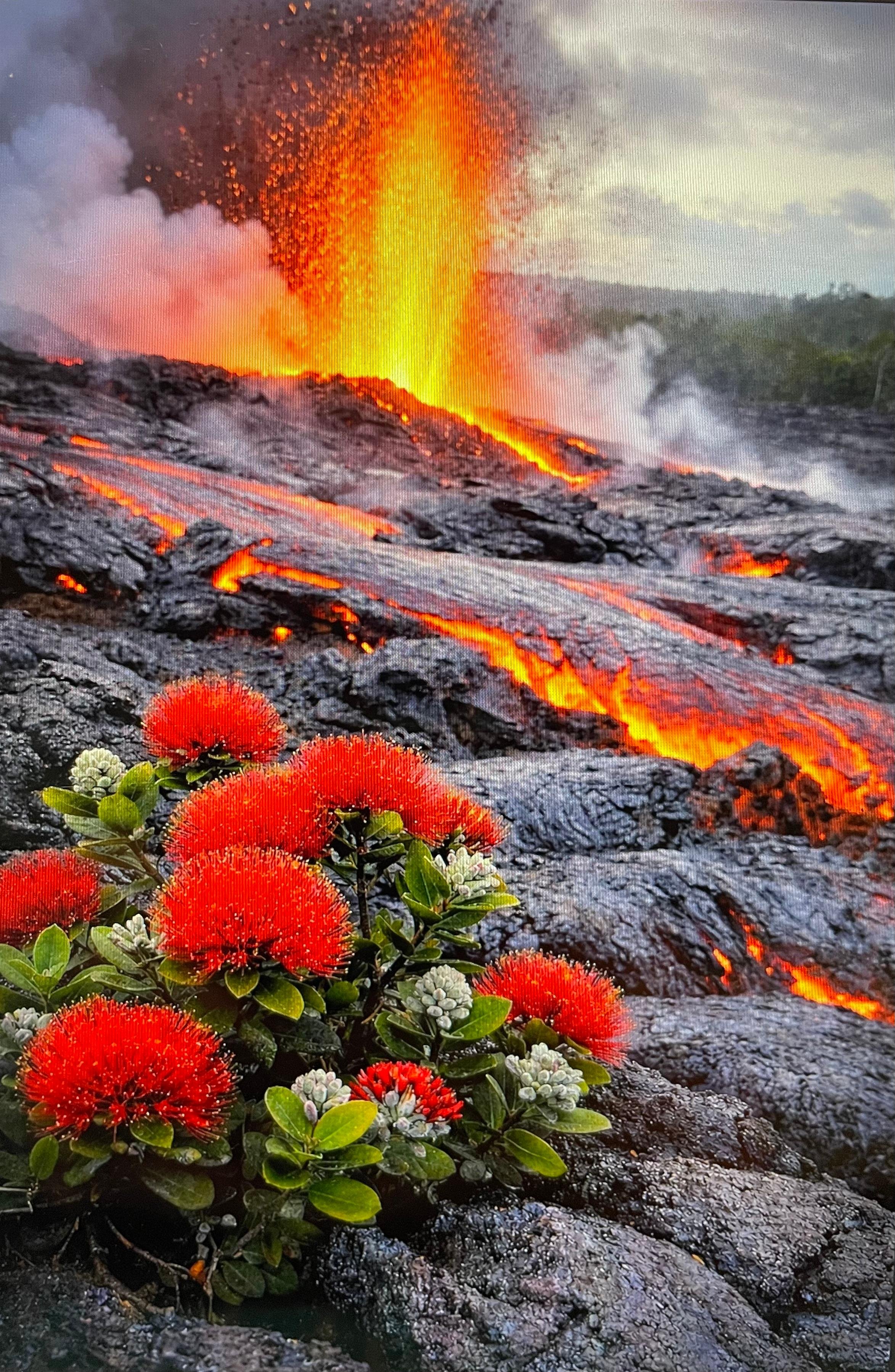
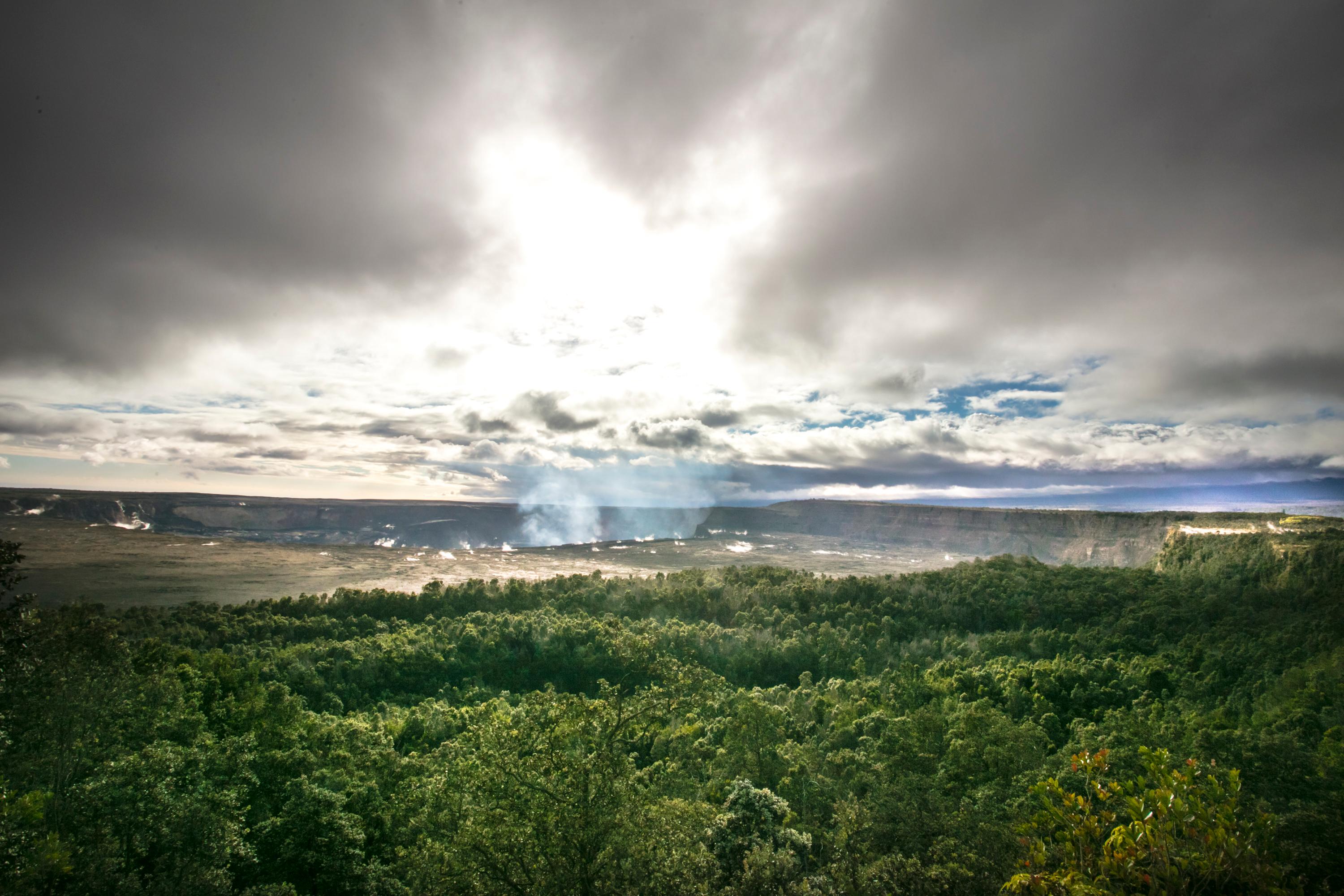
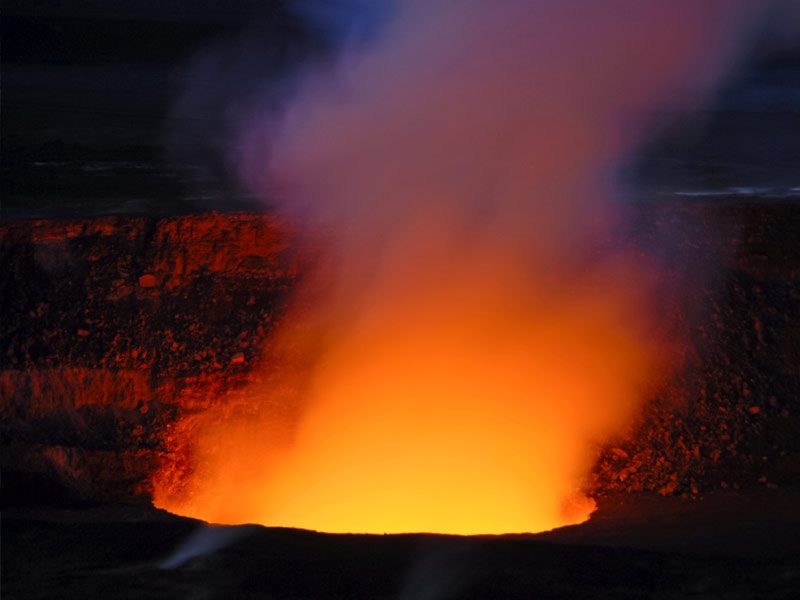
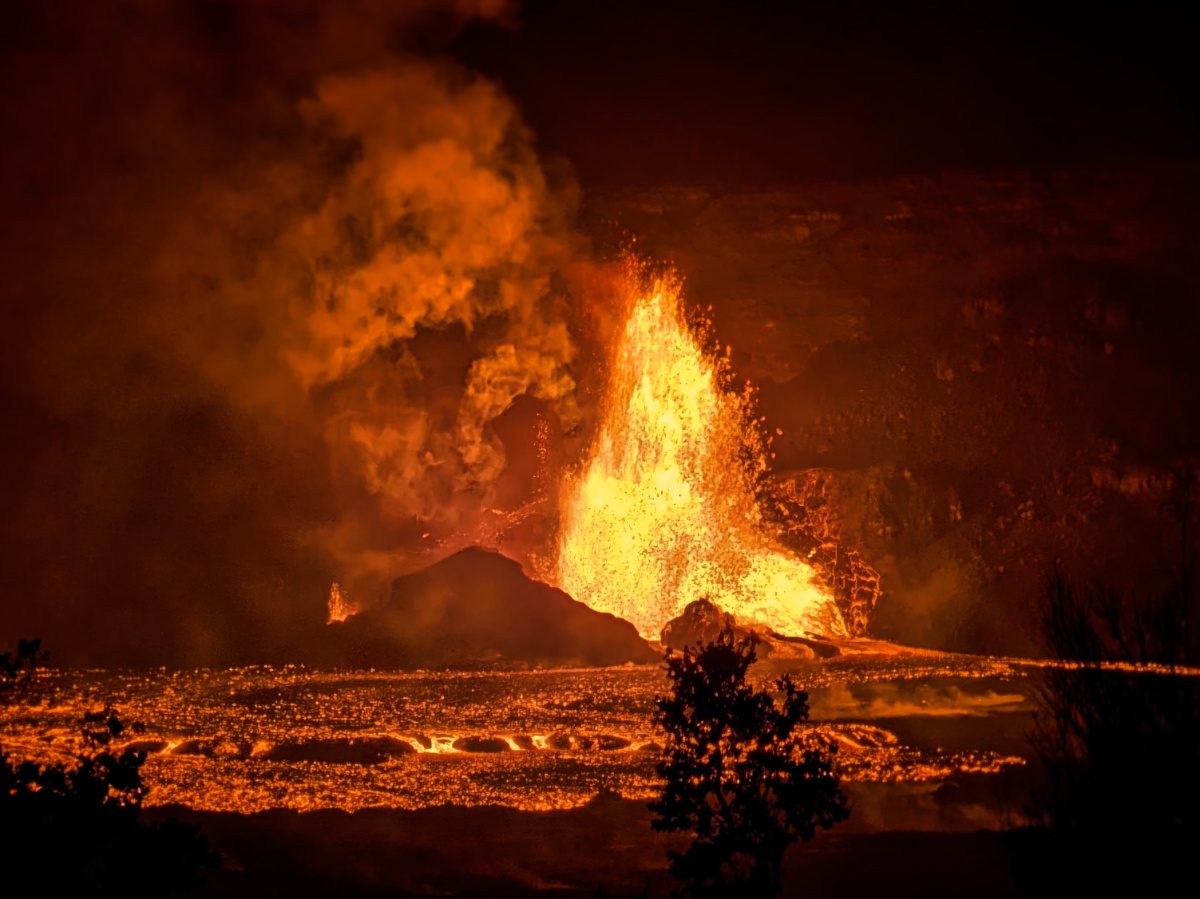
The caldera's floor collapsed 300 feet during the 2018 summit eruption, draining Halemaʻumaʻu Crater and exposing a scarred basin that now holds a lava lake visible from multiple rim overlooks. When darkness falls across Hawaii Volcanoes National Park, that molten lake transforms into a pulsing beacon of orange light, casting a glow strong enough to illuminate the summit's sulfur clouds and silhouette the ʻōhiʻa trees clinging to the crater's edge. The phenomenon draws geologists, photographers, and travelers willing to trade daylight clarity for the primal theater of active volcanism under stars.

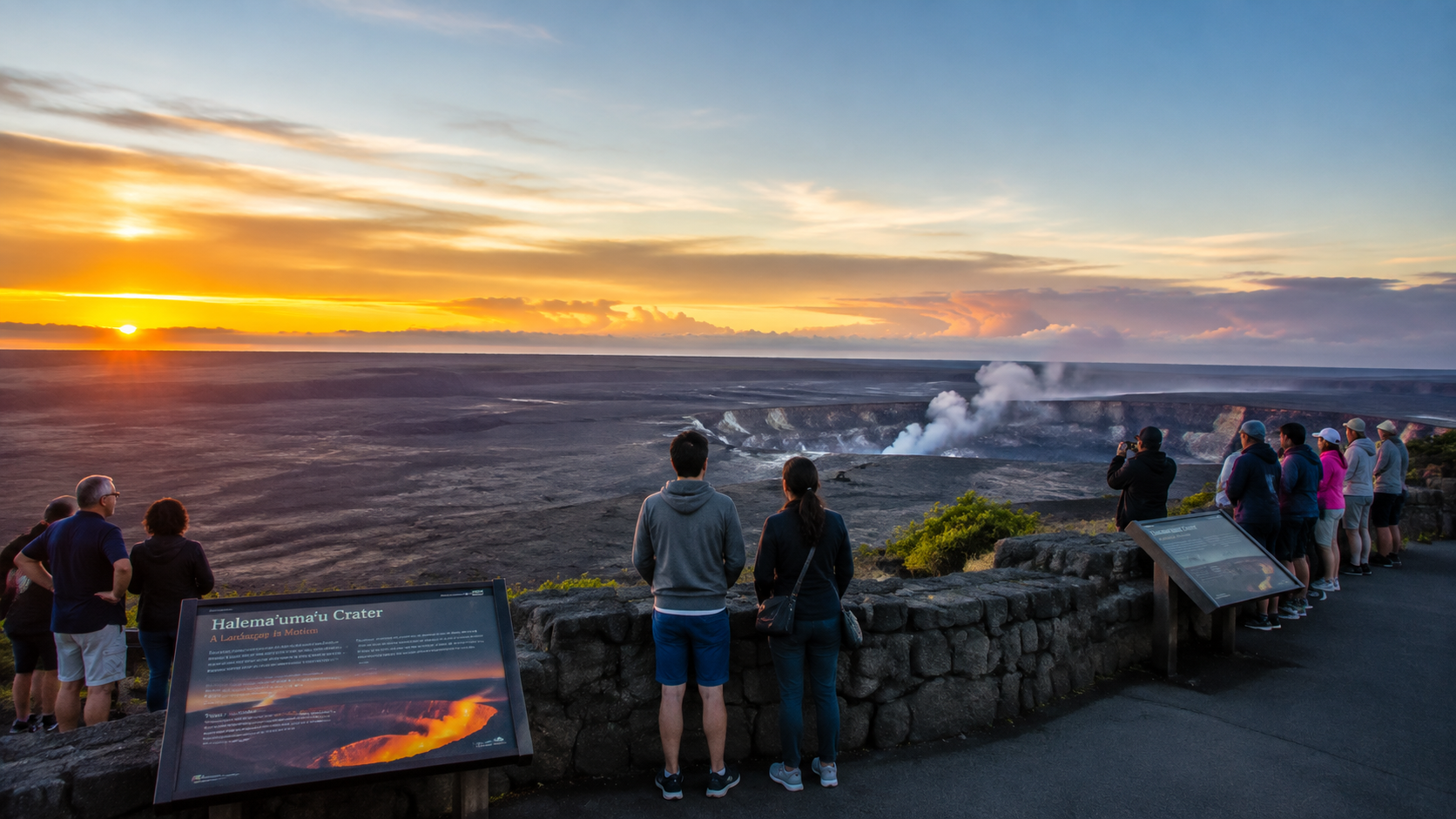
The park's 24-hour access policy makes it one of the few protected volcanic sites in the world where visitors can independently approach an active eruption after dark. Jaggar Museum's closure following the 2018 seismic sequence shifted primary nighttime viewing to overlooks along Crater Rim Drive, where rangers now station interpretive displays and safety barriers. The lava lake's intensity fluctuates with magma supply rates measured by the Hawaiian Volcano Observatory's tiltmeters and seismographs, positioned in bunkers along the caldera's southwest flank. When the lake surface rises within 100 feet of the crater floor, the glow becomes visible from Volcano House's dining terrace, 0.6 miles from the vent. When it retreats below 200 feet, only overlooks directly above Halemaʻumaʻu reveal the crimson pulse.

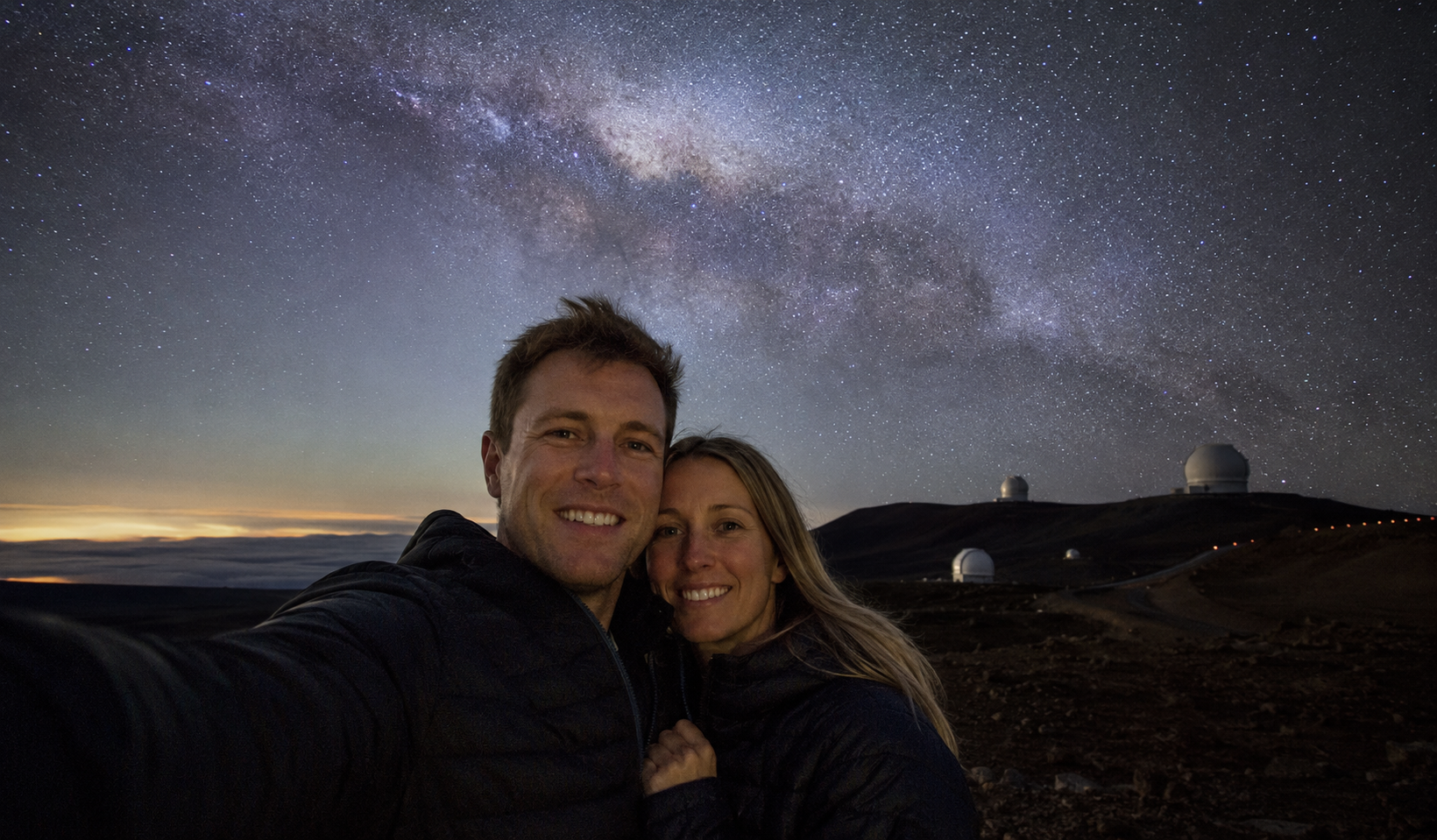
Guided big island volcano tour night excursions depart Kailua-Kona and Hilo in late afternoon, timing arrival for the transition between daylight geology walks and post-sunset lava viewing. The 90-minute drive from the Kona coast climbs 4,000 feet through five ecological zones, passing coffee farms and macadamia orchards before entering the montane rainforest that cloaks Kīlauea's upper slopes. Tour operators coordinate with park rangers to confirm viewing conditions, adjusting routes when sulfur dioxide levels exceed safe thresholds or when cloud cover obscures the caldera. Most itineraries include stops at the Thurston Lava Tube, Devastation Trail's cinder fields, and Steam Vents, where groundwater flash-boils against subsurface magma. The park's elevation and isolation from coastal light pollution produce Bortle Class 2 skies, allowing Milky Way observation between eruption viewings. Stargazing segments typically occur at the Mauna Loa Observatory access road or along Chain of Craters Road, where guides set up telescopes to frame Jupiter's moons and the Andromeda Galaxy against the volcanic horizon.


When darkness falls across Hawaii Volcanoes National Park, that molten lake transforms into a pulsing beacon of orange light, casting a glow strong enough to illuminate the summit's sulfur clouds.

Dress code

Wear sturdy, closed-toe hiking shoes and long pants to protect against sharp lava rock. Bring multiple layers as summit temperatures are significantly cooler than at sea level.

Bags & security

Standard backpacks are permitted for hiking. Security may inspect vehicles at the park entrance station during peak hours.

Photography

Tripods are encouraged for capturing the volcanic glow after dark. Please remain on marked trails at all times while photographing.

Families & strollers

The park offers junior ranger programs and accessible paved trails suitable for all ages. Always supervise children closely around steam vents and uneven volcanic terrain.

Accessibility

Many overlooks and portions of the Crater Rim Trail are wheelchair accessible. Temporary construction at the visitor center may affect local accessibility routes.

Food & drink

Carry sufficient water and snacks, as services inside the park are limited. Leave no trace of food wrappers or waste in the volcanic environment.

Not allowed

× Drones × Glass bottles in sensitive areas × Off-trail hiking × Removal of lava rocks × Smoking × Pets on unpaved trails × Litter × Weapons

What to bring

✓ Water bottle ✓ Rain jacket ✓ Sturdy boots ✓ Flashlight ✓ Sunscreen ✓ Camera ✓ Warm layers

Opening hours

Mon 00:00–23:59
Tue 00:00–23:59
Wed 00:00–23:59
Thu 00:00–23:59
Fri 00:00–23:59
Sat 00:00–23:59
Sun 00:00–23:59

How to get there

At a glance

Operating Hours

00:00–23:59 daily

Address

1 Crater Rim Drive, Hawaii National Park, HI 96718

Accessibility

Accessible trails and visitor facilities available

Best arrival

16:00–20:00 for sunset and night viewing

Services

+1-808-985-6011

Official Site

https://www.nps.gov/havo/index.htm

Cancellation policy

Entrance fees are valid for 7 days from the date of purchase. Fees are non-refundable once the vehicle enters the park.

Plan your time

Planning Your Big Island Volcano Tour Night Timing

Recommended time

5-7 hours

A successful big island volcano tour night requires balancing daylight crater exploration with the evening transition to view the caldera glow. Visitors typically spend several hours traversing steam vents and lava tubes before park traffic increases as dusk approaches. Securing your big island volcano tour night tickets in advance helps streamline entry during the popular evening window, while late-night explorers often find thinner crowds after the initial sunset rush. This duration allows for a comprehensive Hawaii National Park experience without feeling hurried through the geological landscape.

Crowd levels through the day

Morning Moderate
Midday High
Afternoon Moderate
Evening High
Late Night Light
The story

The history of Big Island Volcano Tour Night

Hawaii Volcanoes National Park emerged from a century of scientific curiosity and cultural reverence. In 1823, English missionary William Ellis became one of the first Westerners to document Kīlauea's active lava lake, recording native Hawaiian rituals honoring Pele, the volcano goddess. By 1840, the Hawaiian Volcano Observatory's precursor expeditions had begun systematic monitoring of eruptions, though formal scientific infrastructure would not arrive for decades. Congress established the park on August 1, 1916, making it the eleventh national park and the first to preserve an active volcanic landscape. The designation protected 209 square miles encompassing Kīlauea and Mauna Loa, two of Earth's most active volcanoes. Thomas Jaggar founded the Hawaiian Volcano Observatory in 1912 atop Kīlauea's rim, initiating continuous seismic monitoring that would become essential for predicting eruptions. The Crater Rim Drive opened in 1928, providing public access to previously unreachable vents and caldera viewpoints. Halemaʻumaʻu Crater's lava lake drained suddenly in 1924, triggering explosive steam eruptions that reshaped the summit and killed one photographer. Night viewing of volcanic glow became systematized in the 1960s when Park Service rangers established designated overlooks for safe after-dark observation. Big island volcano tour night experiences evolved from these early access points, though the landscape they reveal has transformed radically. The 2018 eruption sequence redefined the park. Between May and August, Kīlauea's summit collapsed 1,500 feet as lava drained through a rift zone 25 miles away, destroying 700 homes in lower Puna. Halemaʻumaʻu Crater expanded from 280 to 970 feet deep, obliterating the lava lake that had glowed nightly since 2008. The park closed for 134 days, the longest shutdown in its history. When it reopened in September 2018, big island volcano tour night tours and tickets shifted focus from the extinguished summit lake to new steam vents and the recovering caldera floor. In December 2020, lava returned to Halemaʻumaʻu, creating a new lake that continues to reshape nightly viewing opportunities for big island volcano tour night visitors today.

1823

William Ellis documents Kīlauea's active lava lake and native Hawaiian ceremonies.

1912

Thomas Jaggar establishes Hawaiian Volcano Observatory for continuous eruption monitoring.

1916

Congress designates Hawaii Volcanoes National Park on August 1, protecting active volcanic terrain.

1924

Halemaʻumaʻu Crater explodes after its lava lake drains, killing one observer.

1960s

Park Service creates designated night-viewing overlooks for safe lava glow observation.

2008

Halemaʻumaʻu summit lava lake forms, glowing continuously for a decade.

2018

Summit collapses 1,500 feet during four-month eruption, park closes 134 days.

2020

Lava returns to Halemaʻumaʻu in December, forming new lake visible after dark.

Photo spots

Top Big Island Volcano Tour Night Photo Locations

Kilauea Overlook

Kilauea Overlook

Best light · After sunset

Position your tripod along the sturdy railing for a panoramic view of the caldera floor. This primary vantage point offers the clearest perspective for capturing the orange glow against the dark landscape during your big island volcano tour night.

Gallery

Moments from Big Island Volcano Tour Night

With kids

Big Island Volcano Tour Night Logistics for Families

Planning a big island volcano tour night requires preparation to ensure children stay comfortable while exploring the park after dark. Navigating this vast landscape allows families to witness the glowing caldera safely when following established paths.

Strollers and Accessibility

Most paved trails near the main overlooks accommodate strollers, though volcanic terrain requires sturdy wheels and careful navigation of uneven surfaces.

Best Ages for Kids

This Hawaii Volcanoes National Park excursion is best suited for school-aged children who can handle late hours and follow safety instructions near steam vents.

Essential Gear

Bring layers for temperature drops and flashlights for walking between parking areas and viewing points as part of your big island volcano tour night tours planning.

Facilities

Restrooms are available at the Visitor Center and main parking lots, but you should utilize these before heading out to remote trails for your big island volcano tour night tickets experience.

Pacing and Fatigue

Younger children often tire quickly, so plan for frequent breaks and consider shorter walks to keep energy levels manageable for every big island volcano tour night tour participant.

Weather Preparation

Rain is common in this environment, so pack waterproof jackets for the entire family to ensure the evening remains comfortable.

Food & drink

Where to Eat Near Your Big Island Volcano Tour Night Experience

Dining options for your big island volcano tour night are conveniently located both within the park boundaries and in the nearby Volcano Village. Whether you are looking for a meal with a view or a casual local spot, planning ahead ensures you can enjoy a hearty dinner before heading out to catch the volcanic glow.

The Rim

$$$

Fine Dining

Located inside Volcano House with panoramic views of the Kilauea caldera, offering locally sourced ingredients and Pacific cuisine.

Uncle George's Lounge

$$

Casual Dining

Situated at Volcano House, providing lighter fare, cocktails, and late-night snacks with crater views.

Lava Rock Cafe

$$

Local Diner

A family-friendly spot in Volcano Village serving burgers, seafood, and island favorites in a forest setting.

Thai Thai Bistro & Bar

$$

Bistro

Located in Volcano Village, specializing in Thai dishes and a popular stop for dinner before or after your big island volcano tour night tour.

Cafe Ono

$$

Vegetarian Cafe

A charming garden-focused eatery in Volcano Village perfect for a lighter, locally-sourced meal during your big island volcano tour night tickets experience.

FAQ

Big Island Volcano Tour Night — frequently asked questions

Everything you need to know for your journey

Ready for Adventure?

Join thousands of happy travelers who have discovered this incredible experience

Book Your Experience Now