

Quick answer
Big island volcano tubes at Nāhuku are open 24 hours a day, seven days a week, as part of Hawaii Volcanoes National Park. The entrance fee is $30 per private vehicle for a seven-day park pass. The best time to arrive is between 8:00 AM and 9:00 AM to avoid parking congestion and tour groups. The paved loop trail takes most visitors 20 to 30 minutes to complete.
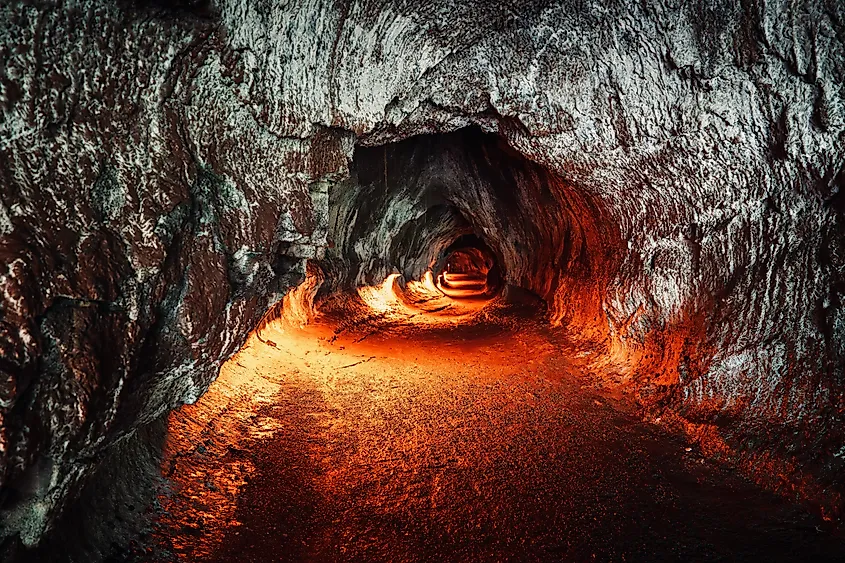
The Nāhuku lava tube formed roughly 500 years ago when the outer crust of a lava stream solidified while molten rock continued flowing beneath, eventually draining and leaving a hollow tunnel. The accessible portion stretches about 600 feet through a fern forest, with the tube's ceiling rising up to 20 feet in some sections. Visitors descend a short set of stairs into the tube, where the temperature drops noticeably and the sound of dripping water echoes off basalt walls. The trail begins in a dense rainforest canopy, passes through the illuminated lava tube, and loops back through native ʻōhiʻa and hāpuʻu fern groves. Park infrastructure includes handrails, paved walkways, and subtle lighting inside the tube itself, making the route accessible for most fitness levels. The site is part of the larger Kīlauea volcano system, one of the world's most active volcanic regions, and the tube's formation is a textbook example of pāhoehoe lava flow dynamics. Crowds peak between 10:00 AM and 2:00 PM, especially when cruise ships dock in Hilo or Kona. Early morning visits offer better light for photography inside the tube and cooler temperatures on the exposed trail sections. Rain is common year-round, and the paved path can become slippery. The park's official site provides real-time alerts for closures due to volcanic activity or hazardous air quality from sulfur dioxide emissions. Nāhuku sits roughly 1.5 miles from the main Kīlauea Visitor Center along Crater Rim Drive. The parking area accommodates about 30 vehicles, and overflow parking extends along the roadside during busy periods. Restrooms are available at the trailhead, but no food or water services exist at the site itself. Cellular reception is limited throughout the park, so download maps and directions before arrival.
“The accessible portion of Nāhuku stretches about 600 feet through a tunnel where the temperature drops noticeably and the sound of dripping water echoes off basalt walls.”
The Best Time to Visit Big Island Volcano Tubes
The best arrival window for visiting Nāhuku is 08:00–09:00. Arriving during this period helps visitors avoid peak parking congestion and heavy crowds that frequent the lava tube later in the day.
Weekday mornings
Minimal congestion—
Visiting midweek during the early morning hours provides the quietest experience inside the tube.
Mid-day periods
High parking demand—
Traffic and foot traffic typically increase significantly between 11:00 and 15:00.
April and October
Moderate crowdsMild temperatures 65-75°F
These shoulder months often feature fewer visitors compared to the peak winter and summer travel seasons.
Weekends
Heavy traffic—
Saturday and Sunday see higher volumes of local and tourist visitors throughout the day.
Verdict: For the most efficient visit, plan to arrive between 08:00–09:00 on a weekday during the shoulder months of April or October.
Opening Hours for Big Island Volcano Tubes
Nāhuku, the Thurston Lava Tube, is accessible to visitors at all hours throughout the week. The site remains open daily to accommodate flexible scheduling for park exploration.
| Monday | 00:00–23:59 | |
|---|---|---|
| Tuesday | 00:00–23:59 | |
| Wednesday | 00:00–23:59 | |
| Thursday | 00:00–23:59 | |
| Friday | 00:00–23:59 | |
| Saturday | 00:00–23:59 | |
| Sunday | 00:00–23:59 |
Entrance Fees for Big Island Volcano Tubes
Access to Nāhuku and the wider Hawaii Volcanoes National Park is managed through a single vehicle-based entrance fee. This fee grants entry to the entire park for a period of seven consecutive days.
Most visitors pay 30 USD per private vehicle, which remains the standard entry cost regardless of the number of passengers.
Getting to Big Island Volcano Tubes
Nāhuku, commonly known as the Thurston Lava Tube, is located within Hawaii Volcanoes National Park. Visitors typically access the site by driving via Crater Rim Drive.
Hawaii Belt Road (Route 11) to Hawaii Volcanoes National Park entrance
Crater Rim Trail from Kilauea Visitor Center
Crater Rim Drive to Nāhuku parking area
Safety and Conduct in Big Island Volcano Tubes
Nāhuku's lava tube ecosystem is fragile, with delicate formations and unique microclimates that visitors must protect. Following park etiquette preserves this geological feature for future generations.
Do
- Stay on designated pathways throughout the tube
- Bring multiple flashlights or headlamps with fresh batteries
- Keep voices low to respect other visitors
- Report any damage or safety hazards to rangers
- Watch your head on low ceiling sections
- Leave all formations and rocks undisturbed
Don't
- Touch cave walls, ceilings, or lava formations
- Use flash photography that disturbs other guests
- Bring food or drinks into the tube
- Stray from marked trails or enter closed areas
- Carve or mark any surface
- Leave trash or disturb the cave environment
Big Island Volcano Tubes Preparation Checklist
Nāhuku (Thurston Lava Tube) requires sturdy footwear, layers for temperature shifts, and a light source to navigate the 600-foot tunnel safely.
-
Wear closed-toe shoes with grip — The tube floor is uneven, damp, and can be slippery in spots.
-
Bring a flashlight or headlamp — Sections of the tube are dimly lit, and a backup light ensures visibility.
-
Layer clothing for temperature changes — The tube interior stays cool year-round while the rainforest trail is warm and humid.
-
Pack a light rain jacket — The trail passes through a rainforest where brief showers are common.
-
Arrive with your park entrance pass — The $30 per vehicle 7-day pass grants access to all park sites including Nāhuku.
-
Check the official site before departure — Confirm the tube is open, as closures can occur for maintenance or safety.
Check availability
Frequently asked questions about big island volcano tubes
Everything you need to know about big island volcano tubes